There is perhaps no abdominal pain more distinct and terrifying than the sharp, stabbing sensation of appendicitis. It often begins deceptively—a dull, vague ache near the belly button that you might dismiss as indigestion or gas. But within hours, the pain migrates, settling ominously in the lower right side of your abdomen, becoming intense, unyielding, and impossible to ignore.
- ⚠️ The Golden Rule: Medical Safety First
- Understanding the “Why”: Anatomy of an Attack
- Immediate Supportive Care: Managing Symptoms Safely
- 1. Strategic Hydration: The Foundation of Defense
- 2. Ginger: The Anti-Nausea Powerhouse
- 3. The Antibacterial Potential of Garlic
- 4. Fenugreek Seeds: Soothing the Mucosa
- The Controversy of Castor Oil Packs
- Herbal Teas: Calming the Storm
- Chamomile: The Spasmolytic
- Peppermint: The Double-Edged Sword
- Lemon and Honey
- Dietary Strategy: The “Appendicitis Recovery” Diet
- Phase 1: The Liquid Phase
- Phase 2: The BRAT Diet Variation
- Phase 3: The Anti-Inflammatory Rebuild
- Post-Surgery Home Care: Where Real Recovery Happens
- 1. Splinting the Abdomen
- 2. Combating Constipation Naturally
- 3. Movement as Medicine
- Recognizing the “Red Flags”: When Home Care Fails
- Myths vs. Facts: Clearing the Confusion
- Prevention: Is It Possible?
- Conclusion: A Balanced Approach to Healing
Appendicitis is the inflammation of the appendix, a small, finger-shaped pouch projecting from your colon on the lower right side of your abdomen. While it is a common condition, affecting millions of people globally, it remains a critical medical emergency. The appendix is a “closed-loop” system; when it gets blocked, bacteria multiply rapidly, causing the organ to swell with pus. If untreated, it acts like a ticking time bomb that can burst, spreading infectious material throughout the abdominal cavity—a life-threatening condition known as peritonitis.
Given the severity of this condition, the internet is flooded with questions: Can I treat appendicitis at home? Are there natural remedies to stop the pain? Can herbal tea save me from surgery?
This comprehensive guide is written to provide clarity, safety, and actionable advice. We will explore the role of natural home remedies—not as magical cures, but as supportive measures for symptom management during the early stages or, more importantly, during the recovery phase after medical intervention. We will debunk dangerous myths, explain the science of gut health, and guide you through the nutritional and holistic steps to bounce back after an appendix flare-up.
⚠️ The Golden Rule: Medical Safety First
Before we dive into the catalogue of herbs, oils, and dietary shifts, we must establish the most important rule of dealing with appendicitis: There is no home remedy that can cure a blocked or infected appendix.

If you are currently experiencing severe abdominal pain, fever, and vomiting, put this article down and go to the nearest emergency room.
Appendicitis is a mechanical obstruction. Just as you cannot unclog a drain by wishing it well, you cannot unblock an infected appendix with tea or essential oils. The blockage—often caused by hardened stool (fecaliths), swollen lymph nodes, or even parasites—cuts off blood flow. Without blood flow, the tissue dies.
The Role of Home Remedies:
The remedies discussed in this guide are intended for two specific scenarios:
- Comfort Care: To manage nausea and mild discomfort while you are being transported to a medical facility or while waiting for medical assessment.
- Post-Treatment Recovery: To accelerate healing, reduce inflammation, and restore gut health after your doctor has treated the acute infection (usually via surgery or heavy-duty antibiotics).
Disclaimer: This content is for educational purposes only. It does not constitute medical advice. Always consult a healthcare professional before applying heat, taking supplements, or changing your diet during an acute medical crisis.
Understanding the “Why”: Anatomy of an Attack
To understand how to support your body, you must understand what your body is fighting. For decades, doctors believed the appendix was a “vestigial” organ—an evolutionary leftover with no function. However, modern research suggests the appendix may act as a “safe house” for good bacteria. It reboots your digestive system after diarrheal illnesses.

When appendicitis strikes, this safe house turns into a danger zone.
- The Blockage: The opening of the appendix gets plugged.
- The Pressure Cooker: Mucus and fluids continue to be secreted inside the appendix, but they have nowhere to go. Pressure builds.
- The Bacterial Bloom: Bacteria that normally live harmlessly in the gut become trapped and multiply rapidly.
- Ischemia: The swelling squeezes the blood vessels, cutting off the blood supply.
- Necrosis and Rupture: The tissue dies and eventually creates a hole (perforation), leaking pus and stool into the abdomen.
This timeline can happen over 24 to 72 hours. This is why “waiting it out” with home remedies is not a strategy—it is a gamble with your life.
Immediate Supportive Care: Managing Symptoms Safely
While you cannot reverse the infection at home, you can make the experience less traumatic for your body while you seek help. If you are in the early stages or recovering post-surgery, these natural approaches can provide significant relief.

1. Strategic Hydration: The Foundation of Defense
When the body fights infection, its metabolic rate increases, and it burns through fluids. Appendicitis often comes with nausea and vomiting, leading to rapid dehydration. Dehydration creates a vicious cycle: it increases pain sensitivity, worsens nausea, and makes it harder for emergency medical teams to find a vein for IVs later.
- The Protocol: Do not chug water. If your stomach is irritated, a large volume of liquid will trigger vomiting. Instead, take one small sip of water every 5 to 10 minutes.
- Electrolyte Balance: Water is good, but mineral balance is better. Clear vegetable broth or bone broth provides sodium and potassium, which help your cells retain fluid.
- What to Avoid: Stay away from sugary sodas or commercial energy drinks. The high sugar content can draw water out of the body and into the gut (osmosis), leading to diarrhea and further dehydration.
2. Ginger: The Anti-Nausea Powerhouse
Ginger (Zingiber officinale) is one of the few natural remedies that is universally respected in both Eastern and Western medicine. Its active compounds, gingerols and shogaols, are potent anti-inflammatories and antiemetics (drugs that prevent vomiting).
In the context of appendicitis or recovery, ginger is not used to “unblock” the appendix, but to settle the violent nausea that accompanies the condition.
- How to Use It:
- Fresh Tea: Slice 2 inches of raw ginger root. Smash it slightly to release the juices. Steep it in hot water for 15 minutes. Sip slowly.
- Aromatherapy: If you cannot keep fluids down, simply smelling fresh cut ginger or ginger essential oil can trick the brain’s chemoreceptor trigger zone (CTZ) into reducing the urge to vomit.
3. The Antibacterial Potential of Garlic
Garlic contains allicin, a compound released when cloves are crushed. Allicin has proven antibacterial and antifungal properties. While it cannot penetrate the appendix to clear a blockage, consuming garlic regularly aids the immune system in its general fight against inflammation.
- Best Practice: Garlic is most effective when raw, but raw garlic can be harsh on a sensitive stomach. During recovery, roast whole cloves of garlic until they are soft and spreadable. Add them to broths. This provides the immune benefits without the digestive distress of raw allicin.
4. Fenugreek Seeds: Soothing the Mucosa
Fenugreek is a staple in Ayurvedic medicine. The seeds are rich in mucilage—a gelatinous substance that coats and soothes inflamed mucous membranes. While usually used for sore throats or ulcers, this soothing effect can extend to the digestive tract.
- Preparation: Boil one teaspoon of fenugreek seeds in a cup of water. Strain the seeds and drink the lukewarm water. This can help reduce the intestinal cramping often associated with lower abdominal issues.
The Controversy of Castor Oil Packs
If you search for natural remedies for abdominal pain, you will inevitably find castor oil packs. This remedy involves soaking wool flannel in castor oil and applying it to the skin. Castor oil contains ricinoleic acid, which is a unique fatty acid that exerts anti-inflammatory effects and promotes lymphatic circulation.
However, there is a critical warning here.
- The Danger of Heat: Traditional castor oil packs are applied with a hot water bottle. You must never apply heat to an acutely inflamed appendix. Heat causes vasodilation (widening of blood vessels) and increases blood flow. In an organ that is already swollen to the bursting point, adding heat can accelerate the rupture.
- The Safe Approach: If you are post-surgery and the incision has healed, castor oil packs (without excessive heat) can be wonderful for preventing scar tissue formation (adhesions) and reducing internal scarring. But during the acute pain phase? Avoid them. Stick to cool compresses if you need topical relief.
Herbal Teas: Calming the Storm
Herbal teas are essentially mild, water-based medicine. They hydrate the body while delivering trace amounts of therapeutic compounds.

Chamomile: The Spasmolytic
Chamomile is famous for sleep, but its primary biological function is as a “spasmolytic”—it stops muscle spasms. Appendicitis often triggers cramping in the surrounding intestines. Chamomile contains bisabolol, which relaxes the smooth muscle lining of the digestive tract.
- Tip: Steep it covered. The essential oils in chamomile are volatile and will evaporate in the steam if left uncovered.
Peppermint: The Double-Edged Sword
Peppermint is excellent for gas and bloating because the menthol relaxes the stomach muscles. However, for some, peppermint can relax the valve between the stomach and esophagus, causing acid reflux. Use peppermint tea cautiously. If it feels soothing, continue; if it causes burning in the chest, switch to ginger.
Lemon and Honey
A simple mixture of warm water, fresh lemon juice, and high-quality honey is excellent for recovery. Lemon provides Vitamin C (vital for wound healing after surgery), and honey is a natural antibacterial agent that provides easily digestible energy.
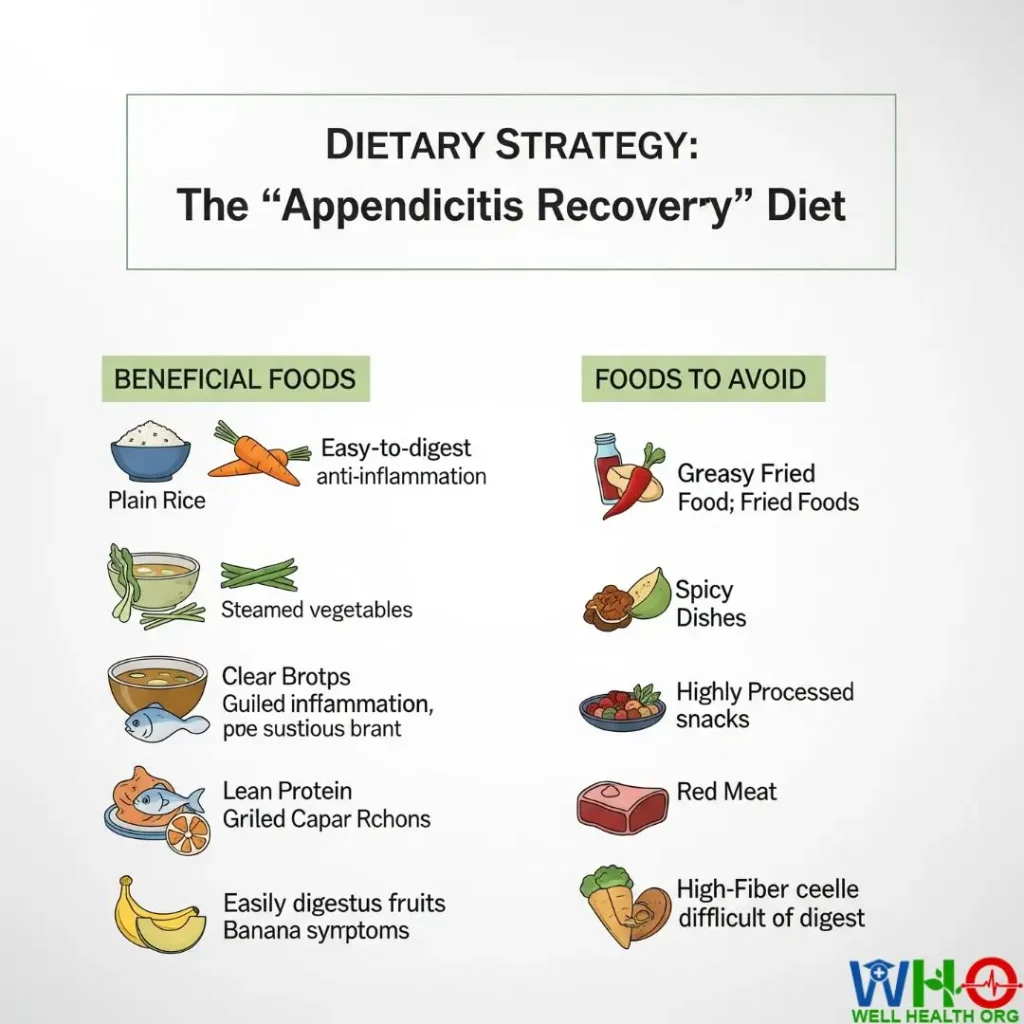
Dietary Strategy: The “Appendicitis Recovery” Diet
Whether you are managing early symptoms or recovering from an appendectomy, your digestive system is in a state of shock. It needs rest. Just as you wouldn’t run a marathon on a broken leg, you shouldn’t force a hamburger into an inflamed gut.
Phase 1: The Liquid Phase
For the first 24 hours of symptoms (or immediately post-surgery), stick to clear liquids.
- Coconut water (high in potassium).
- Diluted apple juice.
- Clear vegetable broth.
- Herbal tea.
Phase 2: The BRAT Diet Variation
As your appetite returns, follow a variation of the BRAT diet (Bananas, Rice, Applesauce, Toast). These foods are low in fiber and act as a binder, making stools firmer and less irritating to pass.
- Why Bananas? They are easy to digest and replenish potassium lost through vomiting.
- White Rice: Unlike brown rice, white rice has had the fiber husk removed. While fiber is generally good, right now, your gut needs “easy” food that doesn’t require hard work to break down.
Phase 3: The Anti-Inflammatory Rebuild
Once the acute danger has passed and you are healing, you need to reduce systemic inflammation. Introduce these foods slowly:
- Turmeric: Add turmeric to your rice or soups. Curcumin, the active ingredient, is a powerful pain reliever.
- Pineapple: Contains bromelain, an enzyme that helps reduce swelling and accelerates wound healing.
- Probiotics: If you were on antibiotics, your good gut bacteria have been wiped out. Plain yogurt or kefir can help recolonize your gut with healthy flora, preventing post-operative diarrhea.
Foods to strictly avoid:
- Fried Foods: High fat content slows down digestion.
- Red Meat: Requires heavy enzymatic activity to break down.
- Spicy Foods: Can irritate the healing lining of the gut.
- High-Fiber Vegetables: Broccoli, beans, and cabbage produce gas. Gas expansion in a tender abdomen is incredibly painful.
Post-Surgery Home Care: Where Real Recovery Happens
The surgery removes the organ, but your recovery happens at home. This is where “home remedies” are most effective and safe.

1. Splinting the Abdomen
This is a practical physical remedy. When you cough, sneeze, or laugh, the sudden pressure on your abdominal muscles can be agonizing.
- The Remedy: Keep a small, firm pillow with you at all times. When you feel a cough coming, press the pillow firmly against your stomach. This “splints” the incision, supporting the muscle and significantly reducing pain.
2. Combating Constipation Naturally
Pain medications (opioids) given during appendicitis treatment are notorious for causing constipation. Straining to have a bowel movement can damage your surgical repair.
- The Remedy: Drink warm prune juice mixed with a little butter or coconut oil. The warmth stimulates the bowel, the prune juice provides sorbitol (a natural laxative), and the fat lubricates the tract.
3. Movement as Medicine
Lying in bed all day increases the risk of blood clots and pneumonia.
- The Remedy: Gentle walking. You don’t need to power walk. Simply doing laps around your living room promotes blood flow, which speeds up healing, and helps “wake up” the intestines (peristalsis) to prevent gas build-up.
Recognizing the “Red Flags”: When Home Care Fails
You must be vigilant. Appendicitis can be tricky. Sometimes, the pain stops suddenly. This is often a bad sign—it could mean the appendix has ruptured, relieving the internal pressure, but releasing the infection.
Go to the ER immediately if:
- Rebound Tenderness: Press gently on your lower right abdomen and release quickly. If it hurts more when you let go than when you press, this is a classic sign of peritonitis.
- The “Jar” Effect: If walking, coughing, or going over a speed bump in a car causes sharp pain in the abdomen.
- Rigid Abdomen: If your stomach muscles feel hard, board-like, or tight (involuntary guarding).
- Inability to Pass Gas: This can indicate a bowel obstruction (ileus).
- Fever Spikes: A low-grade fever is common, but a sudden spike suggests the infection has spread to the bloodstream (sepsis).
Myths vs. Facts: Clearing the Confusion
There is a lot of folklore surrounding the appendix. Let’s set the record straight to keep you safe.
Myth: Jumping up and down can fix the appendix.
Fact: This is an old wives’ tale called the “heel drop test,” but it wasn’t used to fix it—it was used to diagnose it. Jumping causes pain in an inflamed appendix. It will not dislodge a blockage and could cause a rupture.
Myth: Swallowing fruit seeds causes appendicitis.
Fact: This is extremely rare. While it is theoretically possible for a small grape seed or stray popcorn kernel to block the appendix, the vast majority of cases are caused by hardened fecal matter or lymphoid hyperplasia (swelling of tissue due to viral infection). You do not need to fear fruit.
Myth: If the pain isn’t on the right side, it isn’t appendicitis.
Fact: The appendix can be in different positions (retrocecal, pelvic). Pregnant women often feel the pain higher up because the baby pushes the appendix upward. Always treat severe abdominal pain with caution, regardless of the exact location.
Prevention: Is It Possible?
Since we don’t know exactly why the blockage occurs in every case, total prevention is impossible. However, epidemiological studies show that appendicitis is much less common in countries with high-fiber diets.
The Theory: A diet high in fiber keeps the bowels moving efficiently. This prevents the formation of “fecaliths” (stones made of feces) which are a primary cause of appendix blockage.
- Actionable Tip: Once you have fully recovered (4-6 weeks post-surgery or after a scare), aim for a diet rich in vegetables, fruits, and whole grains. Keep your gut microbiome healthy with fermented foods to reduce the likelihood of intestinal inflammation.
Conclusion: A Balanced Approach to Healing
The human body is resilient, but it requires the right tools to heal. In the case of appendicitis, the most important tool is modern medicine—surgery and antibiotics. There is no replacing them.
However, the journey doesn’t end in the operating room. Your recovery is defined by how you treat your body in the days and weeks that follow. By utilizing hydration, gentle herbal teas like ginger and chamomile, anti-inflammatory foods, and smart physical care like splinting, you can turn a painful medical emergency into a smooth recovery process.
Listen to your body. If it whispers that something is wrong, pay attention. If it screams with pain, seek help. And once the danger has passed, use the natural remedies found in your home to nurture yourself back to full health. You only have one body—treat it with the expertise and care it deserves.
Medically Reviewed by Prof. Dr. Akram
Orthopedic Surgeon | Professor | Senior Medical Specialist
Prof. Dr. Akram is a distinguished surgeon with over 15 years of clinical expertise. Having served as a lead Emergency Specialist at Complex International Government Hospital, he currently leads a specialized team of 13 medical professionals at his private hospital. As a Professor at top medical universities, he ensures that every article on WellHealthOrg.com meets rigorous clinical standards.
Medical Disclaimer:
The information provided is for educational purposes only and is not a substitute for professional medical advice, diagnosis, or treatment. Always consult your physician for any medical concerns.
Our content is rigorously fact-checked by our 13-member Editorial Team under the clinical supervision of Prof. Dr. Akram.