Introduction: Understanding the Discomfort of Itchy Eyelids
Few things are as irritating as waking up with itchy, red, and irritated eyelids. That uncontrollable urge to rub your eyes can turn an otherwise normal morning into a frustrating one. Not only does it make your eyes look tired or swollen, but excessive rubbing can also worsen inflammation and even lead to infection.
- Introduction: Understanding the Discomfort of Itchy Eyelids
- Common Causes of Itchy Eyelids
- 1. Allergies: The Most Common Culprit
- Types of Allergies That Affect the Eyes
- Symptoms of Allergic Eyelid Irritation
- 2. Dry Eye Syndrome: When Your Eyes Lack Moisture
- Common Causes of Dry Eye
- How It Feels
- 3. Blepharitis: Inflammation of the Eyelids
- Typical Symptoms
- 4. Contact Dermatitis: Skin Reaction Around the Eyes
- Possible Triggers Include:
- 5. Eyestrain or Environmental Factors
- Top 5 Home Remedies to Relieve Itchy Eyelids
- 1. Apply a Cool Compress
- How to Do It:
- Pro Tip:
- 2. Use a Warm Compress
- How to Do It:
- Extra Tip:
- 3. Try Artificial Tears
- Choosing the Right Type:
- 4. Practice Gentle Eyelid Hygiene
- How to Clean Your Eyelids:
- 5. Avoid Known Irritants
- Practical Tips:
- Additional Natural Remedies to Try
- When Should You See a Doctor?
- Consult an Eye Doctor If You Experience:
- Preventing Itchy Eyelids: Long-Term Care Tips
- Conclusion: Find Lasting Relief the Natural Way
- FAQs
The good news? In most cases, itchy eyelids can be safely and effectively managed at home. You don’t always need prescription medication to find relief. With the right care, a few simple remedies, and better awareness of what’s triggering your discomfort, you can restore calm to your eyes naturally.
In this detailed guide, you’ll learn about the common causes of itchy eyelids, practical home remedies for soothing irritation, and essential preventive tips to keep your eyes feeling fresh and healthy every day.
Common Causes of Itchy Eyelids
Before jumping into treatment, it’s important to understand what’s behind the itch. Eyelid irritation isn’t random — it’s usually the body’s response to an external or internal trigger. Here are some of the most common causes.
1. Allergies: The Most Common Culprit
Allergies are one of the leading reasons people experience itchy, watery, or red eyes. When your immune system reacts to allergens — substances it mistakenly identifies as harmful — it releases histamine, a chemical that causes inflammation, itching, and swelling.
Types of Allergies That Affect the Eyes
- Seasonal Allergies (Hay Fever):
Common during spring and fall, these allergies occur when pollen from grasses, trees, and weeds fills the air. If your eyelids itch around the same time each year, pollen is likely the trigger. - Perennial Allergies:
These persist throughout the year and are often caused by dust mites, mold, or pet dander. If your symptoms never seem to take a break, indoor allergens might be to blame.
Symptoms of Allergic Eyelid Irritation
- Persistent itching
- Redness or puffiness around the eyes
- Tearing or watery eyes
- Burning or stinging sensations
If allergies are the cause, managing your environment and using soothing home remedies can make a world of difference.
2. Dry Eye Syndrome: When Your Eyes Lack Moisture
Your eyes depend on a balanced tear film — a mix of water, oils, and mucus — to stay hydrated and comfortable. When this balance is disrupted, your eyes can become dry, itchy, and irritated.
Common Causes of Dry Eye
- Aging: Tear production naturally decreases with age.
- Medical Conditions: Diabetes, thyroid disorders, or autoimmune diseases like Sjögren’s syndrome.
- Medications: Antihistamines, antidepressants, and certain blood pressure medications can dry out your eyes.
- Environment: Prolonged screen time, dry air, or wind exposure can worsen symptoms.
How It Feels
Dry eyes often cause a gritty or burning sensation, as though sand is trapped under your eyelids. This constant dryness can make your eyes itchy and tired, especially by the end of the day.
3. Blepharitis: Inflammation of the Eyelids
Blepharitis is a common but chronic condition caused by clogged oil glands at the base of your eyelashes. When these glands become blocked, bacteria can build up, leading to inflammation, redness, and itching.
Typical Symptoms
- Crusty flakes or debris on the lash line
- Swollen, red eyelids
- Burning or stinging sensation
- Itchy feeling at the lash roots
Though blepharitis rarely affects vision, it can be stubborn and recurrent. Fortunately, good eyelid hygiene and consistent care can keep it under control.
4. Contact Dermatitis: Skin Reaction Around the Eyes
Sometimes, the cause of your itchy eyelids isn’t an internal problem — it’s something you’ve put directly on your skin. Contact dermatitis occurs when your eyelids react to a substance they find irritating or allergenic.
Possible Triggers Include:
- Makeup (especially mascara or eyeliner)
- Skincare products like cleansers or moisturizers
- Shampoos or soaps
- Nail polish or hand creams (from touching your face)
- Contact lens solutions
Since eyelid skin is thinner and more sensitive than most other parts of the body, it’s particularly prone to irritation.
5. Eyestrain or Environmental Factors
In today’s digital age, screen time is another major contributor to eye irritation. Staring at phones, computers, or TVs for long hours reduces blink rate, which can dry out your eyes and make them itchy.
Likewise, air conditioning, smoke, or pollution can also strip moisture from the eye’s surface, leading to discomfort.
Top 5 Home Remedies to Relieve Itchy Eyelids
When your eyelids feel itchy, irritated, or inflamed, the first instinct is often to rub them — but that’s the worst thing you can do. Instead, try these gentle, proven home remedies to calm the irritation and restore comfort.
1. Apply a Cool Compress
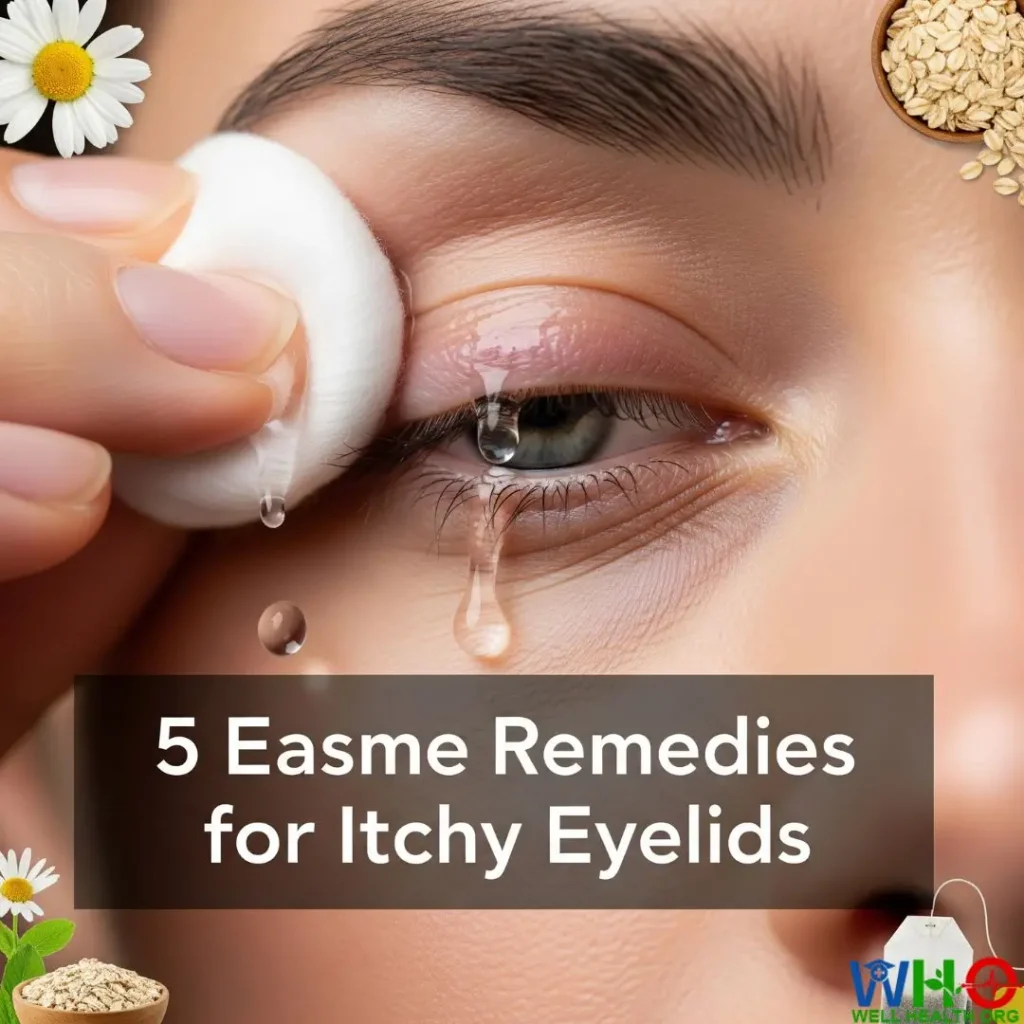
A cool compress is one of the quickest, most soothing remedies for itchy eyelids, especially when allergies are the cause. Cold temperatures help reduce swelling, constrict blood vessels, and numb irritation, providing near-instant relief.
How to Do It:
- Soak a clean, soft washcloth in cold water.
- Wring out the excess so it’s damp but not dripping.
- Place the cloth over your closed eyelids for 5–10 minutes.
- Repeat several times a day for continued comfort.
Pro Tip:
For even better results, refrigerate a few chilled cucumber slices or cotton pads soaked in rose water and place them over your eyelids. They help hydrate and cool the delicate skin around your eyes.
2. Use a Warm Compress
While a cool compress works wonders for allergies, a warm compress is the go-to solution for conditions like blepharitis or dry eye. The heat helps unclog oil glands, improving tear quality and reducing irritation.
How to Do It:
- Dip a clean cloth into warm (not hot) water.
- Wring out the excess and place it over your closed eyes for 10 minutes.
- Gently massage the eyelids afterward to encourage oil flow.
Extra Tip:
Reapply the compress if it cools down too quickly. Consistency is key — try this once or twice daily for lasting relief.
3. Try Artificial Tears
When dryness is the culprit, over-the-counter artificial tears can provide fast, effective moisture. These lubricating drops mimic natural tears, helping wash away irritants and relieve itchiness.
Choosing the Right Type:
- Go for preservative-free eye drops — they’re gentler and suitable for frequent use.
- Avoid “redness-relief” formulas, as overuse can worsen irritation.
Use them several times a day, especially if you spend long hours in front of screens or in dry environments.
4. Practice Gentle Eyelid Hygiene
If blepharitis or debris buildup is causing irritation, keeping your eyelids clean is essential. Regular cleansing prevents oil gland blockages, removes bacteria, and reduces inflammation.
How to Clean Your Eyelids:
- Mix a small amount of baby shampoo or gentle eyelid cleanser with warm water.
- Dip a cotton pad or soft cloth into the solution.
- Gently wipe your eyelids and lash line, removing any crusts or oil.
- Rinse thoroughly with warm water and pat dry.
Do this once or twice daily, especially in the morning and before bed, to maintain healthy eyelids.
5. Avoid Known Irritants
One of the most effective “remedies” is simply avoidance. Once you identify what’s triggering your irritation, removing the cause can prevent future flare-ups.
Practical Tips:
- Switch to hypoallergenic products: Choose fragrance-free and ophthalmologist-tested makeup or skincare.
- Clean your environment: Use an air purifier to reduce pollen and dust, and wash bedding weekly in hot water.
- Limit screen time: Follow the 20-20-20 rule — every 20 minutes, look 20 feet away for 20 seconds.
- Avoid rubbing your eyes: It may feel good temporarily, but it can worsen inflammation and spread bacteria.
Additional Natural Remedies to Try
If you prefer natural treatments, several gentle, kitchen-friendly remedies can provide relief:
- Aloe Vera Gel: Apply a tiny amount (avoiding direct contact with eyes) to soothe inflammation.
- Cold Milk Compress: Soak cotton pads in chilled milk and place them over your eyelids for 5–10 minutes. The lactic acid soothes irritation.
- Green Tea Bags: Used tea bags, once cooled, make excellent compresses. The antioxidants help calm puffiness and itching.
- Coconut Oil: Acts as a natural moisturizer for dry eyelids. Apply a thin layer before bed.
When Should You See a Doctor?
While most cases of itchy eyelids are harmless and respond to home remedies, medical attention may be necessary in some situations.
Consult an Eye Doctor If You Experience:
- Severe or persistent pain around the eyes
- Blurred or changing vision
- Extreme light sensitivity
- Foreign-body sensation (feeling like something is stuck in your eye)
- Thick, yellow-green discharge, which may indicate an infection such as conjunctivitis (pink eye)
If symptoms don’t improve after a week of home care, a professional diagnosis is recommended. Your doctor may prescribe medicated ointments, antibiotic eye drops, or allergy treatments tailored to your condition.
Preventing Itchy Eyelids: Long-Term Care Tips
Relieving symptoms is one thing — preventing them from coming back is another. Here are some everyday habits to keep your eyelids healthy and irritation-free:
- Maintain good eyelid hygiene: Regular cleaning keeps bacteria and oil buildup at bay.
- Use clean makeup tools: Replace mascara every 3 months and avoid sharing cosmetics.
- Stay hydrated: Proper hydration supports tear production.
- Get enough sleep: Fatigue worsens eye irritation and dryness.
- Protect your eyes outdoors: Wear sunglasses to shield against pollen and wind.
Consistent, mindful care can significantly reduce your chances of recurring itchy eyelids.
Conclusion: Find Lasting Relief the Natural Way
Itchy eyelids might be small in size but can cause major discomfort. Thankfully, relief often lies in simple, natural home remedies that you can start using today. From cool compresses and artificial tears to proper eyelid hygiene, these methods work gently yet effectively to restore comfort and health to your eyes.
By identifying the root cause — whether it’s allergies, dryness, or irritation — and making a few small changes to your routine, you can enjoy clearer, calmer eyes without constant itching or irritation.
Remember, your eyes deserve care and attention just like the rest of your body — treat them gently, keep them clean, and they’ll reward you with comfort and clarity every day.
FAQs
1. Can itchy eyelids be a sign of an infection?
Yes, especially if accompanied by discharge, redness, or swelling. In such cases, consult a doctor for proper diagnosis and treatment.
2. How long do itchy eyelids usually last?
Mild cases often improve within a few days of home treatment, while chronic conditions like blepharitis may require consistent eyelid hygiene.
3. Are over-the-counter allergy eye drops safe?
Most are safe for short-term use, but preservative-free drops are best for sensitive eyes or frequent application.
4. Can makeup cause itchy eyelids?
Absolutely. Old or low-quality eye makeup can trigger allergic reactions or bacterial irritation. Always check expiration dates and remove makeup thoroughly.
5. Can I prevent itchy eyelids permanently?
While you can’t always avoid triggers, maintaining clean eyelids, managing allergies, and protecting your eyes from irritants can greatly reduce flare-ups.
Medically Reviewed by Prof. Dr. Akram
Orthopedic Surgeon | Professor | Senior Medical Specialist
Prof. Dr. Akram is a distinguished surgeon with over 15 years of clinical expertise. Having served as a lead Emergency Specialist at Complex International Government Hospital, he currently leads a specialized team of 13 medical professionals at his private hospital. As a Professor at top medical universities, he ensures that every article on WellHealthOrg.com meets rigorous clinical standards.
Medical Disclaimer:
The information provided is for educational purposes only and is not a substitute for professional medical advice, diagnosis, or treatment. Always consult your physician for any medical concerns.
Our content is rigorously fact-checked by our 13-member Editorial Team under the clinical supervision of Prof. Dr. Akram.