
Introduction: A Simple, Natural Path to Pain Relief
Pain is one of the most common challenges people face in daily life. Whether it’s the dull ache after sitting too long at a desk, tight shoulders from stress, or soreness after a tough workout, the search for quick, effective relief is constant. While painkillers may seem like the easiest option, they often come with side effects and only temporary relief. Fortunately, nature offers a time-tested, safe, and incredibly effective alternative — the hot compress.
- Introduction: A Simple, Natural Path to Pain Relief
- The Science Behind Heat Therapy
- Key Benefits of Heat Therapy
- Top Benefits of Using a Hot Compress
- 1. Muscle Pain Relief
- 2. Reduced Joint Stiffness
- 3. Soothing Eye Discomfort
- 4. Safe and Accessible Home Remedy
- How to Make a Hot Compress at Home
- Wet Compress Method: Classic and Effective
- Step-by-Step Guide
- Pro Tip:
- Dry Compress Method: Convenient and Reusable
- How to Make a Dry Compress
- When to Use a Hot Compress
- Ideal Uses for Heat Therapy
- When NOT to Use a Hot Compress
- Important Safety Tips for Using a Hot Compress
- Comparing Hot vs. Cold Compresses
- Enhancing Your Hot Compress Therapy
- Alternative Remedies to Pair with a Hot Compress
- When to Seek Professional Help
- Embrace the Healing Power of Warmth
- FAQs
A hot compress is a simple, centuries-old method that uses warmth to relieve pain, reduce stiffness, and promote healing. It’s affordable, easy to prepare at home, and remarkably versatile. In this comprehensive guide, you’ll discover everything you need to know about using hot compresses — from the science behind heat therapy to step-by-step preparation methods, safety precautions, and expert-backed tips for maximum benefit.
The Science Behind Heat Therapy
At first glance, applying heat to a sore area might seem too simple to be effective. Yet, this humble remedy has solid scientific grounding. Heat therapy works by stimulating blood flow to the targeted area, which in turn increases oxygen and nutrient delivery to damaged tissues. This process not only helps muscles relax but also supports the body’s natural healing mechanisms.

When muscles are tight or overworked, they restrict circulation and trap metabolic waste, causing stiffness and pain. By applying heat, you dilate blood vessels, allowing fresh, oxygen-rich blood to wash through the area, clearing away toxins and bringing relief.
Key Benefits of Heat Therapy
- Improved Circulation: Enhanced blood flow helps the body deliver healing nutrients faster.
- Relaxed Muscles: Warmth loosens muscle fibers, easing spasms and tightness.
- Pain Reduction: Heat interrupts pain signals, providing noticeable comfort.
- Stress Relief: Beyond physical pain, warmth soothes the nervous system, promoting relaxation.
In short, applying heat helps your body work more efficiently to repair itself — naturally and effectively.
Top Benefits of Using a Hot Compress
A hot compress isn’t just about warmth; it’s a multi-functional home remedy with a range of proven health benefits. Let’s break down some of the most common uses and how they work.

1. Muscle Pain Relief
Whether it’s post-workout soreness or chronic muscle tension, heat therapy is your friend. When applied to tired muscles, a hot compress enhances elasticity and flexibility, making movement easier and pain-free. For example, if you wake up with a stiff neck or back, applying a warm compress can relax the area within minutes.
2. Reduced Joint Stiffness
If you suffer from osteoarthritis or other degenerative joint conditions, you’re likely familiar with that morning stiffness that makes even small movements uncomfortable. Applying heat improves the lubrication of joints, enhances flexibility, and reduces discomfort — particularly when used before physical activity or stretching.
3. Soothing Eye Discomfort
For minor eye issues like styes, dry eyes, or swollen eyelids, a warm compress can work wonders. The gentle heat helps open clogged oil glands along the eyelids, improving tear flow and reducing inflammation. Just remember to use a lower temperature and sterile materials for eye applications.
4. Safe and Accessible Home Remedy
Perhaps one of its biggest advantages is accessibility. You don’t need fancy tools — just water, a towel, or even a sock filled with rice. It’s a cost-effective, medication-free way to manage pain and tension from the comfort of your home.
How to Make a Hot Compress at Home
You don’t need to buy anything special to create a hot compress — it can be made using everyday household items. Here are two simple methods: wet and dry.
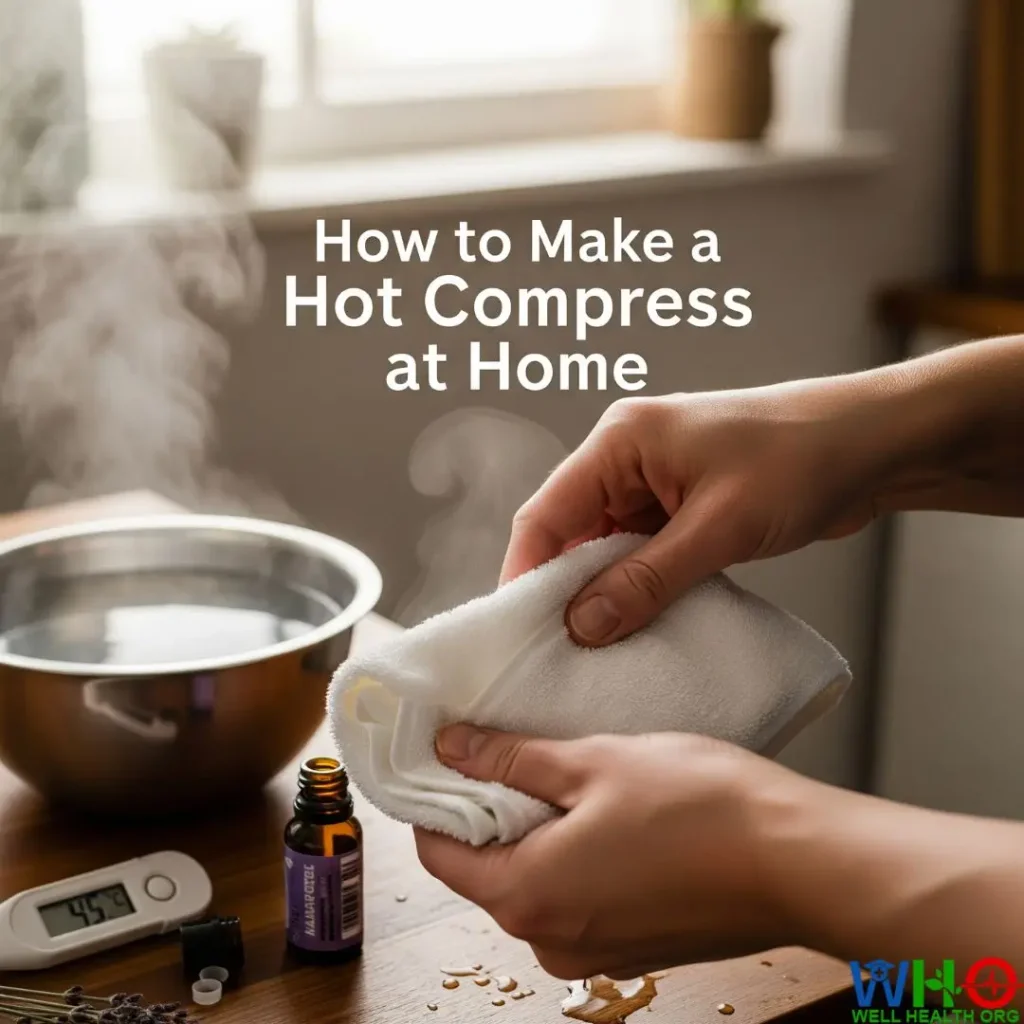
Wet Compress Method: Classic and Effective
The wet compress method is the most traditional approach and particularly effective for muscle pain, stiffness, and certain eye conditions.
Step-by-Step Guide
- Gather Your Materials:
You’ll need a clean cloth or towel, a bowl, and warm water. A washcloth works perfectly for small areas like the neck or face, while a small towel is ideal for larger muscles like the back or thighs. - Heat the Water:
Fill the bowl with comfortably warm water — not boiling. The ideal temperature is around 120°F (49°C) for most adults. For sensitive skin or facial use, aim for around 100°F (37.8°C). - Soak and Wring Out the Cloth:
Submerge your cloth, let it absorb the heat, then carefully wring out the excess water until it’s damp but not dripping. - Apply the Compress:
Fold the cloth and place it gently over the sore area. Keep it in place for 15–20 minutes, reheating as needed to maintain warmth.
Pro Tip:
Add a few drops of lavender or eucalyptus essential oil to the water for added relaxation and mild anti-inflammatory benefits.
Dry Compress Method: Convenient and Reusable
If you prefer to avoid water or want something that stays warm longer, a dry compress is an excellent option.
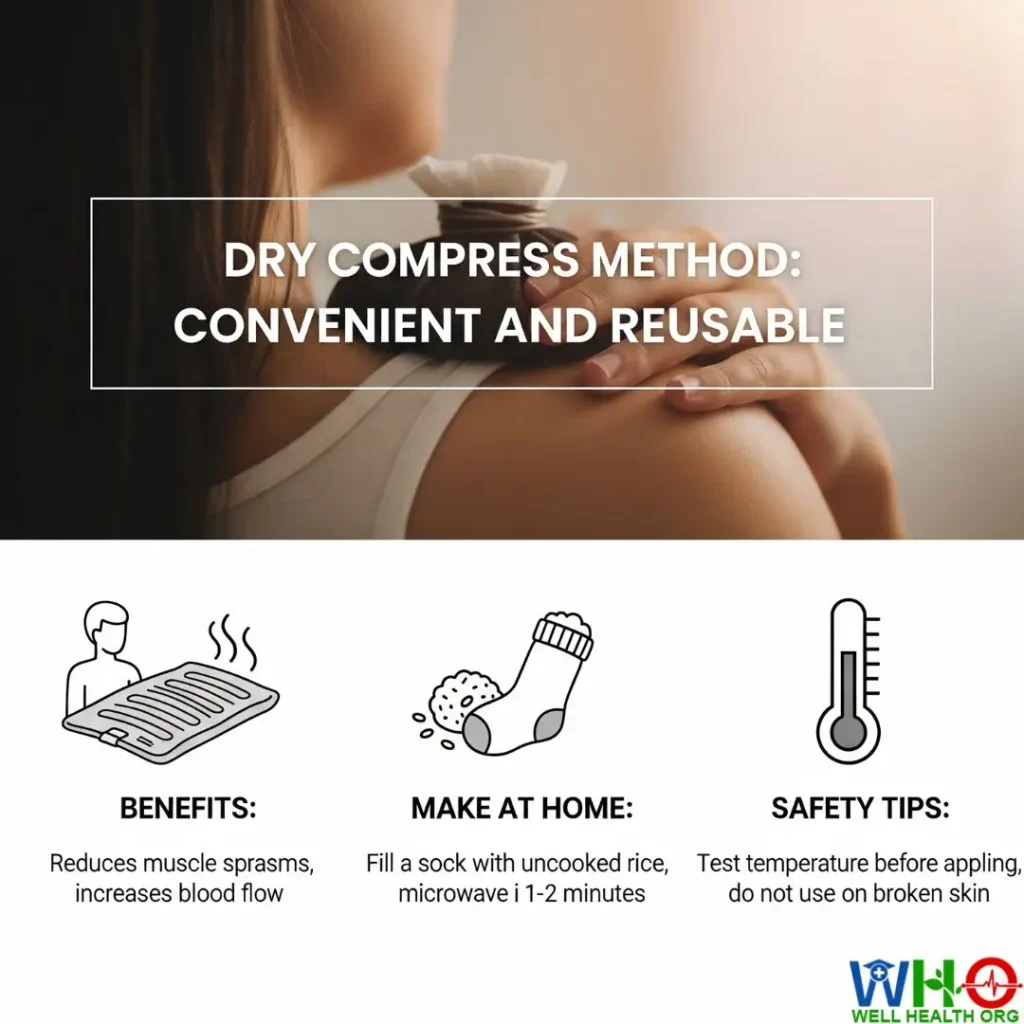
How to Make a Dry Compress
- Rice Sock Compress:
Fill a clean cotton sock halfway with uncooked rice, tie it securely, and heat it in the microwave for 30–60 seconds. Test it on your wrist before applying it to your body. - Heated Gel Pack:
Store-bought gel packs are reusable and maintain warmth for an extended period. Simply heat them as directed and wrap them in a thin towel before applying.
Both versions deliver soothing, targeted warmth that can be used for muscle pain, cramps, or general relaxation.
When to Use a Hot Compress
Knowing when to use heat therapy is as important as knowing how to use it. A hot compress is best suited for chronic or lingering pain rather than fresh injuries.
Ideal Uses for Heat Therapy
- Chronic Muscle Pain: Persistent tension in the shoulders, back, or neck often responds well to consistent heat therapy.
- Joint Stiffness: Great before stretching, yoga, or physical therapy.
- Muscle Spasms: Helps muscles relax and reduces sudden contractions.
- Menstrual Cramps: Applying a warm compress to the lower abdomen provides fast, soothing relief.
- Eye Irritation or Styes: Gentle heat can clear blocked glands and reduce inflammation.
Use heat to loosen and relax — never to treat fresh swelling or inflammation.
When NOT to Use a Hot Compress
Heat isn’t always the answer. In fact, using it at the wrong time can worsen pain or swelling.
Avoid heat therapy if:
- The injury occurred within the past 48 hours.
- There’s visible swelling, redness, or bruising.
- You have open wounds or skin infections in the area.
- You suffer from poor circulation, diabetes, or nerve damage, as you might not feel burns developing.
- You’re experiencing acute inflammation — in such cases, cold therapy is the better choice.
Important Safety Tips for Using a Hot Compress
To make sure your heat therapy remains beneficial and safe, follow these essential precautions:
- Test the Temperature:
Always touch the compress to your wrist before applying it elsewhere. It should feel warm but never hot enough to burn. - Use a Barrier:
If you’re using a gel pack or rice sock, wrap it in a thin towel to prevent direct skin contact. - Avoid Overuse:
Limit each session to about 15–20 minutes. Allow the skin to cool down between applications. - Don’t Apply Over Open Wounds:
Applying heat to cuts or sores can increase the risk of infection. - Consult Your Doctor:
If you have diabetes, eczema, or circulatory problems, get medical advice before trying heat therapy.
Comparing Hot vs. Cold Compresses
It’s easy to confuse when to use hot or cold compresses. Here’s a quick comparison:
| Condition | Best Compress Type | Why It Works |
|---|---|---|
| New injury (within 48 hrs) | Cold | Reduces swelling and numbs pain |
| Chronic pain or stiffness | Hot | Improves circulation and relaxes muscles |
| Muscle spasms | Hot | Loosens tight muscle fibers |
| Swelling or inflammation | Cold | Constricts blood vessels |
| Menstrual cramps | Hot | Soothes muscle contractions |
Using both therapies appropriately can make recovery faster and more effective.
Enhancing Your Hot Compress Therapy
Want to make your hot compress experience even more therapeutic? Try these add-ons:
- Add Essential Oils: Lavender for relaxation, peppermint for cooling contrast, or chamomile for gentle soothing.
- Practice Deep Breathing: Combine heat therapy with mindful breathing to calm your body and mind.
- Stretch Afterwards: Once your muscles are relaxed, do light stretches to prevent future stiffness.
- Hydrate: Heat draws blood and fluids to the surface, so replenish your body by drinking water afterward.
Alternative Remedies to Pair with a Hot Compress
While heat therapy is powerful on its own, combining it with other natural treatments can amplify results:
- Massage: Apply gentle pressure after heating to release knots.
- Epsom Salt Baths: Magnesium in Epsom salt helps relax muscles and ease pain.
- Gentle Exercise: Activities like yoga or swimming keep joints flexible and pain-free.
- Anti-Inflammatory Diet: Include foods like turmeric, ginger, and fatty fish to reduce chronic inflammation.
When to Seek Professional Help
If your pain doesn’t improve after several days of self-care or keeps returning, consult a healthcare professional. You might need a physical exam or imaging to rule out deeper issues like nerve compression, arthritis progression, or chronic muscle imbalance.
Embrace the Healing Power of Warmth
A hot compress is far more than just a warm cloth — it’s a powerful ally in your journey toward natural pain relief. By improving circulation, easing stiffness, and promoting relaxation, it helps your body heal itself from within. The next time you feel those familiar aches or cramps coming on, skip the pill bottle and reach for the warmth instead.
Simple, safe, and incredibly effective — that’s the timeless magic of heat therapy.
FAQs
1. Can I sleep with a hot compress on?
No, you should never sleep with a hot compress, as prolonged exposure can cause burns or irritation.
2. How often can I use a hot compress?
You can safely use it 2–3 times a day, leaving enough time between sessions for the skin to cool down.
3. Can I reuse the same rice sock?
Absolutely! Just store it in a dry place. Replace it every few months if it starts smelling or losing heat efficiency.
4. Is heat therapy safe during pregnancy?
Yes, when used carefully. A warm compress can ease back pain or cramps, but avoid applying excessive heat to the abdomen. Always consult your doctor first.
5. What if my pain gets worse after using heat?
If pain increases or swelling develops, stop immediately and switch to a cold compress or consult a doctor.
Medically Reviewed by Prof. Dr. Akram
Orthopedic Surgeon | Professor | Senior Medical Specialist
Prof. Dr. Akram is a distinguished surgeon with over 15 years of clinical expertise. Having served as a lead Emergency Specialist at Complex International Government Hospital, he currently leads a specialized team of 13 medical professionals at his private hospital. As a Professor at top medical universities, he ensures that every article on WellHealthOrg.com meets rigorous clinical standards.
Medical Disclaimer:
The information provided is for educational purposes only and is not a substitute for professional medical advice, diagnosis, or treatment. Always consult your physician for any medical concerns.
Our content is rigorously fact-checked by our 13-member Editorial Team under the clinical supervision of Prof. Dr. Akram.







