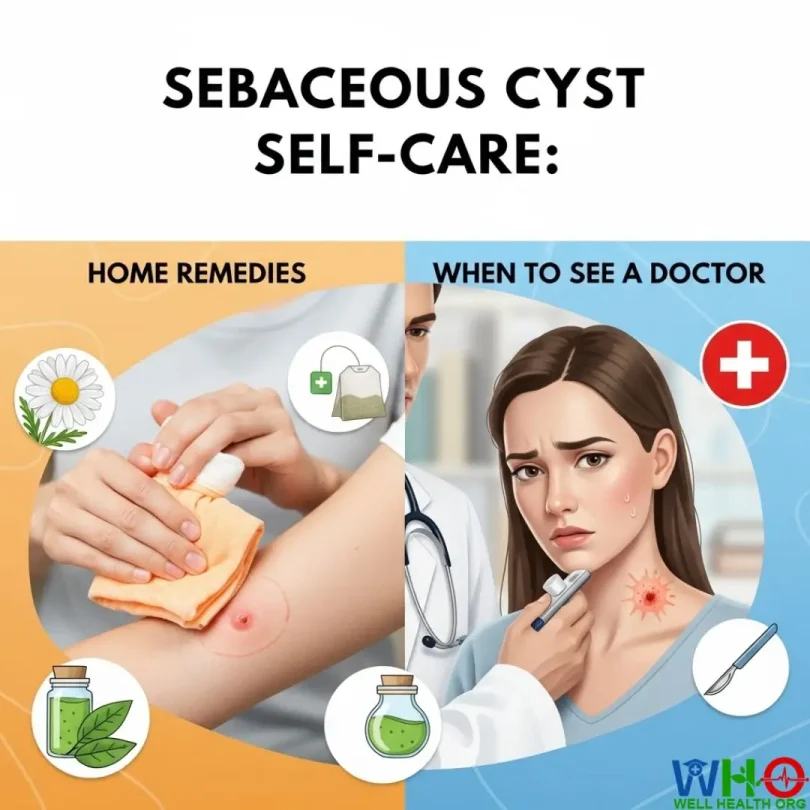
Sebaceous Cyst Self Care
Finding an unfamiliar lump under your skin can be worrying. It’s natural to imagine the worst, but in most cases, these bumps are completely harmless. One of the most common causes is something called a sebaceous cyst—a benign, slow-growing, fluid-filled sac just under the surface of your skin.
- Sebaceous Cyst Self Care
- Understanding Sebaceous (Epidermal Inclusion) Cysts
- Typical Symptoms of a Sebaceous Cyst
- Safe Sebaceous Cyst Self-Care at Home
- 1. Keep the Area Clean
- 2. Use a Warm Compress
- 3. Avoid Squeezing or Popping
- 4. Apply Over-the-Counter Anti-Inflammatory Creams
- 5. Choose Loose, Breathable Clothing
- Natural Remedies for Sebaceous Cysts
- Tea Tree Oil
- Aloe Vera
- Apple Cider Vinegar (ACV)
- Witch Hazel
- When to See a Doctor
- Seek medical attention if:
- Incision and Drainage (I&D)
- Surgical Excision
- Corticosteroid Injection
- Antibiotics
- Can Sebaceous Cysts Be Prevented?
- Understanding the Difference Between a Cyst, Boil, and Lipoma
- Complications to Watch Out For
- Your Path to Healthier Skin
- Frequently Asked Questions (FAQs)
- Final Thoughts
Though these cysts are not dangerous, they can be uncomfortable, unsightly, or even painful when irritated. Many people search for safe, natural ways to manage them at home, without resorting to risky “DIY removal” techniques that can cause infection or scarring.
This guide will walk you through everything you need to know about sebaceous cyst self-care: what they are, how to manage them safely, when to seek medical help, and simple habits to reduce the chances of getting them again.
Understanding Sebaceous (Epidermal Inclusion) Cysts
Despite the name, most “sebaceous cysts” aren’t truly sebaceous. The medical term for what most people experience is epidermal inclusion cyst (or epidermoid cyst). True sebaceous cysts—those filled with oily sebum—are actually quite rare. However, the term sebaceous cyst remains widely used, so we’ll continue using it for simplicity.
A sebaceous cyst forms when skin cells that should shed naturally become trapped beneath the surface. These trapped cells produce keratin—a protein that gives structure to hair, nails, and skin—and this keratin accumulates inside a thin sac or capsule, creating a small lump.
Common triggers include:
- Blocked hair follicles or pores
- Minor skin injuries or surgical wounds
- Chronic acne or oily skin
- Friction or irritation (from clothing or shaving)
- Genetic conditions that predispose people to cysts
Most cysts develop slowly and remain stable in size. They can range from a few millimeters to several centimeters and usually feel firm but movable under the skin.
Typical Symptoms of a Sebaceous Cyst
Recognizing a sebaceous cyst is fairly easy once you know what to look for:
- A small, round, dome-shaped bump just beneath the skin
- A visible “punctum” (small dark dot) at the center—this is the blocked pore
- Slow, gradual growth over weeks or months
- Smooth, mobile texture—it can usually be moved slightly under the skin
- Usually painless, unless irritated or infected
In some cases, the cyst becomes inflamed. When that happens, it can swell, turn red, feel warm, and become tender to touch. If infection develops, yellow or foul-smelling pus may drain from it.
Sebaceous cysts most commonly appear on:
- The face and neck
- The scalp
- The chest, shoulders, and back
- The genitals or upper thighs
They’re not contagious and, importantly, they’re not cancerous. However, any lump that changes rapidly or looks unusual should always be checked by a doctor to rule out other conditions.
Safe Sebaceous Cyst Self-Care at Home
If your cyst is small, not painful, and shows no signs of infection, there’s usually no need for urgent medical treatment. Gentle home care can help reduce discomfort and inflammation while you monitor the cyst.
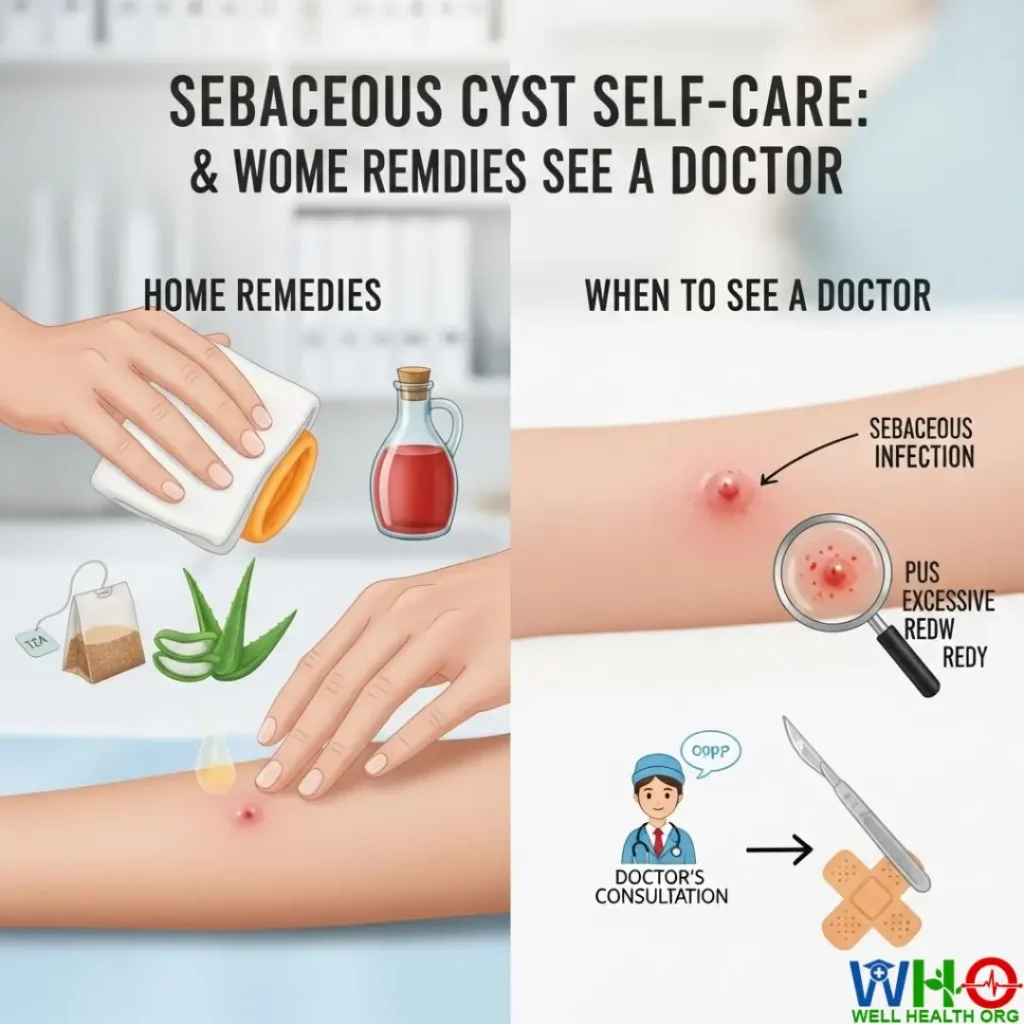
Here’s how to do it safely:
1. Keep the Area Clean
Cleanliness is the foundation of cyst care. Gently wash the affected area twice daily using lukewarm water and a mild, fragrance-free cleanser. Avoid harsh soaps, scrubs, or alcohol-based products—they can irritate your skin and make inflammation worse.
After washing, pat the area dry with a clean towel. Never rub, as friction can aggravate the cyst.
2. Use a Warm Compress
One of the most effective and soothing home remedies is a warm compress.
How to do it:
- Soak a clean cloth in comfortably warm (not hot) water.
- Wring out the excess and place it over the cyst for 10–15 minutes.
- Repeat this 3–4 times a day.
Warmth improves blood circulation to the area, helps reduce swelling, and can encourage the cyst to drain naturally over time. However, never force or squeeze drainage—allow the process to occur naturally if it happens at all.
3. Avoid Squeezing or Popping
It’s tempting to treat a cyst like a pimple—but resist that urge. Trying to pop or drain a cyst yourself can lead to serious complications:
- It can push bacteria deeper into the skin, causing infection.
- The cyst wall may rupture internally, leading to a painful, inflamed lump called a granuloma.
- Scarring and discoloration often occur after squeezing.
- The cyst usually comes back because the sac (capsule) remains inside.
For these reasons, dermatologists strongly advise against “DIY extraction.” Only trained medical professionals should perform drainage or excision in sterile conditions.
4. Apply Over-the-Counter Anti-Inflammatory Creams
If the area is mildly inflamed, you can apply a thin layer of an over-the-counter (OTC) hydrocortisone cream once daily for a few days. This can help reduce redness and irritation.
Alternatively, a topical antibiotic cream (such as one containing bacitracin or mupirocin) may be applied if the cyst looks irritated but not severely infected.
Always follow package instructions and avoid prolonged use without consulting a doctor.
5. Choose Loose, Breathable Clothing
If your cyst is located in an area prone to friction—like under a bra strap, waistband, or collar—wear loose-fitting, breathable fabrics. Reducing friction helps prevent inflammation and discomfort, allowing the cyst to settle naturally.
Natural Remedies for Sebaceous Cysts
Some people prefer natural or home-based approaches. While these remedies won’t make a cyst disappear overnight, they can support comfort and skin health:
Tea Tree Oil
Known for its natural antibacterial properties, tea tree oil can help reduce the risk of infection. Dilute a few drops with a carrier oil (like coconut or jojoba oil) and apply gently once daily.
Aloe Vera
Aloe vera gel cools and soothes irritated skin. It may help calm mild inflammation around the cyst area. Use pure, additive-free aloe gel for best results.
Apple Cider Vinegar (ACV)
Some people use diluted apple cider vinegar (one part ACV to three parts water) as a mild antiseptic wipe. However, avoid using ACV on open or irritated cysts—it can sting and worsen inflammation.
Witch Hazel
This natural astringent may help reduce oil buildup on the skin. Apply it gently using a cotton ball once daily to help keep pores clear.
When to See a Doctor
Most sebaceous cysts are harmless, but certain signs mean it’s time to get professional help.
Seek medical attention if:
- The cyst grows rapidly or becomes unusually large.
- There’s severe redness, warmth, or pain (possible infection).
- The cyst drains thick, yellow, or foul-smelling fluid.
- You develop a fever or feel unwell.
- The cyst is located on your face or genitals, where scarring or discomfort may be an issue.
- You’ve tried home care for several weeks with no improvement.
A dermatologist can confirm the diagnosis and discuss treatment options. These may include:
Incision and Drainage (I&D)
The doctor numbs the area and makes a small cut to release the trapped material. This provides quick relief, but the cyst may return since the capsule remains intact.
Surgical Excision
This involves removing both the contents and the entire cyst wall. It’s the most effective long-term solution to prevent recurrence.
Corticosteroid Injection
For inflamed cysts, your doctor may inject a small dose of corticosteroid directly into the area to reduce swelling and tenderness.
Antibiotics
If infection is present, oral or topical antibiotics may be prescribed.
Can Sebaceous Cysts Be Prevented?
While you can’t prevent every cyst—especially if you’re genetically prone—simple skincare habits can reduce your risk:
- Maintain a Consistent Skincare Routine: Cleanse your skin regularly to prevent oil and dead cell buildup that can block pores.
- Exfoliate Gently: Use mild exfoliants (like salicylic acid or lactic acid) once or twice a week to remove dead skin cells.
- Avoid Heavy, Greasy Products: Choose non-comedogenic (non-pore-clogging) lotions, sunscreens, and makeup.
- Manage Acne Properly: Uncontrolled acne increases the risk of follicle blockage. Seek dermatologic treatment if necessary.
- Avoid Picking at Your Skin: Scratching or popping pimples can introduce bacteria and increase the likelihood of cyst formation.
- Stay Hydrated and Eat Well: Balanced nutrition supports skin health and healing.
Understanding the Difference Between a Cyst, Boil, and Lipoma
People often confuse cysts with other skin lumps. Here’s how to tell them apart:
| Type | Texture & Look | Pain | Common Locations | Treatment |
|---|---|---|---|---|
| Sebaceous Cyst | Smooth, round, movable lump with central dot | Usually painless unless infected | Face, neck, back, chest | Warm compress, professional removal |
| Boil (Furuncle) | Red, swollen, pus-filled bump | Painful and tender | Any area with hair follicles | Drains on its own or needs antibiotics |
| Lipoma | Soft, rubbery, movable lump under the skin | Painless | Shoulders, arms, trunk | Usually none needed unless large |
Complications to Watch Out For
Though rare, untreated cysts can lead to complications:
- Infection: When bacteria enter the cyst, it can form an abscess.
- Rupture: A cyst may burst under the skin, causing inflammation.
- Scarring: Frequent irritation or improper treatment can leave permanent marks.
- Recurrence: If the cyst wall isn’t completely removed, it can regrow.
If you notice any of these issues, don’t attempt to handle them yourself—seek medical evaluation promptly.
Your Path to Healthier Skin
Sebaceous cysts may be common, but they don’t have to disrupt your life. Understanding what they are—and more importantly, what not to do—can make a world of difference in your healing and confidence.
Gentle hygiene, warm compresses, and patience are often all that’s needed for small, non-infected cysts. But if your cyst becomes painful, swollen, or starts to drain, it’s best to let a healthcare professional step in.
With proper self-care and smart prevention, you can manage these harmless skin bumps safely and effectively—without the risks of at-home popping or infection.
Frequently Asked Questions (FAQs)
1. Can I remove a sebaceous cyst myself?
No. Trying to pop or cut a cyst yourself can cause infection, inflammation, and scarring. Always seek medical removal for safe results.
2. How long does it take for a cyst to go away naturally?
Some cysts may shrink over several weeks or months, but others remain until professionally removed.
3. Will a sebaceous cyst turn into cancer?
Sebaceous cysts are benign and almost never become cancerous. However, any lump that changes shape, color, or grows rapidly should be checked by a doctor.
4. Can diet affect cyst formation?
A diet high in processed foods or oils might increase skin oiliness in some people. Eating a balanced diet rich in fruits, vegetables, and omega-3 fats supports healthier skin.
5. Do essential oils work for cysts?
Some essential oils like tea tree oil may reduce mild inflammation or bacterial risk, but they won’t remove the cyst. Always dilute them properly before applying to the skin.
Final Thoughts
Sebaceous cysts are common, harmless, and manageable. By combining gentle hygiene, warm compresses, and patience, you can minimize discomfort while keeping your skin healthy. When in doubt—or if the cyst becomes painful or infected—see a healthcare professional for proper care.
Your skin heals best when you treat it gently, stay informed, and resist the urge to take drastic measures.
Medically Reviewed by Prof. Dr. Akram
Orthopedic Surgeon | Professor | Senior Medical Specialist
Prof. Dr. Akram is a distinguished surgeon with over 15 years of clinical expertise. Having served as a lead Emergency Specialist at Complex International Government Hospital, he currently leads a specialized team of 13 medical professionals at his private hospital. As a Professor at top medical universities, he ensures that every article on WellHealthOrg.com meets rigorous clinical standards.
Medical Disclaimer:
The information provided is for educational purposes only and is not a substitute for professional medical advice, diagnosis, or treatment. Always consult your physician for any medical concerns.
Our content is rigorously fact-checked by our 13-member Editorial Team under the clinical supervision of Prof. Dr. Akram.