
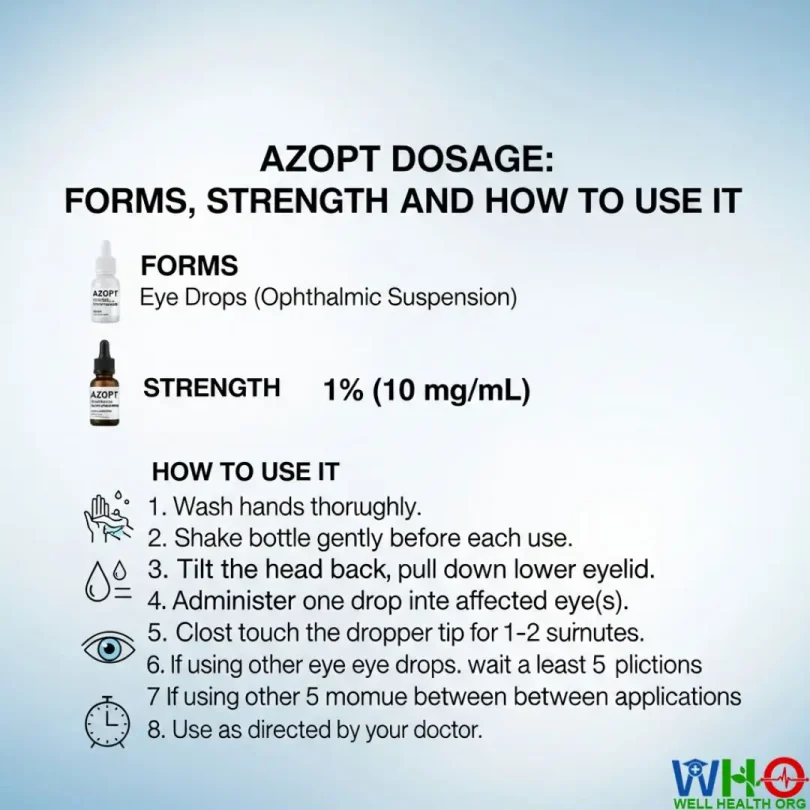
Managing eye conditions like ocular hypertension and glaucoma often requires long-term use of prescription medications. One of the commonly prescribed treatments is Azopt (brinzolamide), an ophthalmic suspension designed to reduce intraocular pressure. Getting the dosage right is essential because consistent use not only protects your vision but also minimizes potential side effects.
- What is Azopt and Why is Dosage Important?
- Forms and Strengths of Azopt
- Form of Azopt
- Strength of Azopt
- Standard Dosage Instructions for Azopt
- For Adults with Ocular Hypertension or Open-Angle Glaucoma
- Combination Therapy
- Step-by-Step Guide: How to Use Azopt Eye Drops Correctly
- 1. Wash Your Hands Thoroughly
- 2. Shake the Bottle
- 3. Get Into Position
- 4. Administer the Drop
- 5. Close and Press
- 6. Recap and Store Properly
- 7. If You Use Contact Lenses
- What to Do If You Miss a Dose
- Potential Side Effects of Azopt
- Common Side Effects
- Less Common but Possible Side Effects
- Serious Side Effects
- Precautions Before Using Azopt
- Allergies
- Medical History
- Children and Older Adults
- Drug Interactions with Azopt
- Other Eye Drops
- Oral Medications
- Other Drug Classes to Watch
- What to Do in Case of Overdose
- If You Use Too Much
- If You Accidentally Swallow Azopt
- How to Store Azopt Safely
- Practical Tips for Successful Long-Term Use of Azopt
- When to Call Your Doctor
- Your Next Steps with Azopt
- Conclusion
- FAQs About Azopt Dosage and Use
In this comprehensive guide, we’ll cover everything you need to know about Azopt dosage, forms, and strengths, along with detailed instructions on how to use it correctly. We’ll also explore what to do if you miss a dose, possible side effects, storage tips, and precautions to keep in mind. By the end, you’ll feel confident in using Azopt effectively and safely as part of your eye care routine.
What is Azopt and Why is Dosage Important?
Azopt, the brand name for brinzolamide ophthalmic suspension 1%, belongs to a class of drugs called carbonic anhydrase inhibitors. Its primary role is to reduce the production of fluid inside the eye (aqueous humor), which in turn lowers intraocular pressure (IOP). High eye pressure is one of the biggest risk factors for developing glaucoma or experiencing worsening vision loss from ocular hypertension.
If left untreated, increased eye pressure can damage the optic nerve, eventually leading to irreversible vision impairment or blindness. That’s why accurate dosage and consistent use of Azopt are critical—using too little may render it ineffective, while using too much may increase the risk of side effects.
Eye drops might seem simple, but their effectiveness largely depends on how well patients follow dosage instructions. Many people underestimate the importance of shaking the suspension properly, applying the drops correctly, and spacing them from other medications. Even small mistakes, like touching the bottle tip to the eye, can lead to contamination or infections.
Forms and Strengths of Azopt
Before discussing dosage in detail, let’s look at how Azopt is made available and why these details matter for patients.
Form of Azopt
Azopt comes as an ophthalmic suspension, which is a liquid with tiny particles of medication evenly dispersed throughout. Because it is a suspension (not a solution), the particles tend to settle at the bottom of the bottle when left standing. This is why shaking the bottle well before every use is absolutely necessary—otherwise, the first few drops may contain too little medication, and the later ones too much.
The medication is packaged in sterile plastic dropper bottles, typically in 10 mL and 15 mL sizes, making it easy to administer the correct amount without requiring any additional tools.
Strength of Azopt
Unlike some medications that come in multiple strengths, Azopt is available in only one strength: 1%. This means each milliliter (mL) of suspension contains 10 milligrams of brinzolamide, the active ingredient.
Since all bottles contain the same concentration, the number of drops per day—not the strength—controls the dosage. This simplifies prescribing for doctors and ensures consistent treatment outcomes for patients.
Standard Dosage Instructions for Azopt
The official manufacturer’s guidelines provide a starting point, but your doctor will tailor the dosage to your condition, response, and overall health.
For Adults with Ocular Hypertension or Open-Angle Glaucoma
- Recommended dose: One drop in the affected eye (or eyes) three times daily.
- Timing: Ideally, doses should be spaced evenly throughout the day (for example, morning, afternoon, and evening).
Azopt is considered a long-term therapy. Most patients continue treatment for months or even years, provided the medication effectively controls eye pressure and side effects remain manageable. Your doctor may adjust the dosing schedule depending on:
- How well your eye pressure responds
- Whether you are using other glaucoma medications
- Your overall tolerance to the drug
Combination Therapy
In some cases, Azopt is prescribed alongside other eye drops, such as beta-blockers (like timolol) or prostaglandin analogs (like latanoprost). If you are using more than one type of eye drop, wait at least 10 minutes between each medication to prevent dilution or interference with absorption.
Step-by-Step Guide: How to Use Azopt Eye Drops Correctly
Taking Azopt is not just about remembering the right dosage—it’s also about using the drops correctly. Many patients struggle with proper technique, which can reduce the effectiveness of the treatment. Below is a step-by-step method recommended by eye care professionals:
1. Wash Your Hands Thoroughly
Always begin with clean hands to avoid introducing bacteria into your eyes. This simple step reduces the risk of infection significantly.
2. Shake the Bottle
Since Azopt is a suspension, it must be shaken well before every dose. A gentle but firm shake for 5–10 seconds helps evenly distribute the medication.
3. Get Into Position
Tilt your head back slightly or lie down. Using one hand, gently pull down your lower eyelid to form a small pocket where the drop will be placed.
4. Administer the Drop
Hold the bottle close to your eye (but do not touch it to your eye or lashes) and squeeze out exactly one drop. Excessive squeezing may release too much medication, which won’t increase effectiveness but may raise the chance of side effects.
5. Close and Press
After the drop lands, close your eye gently for about 1–2 minutes. Some doctors also recommend pressing lightly on the corner of your eye (near the nose) to prevent the medication from draining into your tear ducts and bloodstream. This method, called punctal occlusion, improves absorption in the eye and reduces systemic side effects.
6. Recap and Store Properly
Replace the cap tightly after every use. Leaving it off can expose the suspension to bacteria or cause it to dry out.
7. If You Use Contact Lenses
Remove your lenses before applying Azopt, as the preservatives in the drops can adhere to them. Wait at least 15 minutes before reinserting your contacts.
What to Do If You Miss a Dose
Even the most careful patients sometimes forget a dose. If this happens:
- Take it as soon as you remember, unless it’s almost time for your next scheduled dose.
- If it’s close to the next dose, skip the missed one—do not double up.
- To avoid future missed doses, consider setting a phone alarm, calendar reminder, or medication tracking app.
Consistency is key with glaucoma medications, since eye pressure can fluctuate quickly if doses are missed repeatedly.
Potential Side Effects of Azopt
Like all prescription medications, Azopt can cause side effects. While many people tolerate it well, it’s important to understand what you might experience so you can monitor your symptoms and know when to call your doctor.
Common Side Effects
The most frequently reported side effects are relatively mild and often improve as your body adjusts to the medication:
- Temporary blurred vision right after application (this usually clears within a few minutes).
- Unusual taste in the mouth, such as a bitter or sour sensation, which occurs because some of the medication drains into the throat.
- Mild eye discomfort, redness, or a feeling that something is in the eye.
These effects don’t usually require medical attention unless they persist or worsen.
Less Common but Possible Side Effects
Some patients may experience less frequent side effects, including:
- Dry eyes or watery eyes
- Headache
- Mild dizziness or fatigue
- Increased sensitivity to light
Serious Side Effects
Although rare, certain side effects require immediate medical attention:
- Severe eye pain or swelling
- Persistent vision changes
- Allergic reactions, such as rash, itching, or swelling of the face or throat
- Difficulty breathing or chest pain
Because Azopt is a sulfonamide-based medication, individuals allergic to sulfa drugs should be especially cautious and notify their doctor before starting treatment.
Precautions Before Using Azopt
Before beginning Azopt, your doctor will evaluate your medical history and current medications. There are several important considerations to keep in mind:
Allergies
- If you have a known allergy to sulfa drugs, let your doctor know, as Azopt may trigger an allergic reaction.
- Report any past reactions to eye medications, preservatives, or inactive ingredients.
Medical History
Azopt may not be suitable for everyone. Discuss the following conditions with your doctor:
- Kidney problems: Brinzolamide is eliminated through the kidneys, so patients with severe kidney impairment may not be ideal candidates.
- Liver conditions: While less common, liver function can influence how medications are processed in the body.
- Pregnancy or breastfeeding: Limited data exist on Azopt use during pregnancy, so doctors typically weigh risks versus benefits before prescribing.
Children and Older Adults
- The safety and effectiveness of Azopt in children under 18 have not been well established.
- In older adults, Azopt is generally considered safe but should still be monitored closely, as they may be more sensitive to side effects.
Drug Interactions with Azopt
Azopt is usually safe to use alongside other medications, but interactions are possible. Being open with your healthcare provider about all prescriptions, over-the-counter drugs, and supplements you take is critical.
Other Eye Drops
If you’re prescribed multiple glaucoma medications, Azopt is often combined with beta-blockers (like timolol) or prostaglandin analogs (like latanoprost, travoprost, or bimatoprost). These combinations can be effective but must be carefully spaced (at least 10 minutes apart) to prevent dilution.
Oral Medications
Since Azopt is a carbonic anhydrase inhibitor, taking it alongside oral carbonic anhydrase inhibitors (CAIs) such as acetazolamide or methazolamide may increase the risk of side effects like fatigue, nausea, or electrolyte imbalances.
Other Drug Classes to Watch
- Aspirin and salicylates (in very high doses) may interact with carbonic anhydrase inhibitors.
- Diuretics and certain blood pressure medications may require monitoring, as they can influence kidney function or electrolyte levels.
What to Do in Case of Overdose
An overdose with Azopt is rare when used as prescribed, since it is applied directly to the eye. However, accidental ingestion or excessive application could lead to complications.
If You Use Too Much
- Applying more drops than prescribed won’t increase effectiveness but may raise the risk of side effects like burning, blurred vision, or systemic absorption. Simply return to your regular dosing schedule.
If You Accidentally Swallow Azopt
- Ingesting Azopt can lead to symptoms such as headache, dizziness, nausea, or unusual fatigue.
- Call your doctor immediately if this happens. If severe symptoms occur, such as difficulty breathing or loss of consciousness, seek emergency medical help right away.
How to Store Azopt Safely
Proper storage ensures that Azopt remains effective throughout its shelf life.
- Temperature: Store at room temperature (between 59°F and 86°F / 15°C to 30°C). Avoid exposure to heat or freezing conditions.
- Moisture and Light: Keep away from direct sunlight, bathrooms, or damp environments.
- Bottle Position: Store upright with the cap tightly closed.
- Expiration Date: Do not use Azopt beyond its expiration date, as expired drops may lose effectiveness or become contaminated.
- Out of Reach of Children: Keep the medication securely stored where children or pets cannot access it.
Practical Tips for Successful Long-Term Use of Azopt
Managing an eye condition often requires patience, consistency, and discipline. Here are some real-world strategies to make Azopt use easier and more effective:
- Build It Into Your Routine
Tie your dosing schedule to daily habits like brushing your teeth or eating meals. This makes it easier to remember your drops. - Use a Mirror
Especially at the beginning, applying drops while standing in front of a mirror can help ensure accuracy. - Keep a Spare Bottle
If you travel frequently, ask your doctor about keeping an extra bottle on hand in case you forget or lose your medication. - Track Your Progress
Keep a log of your eye pressure readings (if measured during checkups) and how you feel after using the drops. This helps you and your doctor evaluate effectiveness. - Report New Symptoms
Even if side effects seem minor, mention them at your next appointment. Sometimes small changes can provide clues about how your body is responding.
When to Call Your Doctor
Not every symptom is cause for alarm, but knowing when to seek medical advice is crucial. Call your doctor if you experience:
- Persistent blurred or double vision
- Severe eye redness, swelling, or pain
- Allergic reactions such as rash, itching, or swelling
- Headaches, dizziness, or unusual fatigue that worsens over time
- No noticeable improvement in eye pressure despite consistent use
Regular follow-up appointments are essential. Your doctor may adjust your dosage, switch you to a different medication, or combine Azopt with other treatments if needed.
Your Next Steps with Azopt
Azopt is not a short-term fix but rather a long-term solution for managing high eye pressure. Following the prescribed dosage, using the drops correctly, and staying consistent can significantly reduce your risk of glaucoma-related vision loss.
Never adjust your dosage without consulting your healthcare provider, and always inform them about other medications you are taking. If at any point you have doubts or concerns, your doctor or pharmacist is your best resource for guidance.
Conclusion
Azopt (brinzolamide ophthalmic suspension 1%) is a trusted medication for managing ocular hypertension and open-angle glaucoma. While the standard dosage is one drop three times daily, the key to success lies in proper technique, consistency, and communication with your doctor.
From understanding how to shake and apply the suspension correctly, to knowing what to do if you miss a dose, every detail matters. With the right approach, Azopt can help preserve your vision and maintain healthy eye pressure for years to come.
FAQs About Azopt Dosage and Use
1. Can Azopt be used in both eyes if only one is affected?
Yes, if prescribed for both eyes. However, your doctor will decide whether both eyes need treatment based on your eye pressure readings.
2. How long does it take for Azopt to start working?
Azopt usually begins lowering eye pressure within a few hours, but full effectiveness may take several weeks of consistent use.
3. Is it safe to drive after using Azopt?
Since Azopt can cause temporary blurred vision, wait until your vision clears before driving or operating heavy machinery.
4. Can I stop using Azopt once my eye pressure is controlled?
No. Stopping suddenly may cause your eye pressure to rise again, which can damage your optic nerve. Always follow your doctor’s instructions.
5. What if Azopt alone doesn’t control my eye pressure?
Your doctor may add another glaucoma medication or switch you to a combination therapy. Each patient’s treatment plan is individualized.
Medically Reviewed by Prof. Dr. Akram
Orthopedic Surgeon | Professor | Senior Medical Specialist
Prof. Dr. Akram is a distinguished surgeon with over 15 years of clinical expertise. Having served as a lead Emergency Specialist at Complex International Government Hospital, he currently leads a specialized team of 13 medical professionals at his private hospital. As a Professor at top medical universities, he ensures that every article on WellHealthOrg.com meets rigorous clinical standards.
Medical Disclaimer:
The information provided is for educational purposes only and is not a substitute for professional medical advice, diagnosis, or treatment. Always consult your physician for any medical concerns.
Our content is rigorously fact-checked by our 13-member Editorial Team under the clinical supervision of Prof. Dr. Akram.







