Receiving a diagnosis of acoustic neuroma can feel like stepping into unfamiliar territory. Suddenly, medical terms you’ve never heard before fill your conversations with doctors, and treatment decisions carry life-changing weight. Among the options your physician might discuss is translabyrinthine surgery, a specialized procedure designed to remove these tumors.
- What Exactly Is Translabyrinthine Surgery?
- Why It’s Used
- How It Differs From Other Surgeries
- Why Doctors Recommend the Translabyrinthine Approach
- Key Reasons Doctors Choose This Surgery
- When It’s Not the Best Option
- Step-by-Step Look at the Translabyrinthine Surgical Procedure
- 1. Pre-Surgical Preparation
- 2. Anesthesia and Incision
- 3. Bone Removal
- 4. Tumor Exposure
- 5. Tumor Removal
- 6. Closure
- Timeframe
- Advanced Techniques That Improve Outcomes
- 1. Intraoperative Facial Nerve Monitoring
- 2. High-Powered Surgical Microscopes
- 3. Endoscopic Assistance
- 4. Image-Guided Navigation
- Benefits and Advantages of Translabyrinthine Surgery
- 1. High Tumor Removal Rates
- 2. Facial Nerve Preservation
- 3. Low Risk of Major Complications
- 4. Excellent Tumor Visibility
- 5. Improved Quality of Life
- Understanding the Risks and Considerations of Translabyrinthine Surgery
- 1. Complete Hearing Loss
- 2. Facial Nerve Complications
- 3. Balance Problems
- 4. Other Rare Complications
- 5. Psychological and Emotional Considerations
- Temporary Post-Surgical Effects: What Patients Commonly Experience
- 1. Dizziness and Imbalance
- 2. Headache and Fatigue
- 3. Facial Weakness
- 4. Tinnitus (Ringing in the Ear)
- 5. Emotional Adjustment
- Recovery and Rehabilitation After Translabyrinthine Surgery
- 1. Hospital Stay
- 2. First Weeks at Home
- 3. Vestibular Rehabilitation Therapy
- 4. Emotional and Cognitive Healing
- Long-Term Outcomes: What Life Looks Like After Surgery
- 1. Balance and Coordination
- 2. Hearing and Communication
- 3. Facial Function
- 4. Quality of Life
- 5. Return to Work and Normal Activities
- Making an Informed Decision: Is Translabyrinthine Surgery Right for You?
- Key Factors to Consider
- Questions to Ask Your Surgeon
- The Value of Second Opinions
- The Role of Support Systems in Recovery
- 1. Family and Friends
- 2. Medical Team Support
- 3. Support Groups
- 4. Counseling and Emotional Wellness
- Why a Second Opinion Matters
- 1. Confirmation of Diagnosis and Options
- 2. Surgeon Experience
- 3. Exploring Alternative Approaches
- 4. Peace of Mind
- Emotional and Lifestyle Adjustments After Surgery
- 1. Coping with Hearing Loss
- 2. Adjusting to Balance Changes
- 3. Rebuilding Confidence
- 4. Mental and Emotional Health
- Preparing for Translabyrinthine Surgery: Practical Tips
- 1. Medical Preparation
- 2. Home Preparation
- 3. Emotional Preparation
- 4. Work and Lifestyle Planning
- Taking the Next Step in Your Treatment Journey
- Conclusion: Making Peace with the Decision
- Frequently Asked Questions About Translabyrinthine Surgery
- 1. How long does it take to fully recover after translabyrinthine surgery?
- 2. Will I be able to drive after surgery?
- 3. Is the tumor likely to come back after translabyrinthine surgery?
- 4. Can hearing be restored after translabyrinthine surgery?
- 5. What can I do to prepare myself mentally and physically before surgery?
- Final Words
At first, the name itself may sound intimidating. But once you understand what this surgery involves, why it’s recommended in certain cases, and how recovery unfolds, the concept becomes far less overwhelming. Knowledge truly is power—and in the case of acoustic neuroma, understanding your treatment options can give you both peace of mind and confidence in your healthcare choices.
This guide offers a detailed, patient-friendly breakdown of translabyrinthine surgery. We’ll cover everything from the basic definition of the procedure to its unique advantages, the surgical steps, possible risks, and what life looks like after recovery.
What Exactly Is Translabyrinthine Surgery?
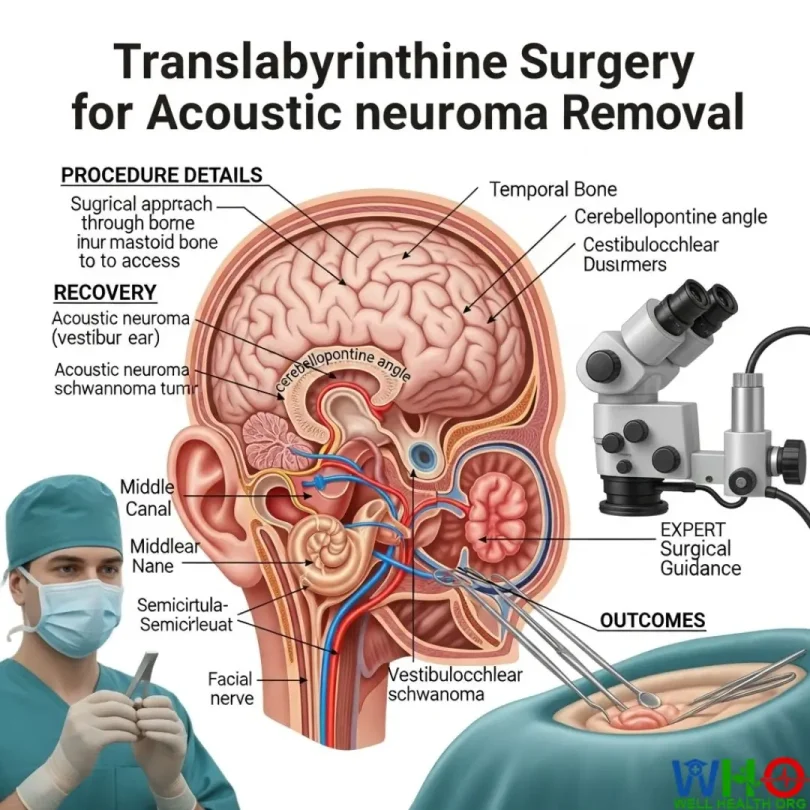
Translabyrinthine surgery is a microsurgical technique specifically developed to remove vestibular schwannomas, also known as acoustic neuromas. These are benign (non-cancerous) tumors that grow on the eighth cranial nerve, a nerve that plays a key role in hearing and balance.
Unlike some other surgical methods, the translabyrinthine approach requires surgeons to pass directly through the labyrinth—the delicate inner ear structure responsible for balance. By carefully removing portions of the mastoid bone and the labyrinth, surgeons gain a clear path to the tumor without needing to retract or put unnecessary pressure on the brain.
The procedure gets its name from this unique pathway: “trans-” (through) and “labyrinthine” (labyrinth). Because the labyrinth is sacrificed during surgery, this approach always results in complete hearing loss in the operated ear. However, most candidates for this surgery already have little to no hearing on the affected side before surgery, making the trade-off less impactful.
Why It’s Used
The translabyrinthine approach is most often chosen when:
- The tumor is large, often exceeding 3 centimeters.
- The patient already has severe or complete hearing loss in the affected ear.
- The surgeon’s priority is full tumor removal with minimal risk to brain structures.
- Alternative surgical methods pose greater risks or are less effective.
How It Differs From Other Surgeries
Other surgical approaches, such as the retrosigmoid or middle fossa techniques, may be used for smaller tumors or when hearing preservation is still possible. However, those approaches sometimes involve more brain retraction or provide less direct visibility of the facial nerve.
The translabyrinthine approach stands out because it combines:
- Excellent tumor visibility
- High rates of complete removal
- Low complication risks
- Strong facial nerve preservation outcomes
In short, while hearing cannot be saved, many other crucial functions can be protected, making this method highly effective in the right patients.
Why Doctors Recommend the Translabyrinthine Approach
You might wonder, Why would my surgeon recommend a procedure that sacrifices hearing entirely? The answer lies in a balance between risks and benefits. For many patients, the translabyrinthine approach offers the safest, most effective path to eliminating the tumor while preserving overall quality of life.
Key Reasons Doctors Choose This Surgery
- Tumor Size and Location
Larger acoustic neuromas can compress brain structures, particularly the brainstem, leading to dangerous complications if left untreated. The translabyrinthine approach allows surgeons to access and remove these larger growths with maximum visibility. - Preexisting Hearing Loss
Since the surgery destroys the labyrinth, any residual hearing is lost. That’s why it’s typically recommended for patients who already have non-functional hearing on the affected side. For these individuals, the trade-off is minimal compared to the risks of leaving the tumor untreated. - Lower Risk of Brain Injury
Unlike approaches that require pushing against brain tissue, the translabyrinthine method avoids direct pressure on the brain. This reduces the chances of neurological complications. - High Facial Nerve Preservation Rates
The facial nerve, which controls expressions like smiling and blinking, runs very close to the tumor site. Damage to this nerve can cause permanent weakness or paralysis. The translabyrinthine approach provides a clear view of the nerve, enabling surgeons to protect it more effectively. - Complete Tumor Removal Goal
For many patients, particularly those with growing or symptomatic tumors, the priority is total removal. This method has an 85–95% success rate in achieving that goal.
When It’s Not the Best Option
While powerful, this approach isn’t for everyone. It’s generally not recommended if:
- The patient has usable hearing that could still be preserved.
- The tumor is small and asymptomatic.
- The patient’s overall health doesn’t allow for major surgery.
For those cases, stereotactic radiosurgery or alternative surgical techniques may be considered.
Step-by-Step Look at the Translabyrinthine Surgical Procedure
Understanding what happens during surgery can help reduce fear and uncertainty. While the procedure is complex and requires a highly skilled surgical team, knowing the general steps offers reassurance.
1. Pre-Surgical Preparation
Before surgery, patients undergo a series of tests and evaluations, including:
- MRI scans to map the tumor’s size and location.
- Audiology exams to assess hearing function.
- Neurological evaluations to establish a baseline for nerve function.
- Routine bloodwork and physical exams to ensure overall fitness for surgery.
Patients are also counseled about expected outcomes, risks, and recovery timelines.
2. Anesthesia and Incision
On the day of surgery, the patient is placed under general anesthesia. The surgeon then makes a C-shaped incision behind the ear, exposing the mastoid bone.
3. Bone Removal
Using specialized drills, the surgeon removes sections of the mastoid bone and the semicircular canals (inner ear structures) to reach the internal auditory canal, where the tumor resides.
4. Tumor Exposure
Once the pathway is open, the surgeon carefully exposes the tumor. This step demands microscopic precision, as critical nerves run through the same region.
5. Tumor Removal
The surgeon methodically removes the tumor, often in small fragments, while continuously monitoring the facial nerve with advanced intraoperative monitoring tools.
6. Closure
After the tumor is removed, the area is reconstructed, and the incision is closed with sutures. A dressing is applied to protect the surgical site.
Timeframe
The surgery typically lasts 4–8 hours, depending on the tumor’s size and complexity. Patients remain in the hospital for a few days afterward for monitoring.
Advanced Techniques That Improve Outcomes
Modern translabyrinthine surgery has benefited greatly from technological innovation. Today’s surgeons have tools that improve both safety and success rates compared to earlier decades.
1. Intraoperative Facial Nerve Monitoring
This technology provides real-time feedback about facial nerve function throughout surgery. If the nerve is at risk, the surgical team is immediately alerted, reducing the likelihood of permanent damage.
2. High-Powered Surgical Microscopes
Magnification allows surgeons to see the tiniest anatomical details, ensuring precision cuts and minimal collateral damage.
3. Endoscopic Assistance
In some cases, surgeons use endoscopes (tiny cameras) to enhance visibility in hard-to-reach areas.
4. Image-Guided Navigation
Advanced imaging systems guide the surgical pathway, helping surgeons avoid critical structures and ensuring accurate tumor removal.
These advancements collectively contribute to safer procedures, shorter recovery times, and improved long-term outcomes.
Benefits and Advantages of Translabyrinthine Surgery
So why do many specialists continue to recommend this surgery, despite its unavoidable impact on hearing? The answer lies in its track record of safety, effectiveness, and preservation of critical functions.
1. High Tumor Removal Rates
Research shows that 85–95% of patients experience complete tumor removal. This reduces the risk of recurrence and often eliminates symptoms caused by the tumor’s growth.
2. Facial Nerve Preservation
Studies reveal that 70–90% of patients maintain normal or near-normal facial movement after surgery. This is a key quality-of-life factor, as facial weakness can affect eating, speaking, and even social interactions.
3. Low Risk of Major Complications
Serious complications such as infection, cerebrospinal fluid leaks, or stroke occur in fewer than 5% of patients.
4. Excellent Tumor Visibility
Unlike some other surgical methods, the translabyrinthine approach gives surgeons a full view of the tumor and surrounding nerves, allowing for more complete and careful removal.
5. Improved Quality of Life
Although patients lose hearing in the operated ear, most report a net improvement in quality of life due to:
- Relief from pressure symptoms like headaches or imbalance.
- Elimination of tumor-related risks.
- Preservation of critical nerve functions.
Understanding the Risks and Considerations of Translabyrinthine Surgery
Every surgical procedure comes with risks, and translabyrinthine surgery is no exception. While it is considered safe and effective, patients must weigh the potential complications alongside the benefits before making a decision. Understanding these risks helps you set realistic expectations and prepares you for the recovery journey ahead.
1. Complete Hearing Loss
Perhaps the most significant trade-off with this surgery is the permanent loss of hearing in the operated ear. Unlike other approaches where there may be a chance—however small—of preserving hearing, the translabyrinthine method sacrifices it by design.
For many candidates, though, this is not as devastating as it sounds. Most already have non-functional hearing on the affected side due to tumor growth. In those cases, the surgery simply formalizes a loss that was already present, while protecting far more critical functions like facial movement and brain health.
2. Facial Nerve Complications
The facial nerve is one of the most delicate structures involved in this surgery. While surgeons use advanced monitoring to protect it, there is still a chance of:
- Temporary facial weakness (often improving in weeks to months).
- Permanent facial paralysis in rare cases.
- Eye-related issues due to reduced blinking, requiring artificial tears or protective measures.
3. Balance Problems
Because the labyrinth is removed, patients often experience dizziness, imbalance, or vertigo following surgery. While alarming at first, these symptoms usually improve as the brain adapts and compensates through a process called neuroplasticity.
4. Other Rare Complications
Though uncommon, some additional risks include:
- Cerebrospinal fluid (CSF) leaks, which may require further treatment.
- Wound infections, manageable with antibiotics.
- Meningitis (very rare, but serious if it occurs).
- Blood clots or stroke in rare circumstances.
5. Psychological and Emotional Considerations
It’s easy to focus on the physical risks, but the emotional impact should not be overlooked. Patients may struggle with:
- Anxiety before surgery.
- Frustration during recovery.
- Adjustment to single-sided deafness.
Having a supportive medical team, family, and possibly a counselor can make this adjustment smoother.
Temporary Post-Surgical Effects: What Patients Commonly Experience
Many patients worry about what the first days and weeks after surgery will feel like. While everyone’s experience is unique, there are common short-term side effects most people go through during recovery.
1. Dizziness and Imbalance
Nearly all patients experience dizziness immediately after surgery. This is expected since the balance organs in the inner ear have been removed.
- For some, dizziness lasts only days.
- For others, it can take weeks or months to fully stabilize.
- Vestibular rehabilitation therapy significantly accelerates adaptation.
2. Headache and Fatigue
It’s normal to feel head pressure, headaches, and general fatigue after brain-related surgery. These usually improve with rest, hydration, and pain management prescribed by your doctor.
3. Facial Weakness
Some patients notice their smile feels uneven, or one eye doesn’t close as easily. This is often temporary and improves as swelling subsides.
4. Tinnitus (Ringing in the Ear)
Even though hearing is lost in the operated ear, some patients report phantom sounds such as ringing, buzzing, or whooshing. Over time, the brain typically adjusts, and these sensations fade.
5. Emotional Adjustment
It’s natural to feel a mix of relief and anxiety after surgery. Many patients describe the first few weeks as a “rollercoaster” of emotions, moving between gratitude for successful tumor removal and frustration with recovery challenges.
Recovery and Rehabilitation After Translabyrinthine Surgery
Recovery is not just about surgical healing—it’s about rebuilding balance, strength, and confidence in daily life. Understanding what to expect and following a structured recovery plan can make a world of difference.
1. Hospital Stay
- Most patients remain in the hospital for 3–5 days.
- During this time, doctors monitor for complications, manage pain, and help you take your first steps post-surgery.
- A physical therapist may begin simple balance exercises before discharge.
2. First Weeks at Home
The first few weeks are critical for rest and cautious activity:
- Wound Care: Keep the incision area clean and dry until cleared by your surgeon.
- Activity Restrictions: Avoid heavy lifting, bending over, or strenuous exercise.
- Sleep Positioning: Some doctors recommend sleeping with your head slightly elevated.
- Medication: Pain relievers and antibiotics may be prescribed.
3. Vestibular Rehabilitation Therapy
This is a game-changer for many patients. Vestibular therapy uses targeted exercises to:
- Retrain your brain to compensate for balance loss.
- Improve walking stability and reduce dizziness.
- Rebuild confidence in performing daily activities.
Patients who commit to therapy often recover balance months faster than those who don’t.
4. Emotional and Cognitive Healing
- Fatigue is normal—listen to your body and pace yourself.
- Memory and concentration may feel slightly off in the early weeks. This usually improves.
- Support groups (online or in-person) can help patients feel less alone during recovery.
Long-Term Outcomes: What Life Looks Like After Surgery
One of the biggest concerns patients have is: What will my life look like after translabyrinthine surgery? The good news is that most people return to fulfilling, active lives after recovery.
1. Balance and Coordination
- The brain has an incredible ability to adapt. Within 6–12 months, most patients regain solid balance.
- Some patients may notice subtle balance issues when walking in the dark or on uneven surfaces, but these rarely limit daily life.
2. Hearing and Communication
- Hearing in the operated ear is permanently lost.
- Many patients adapt by relying on their good ear.
- Devices like CROS (Contralateral Routing of Signal) hearing aids or bone-anchored hearing systems (BAHS) can help improve sound localization and awareness.
3. Facial Function
- Thanks to modern monitoring techniques, most patients retain normal or near-normal facial movement.
- For the small percentage who experience lasting weakness, facial rehabilitation and sometimes corrective surgery can help.
4. Quality of Life
Studies consistently show that after the adjustment period, most patients report:
- Relief from symptoms like pressure or headaches.
- Improved mental health, knowing the tumor is gone.
- Ability to resume daily activities, from work to hobbies.
5. Return to Work and Normal Activities
- Many patients return to work within 6–12 weeks, depending on job demands.
- High-impact sports or heavy labor may require more time.
- Activities like driving, swimming, or traveling can usually be resumed once balance stabilizes.
Making an Informed Decision: Is Translabyrinthine Surgery Right for You?
Deciding on surgery is a major step, and it’s important to consider your personal goals, medical situation, and lifestyle preferences.
Key Factors to Consider
- Tumor size: Larger tumors often necessitate this approach.
- Hearing status: If hearing is already severely compromised, preserving it may not be realistic.
- Overall health: Age, medical conditions, and recovery ability all play roles.
- Lifestyle needs: Consider how hearing loss and recovery may affect your career, hobbies, or social interactions.
Questions to Ask Your Surgeon
- Am I an ideal candidate for the translabyrinthine approach?
- What other surgical or non-surgical options are available?
- What success rates has your team achieved with this surgery?
- How many of these procedures have you personally performed?
- What support resources will be available to me during recovery?
The Value of Second Opinions
Because acoustic neuroma surgery is so specialized, many patients benefit from consulting with a second or even third surgeon before making a final choice. Different doctors may recommend different approaches, and hearing multiple perspectives can give you confidence in your decision.
The Role of Support Systems in Recovery
Recovering from translabyrinthine surgery isn’t just about what happens in the operating room—it’s about the network of family, friends, and healthcare providers who help you through the journey. A strong support system can make the difference between a stressful recovery and one that feels manageable and hopeful.
1. Family and Friends
Having loved ones by your side provides both practical help and emotional encouragement. Simple things like preparing meals, driving you to follow-up appointments, or just keeping you company during recovery can ease the burden. Patients often say their healing felt faster when surrounded by people who cared for them.
2. Medical Team Support
Your surgical team doesn’t disappear after the operation. You’ll continue to work with:
- Surgeons for follow-up assessments.
- Physical therapists for vestibular rehabilitation.
- Audiologists for hearing aid or implant evaluations.
- Primary care doctors for overall health management.
3. Support Groups
Joining a patient support group—either in person or online—can provide comfort, validation, and practical advice from people who’ve already walked this path. Sharing tips about dizziness management, hearing adaptation, or coping with facial nerve issues helps reduce the feeling of being “alone” in recovery.
4. Counseling and Emotional Wellness
Some patients benefit from talking to a psychologist or counselor who understands medical recovery. This can help manage anxiety, fear of recurrence, or emotional struggles linked to hearing loss and lifestyle adjustments.
Why a Second Opinion Matters
For a surgery as significant as the translabyrinthine approach, seeking a second opinion is not only acceptable—it’s encouraged. Different surgeons may have different levels of experience, preferences for surgical techniques, or recommendations based on your specific case.
1. Confirmation of Diagnosis and Options
A second opinion can confirm:
- That the diagnosis of acoustic neuroma is accurate.
- That surgery is the best course of action versus alternatives like radiation or observation.
- Which surgical approach offers the best balance of safety and effectiveness for your unique case.
2. Surgeon Experience
Not all surgeons perform translabyrinthine procedures with the same frequency. Asking about surgical volume and success rates is important. A second opinion may connect you with a surgeon who specializes more heavily in this area.
3. Exploring Alternative Approaches
In some cases, a different surgeon may recommend:
- Radiosurgery (Gamma Knife or CyberKnife) for smaller tumors.
- Observation if the tumor is not growing.
- Different surgical techniques if hearing preservation is still a possibility.
4. Peace of Mind
Ultimately, a second opinion gives patients peace of mind. Making a decision about brain surgery is daunting—knowing that more than one expert agrees with your treatment plan can help reduce anxiety and build confidence.
Emotional and Lifestyle Adjustments After Surgery
The physical aspects of recovery often receive the most attention, but the emotional journey is just as significant. Adjusting to hearing loss, balance challenges, or even subtle facial changes can affect your self-image, social life, and confidence.
1. Coping with Hearing Loss
Losing hearing in one ear changes how you interact with the world. Challenges may include:
- Difficulty localizing sounds.
- Struggling to hear conversations in noisy environments.
- Fatigue from concentrating harder during conversations.
Solutions: Many patients benefit from CROS hearing aids, which reroute sounds from the deaf ear to the hearing ear, or bone-anchored devices that vibrate sound directly into the skull bone.
2. Adjusting to Balance Changes
The first few months may bring frustration with balance issues. Simple daily tasks—walking in the dark, climbing stairs, or moving quickly—might feel awkward. Over time, however, most patients adjust remarkably well through natural brain compensation and therapy.
3. Rebuilding Confidence
Facial weakness, even when temporary, can affect confidence. Patients sometimes feel self-conscious about smiling or speaking in public. Facial exercises and in some cases, specialized therapy, help restore both physical function and self-esteem.
4. Mental and Emotional Health
Post-surgical blues are common. Feelings of frustration, sadness, or anxiety are normal, especially during the first weeks when progress feels slow. Journaling, mindfulness practices, and professional counseling can help patients process emotions constructively.
Preparing for Translabyrinthine Surgery: Practical Tips
The weeks leading up to surgery can feel overwhelming, but being proactive helps you feel more in control. Preparation isn’t just medical—it’s also about practical planning, emotional readiness, and creating a recovery-friendly environment.
1. Medical Preparation
- Complete all required imaging and lab work.
- Review your medication list with your doctor (some, like blood thinners, may need to be stopped).
- Discuss anesthesia concerns with your surgical team.
2. Home Preparation
- Arrange a comfortable rest area at home with easy access to essentials.
- Stock up on groceries, medications, and personal care items.
- Organize help for household tasks during the first 1–2 weeks.
3. Emotional Preparation
- Write down your questions before pre-surgical appointments.
- Practice relaxation techniques such as deep breathing or guided meditation.
- Talk openly with loved ones about your concerns and expectations.
4. Work and Lifestyle Planning
- Plan for time off work, usually at least 4–6 weeks depending on your recovery speed and job demands.
- Notify your employer or school about possible limitations.
- Avoid scheduling major events too soon after surgery.
Taking the Next Step in Your Treatment Journey
Deciding to move forward with translabyrinthine surgery is a brave and proactive choice. While the procedure is complex, it has helped thousands of patients successfully remove acoustic neuromas and reclaim their quality of life.
The most important step is working with an experienced surgical team that specializes in this approach. Their expertise ensures not only safe tumor removal but also the preservation of critical functions and a smoother recovery.
Scheduling a consultation with a neurosurgeon or neurotologist gives you the chance to:
- Ask questions about your unique case.
- Review personalized treatment options.
- Understand the realistic outcomes you can expect.
- Gain confidence in your healthcare path.
Remember, you don’t have to face this decision alone. With the right information, medical guidance, and support system, you can move forward with clarity and confidence.
Conclusion: Making Peace with the Decision
Facing the prospect of translabyrinthine surgery can feel intimidating, especially when you first hear the words “brain surgery” or “hearing loss.” But knowledge transforms fear into confidence. By now, you’ve learned that while this surgery has its trade-offs, it also offers remarkable benefits: high tumor removal success, excellent facial nerve preservation, and low complication rates compared to other approaches for large tumors.
Recovery is a journey—one that involves physical healing, emotional adjustment, and steady progress through rehabilitation. Patients who approach recovery with patience, a strong support system, and commitment to therapy often find themselves returning to a life that feels normal again, sometimes even better than before surgery.
Ultimately, the decision to undergo translabyrinthine surgery is highly personal. It depends on your tumor size, your hearing status, your lifestyle, and your own priorities. The most important factor is working with an experienced surgical team who understands not just the technical side of the operation, but also the human side—your fears, your goals, and your hope for the future.
When you take that step, remember this: you’re not just treating a tumor. You’re reclaiming your health, your peace of mind, and your ability to move forward in life with strength and resilience.
Frequently Asked Questions About Translabyrinthine Surgery
1. How long does it take to fully recover after translabyrinthine surgery?
Recovery time varies, but most patients feel significantly better within 6–12 weeks. Balance and energy levels continue to improve over 6–12 months as the brain adapts. Some minor balance issues may persist, but they rarely interfere with daily life once rehabilitation is complete.
2. Will I be able to drive after surgery?
Yes, but not immediately. Driving requires stable balance, quick reflexes, and clear focus. Most patients are cleared to drive within 4–6 weeks, depending on their recovery progress and balance stability. Your surgeon will give specific guidance during follow-up visits.
3. Is the tumor likely to come back after translabyrinthine surgery?
The recurrence rate is very low. Studies show that 85–95% of patients achieve complete tumor removal, and for most, the tumor does not return. In rare cases where small portions remain, ongoing monitoring with regular MRI scans helps catch any regrowth early.
4. Can hearing be restored after translabyrinthine surgery?
Unfortunately, no. Because the labyrinth and cochlear structures are removed, hearing cannot be restored in the operated ear. However, many patients adapt well to single-sided hearing and may benefit from technologies like CROS hearing aids or bone-anchored hearing systems.
5. What can I do to prepare myself mentally and physically before surgery?
Preparation makes recovery smoother. Physically, follow your surgeon’s instructions on medications, nutrition, and pre-surgical tests. Mentally, practice relaxation techniques, talk openly with your support network, and consider joining a support group for acoustic neuroma patients. Having realistic expectations and a positive mindset goes a long way in helping you feel ready.
Final Words
Choosing translabyrinthine surgery is not just about treating a tumor—it’s about choosing a path that offers safety, effectiveness, and the possibility of returning to a fulfilling life. With today’s advanced surgical techniques, supportive rehabilitation programs, and strong patient education, the outlook for most individuals is very positive.
If you or a loved one is facing this decision, take heart: many patients before you have walked this path successfully and returned to vibrant, active lives. Your journey may feel daunting now, but with knowledge, preparation, and the right medical team, you’ll have the tools to face it with courage and confidence.
Medically Reviewed by Prof. Dr. Akram
Orthopedic Surgeon | Professor | Senior Medical Specialist
Prof. Dr. Akram is a distinguished surgeon with over 15 years of clinical expertise. Having served as a lead Emergency Specialist at Complex International Government Hospital, he currently leads a specialized team of 13 medical professionals at his private hospital. As a Professor at top medical universities, he ensures that every article on WellHealthOrg.com meets rigorous clinical standards.
Medical Disclaimer:
The information provided is for educational purposes only and is not a substitute for professional medical advice, diagnosis, or treatment. Always consult your physician for any medical concerns.
Our content is rigorously fact-checked by our 13-member Editorial Team under the clinical supervision of Prof. Dr. Akram.