Medically Reviewed by:
Prof. Dr. Akram
Chief Medical Content Strategist & Senior Neurologist | 30+ Years of Clinical Expertise
Patient Guide & Clinical Index
Understand the ancient science of heart health through a clinical lens. Use the index below to navigate the pillars of Ayurvedic hypertension management.
Healing the Silent Weight: An Introduction to Heart Harmony
Living with high blood pressure—clinically known as hypertension—is often described by my patients as carrying a silent weight. It is a persistent throb at the base of the skull, a sudden racing of the heart during a quiet evening, or an inexplicable sense of fatigue. Most taxing, however, is the underlying anxiety: the constant “what if” regarding the health of your heart, kidneys, and brain.
Ayurvedic Guide to High Blood Pressure
Asaan Alfaz mein Summary (हिंदी सारांश) – Click to Expand
- हाई ब्लड प्रेशर (High BP) सिर्फ बीमारी नहीं, शरीर के असंतुलन का संकेत है।
- अर्जुन की छाल: यह दिल की मांसपेशियों को मजबूत करती है और नसों को खोलती है।
- अश्वगंधा: यह तनाव कम करके बीपी को स्थिर रखता है।
- नमक का परहेज: सफेद नमक की जगह ‘सेंधा नमक’ का कम मात्रा में इस्तेमाल करें।
- लहसुन: रोज सुबह खाली पेट एक कली लहसुन लेने से नसें नरम रहती हैं।
- पानी का नियम: हमेशा हल्का गुनगुना पानी पिएं, ठंडा पानी नसों को सिकोड़ता है।
- प्राणायाम: ‘अनुलोम-विलोम’ और ‘भ्रामरी’ बीपी को तुरंत कम करने में मदद करते हैं।
- नींद: रात 10 बजे तक सो जाना दिल की मरम्मत के लिए बहुत जरूरी है।
- तेल मालिश: पैरों के तलवों की तिल के तेल से मालिश करने से नर्वस सिस्टम शांत होता है।
- इलाज का तरीका: आयुर्वेद में इसे ‘रक्त गत वात’ कहते हैं, यानी खून में हवा का बढ़ना।
- पुनर्नवा: यह शरीर से फालतू पानी और सूजन को बाहर निकालता है।
- गुस्सा और तनाव: पित्त बढ़ने से बीपी बढ़ता है, इसलिए मन को शांत रखना ही सबसे बड़ी दवा है।
- सेब और अनार: ये फल नसों की सेहत के लिए बेहतरीन ‘टॉनिक’ हैं।
- धैर्य रखें: आयुर्वेदिक इलाज का असर दिखने में 3 से 6 महीने लग सकते हैं।
- सावधानी: अपनी एलोपैथिक दवा एकदम बंद न करें, डॉक्टर की सलाह से ही बदलाव करें।
Quick Insights in Hinglish (Roman Hindi) – Click to Expand
- High BP ko Ayurveda mein ‘Rakta Gata Vata’ kehte hain.
- Arjuna Bark heart ke liye sabse best tonic hai, ye pumping improve karta hai.
- Ashwagandha stress hormone (cortisol) ko kam karke BP control karta hai.
- Din bhar thoda thoda lukewarm water peena chahiye toxins flush karne ke liye.
- Morning mein ‘Nadi Shodhana’ (Anulom Vilom) 10 minutes zaroor karein.
- White salt bilkul kam kar dein, Sendha Namak use karein.
- Garlic (Lahsun) ki ek kali ko crush karke 10 min baad khayein, ye veins relax karta hai.
- Raat ko 10 baje tak so jana heart ki healing ke liye crucial hai.
- Foot massage (Abhyanga) se brain ko ‘relax’ signal milta hai.
- Hibiscus tea (Gudhal ki chai) ek natural medicine ki tarah kaam karti hai.
- Jyada gussa aur perfectionism Pitta badhata hai, jisse BP spike hota hai.
- Punarnava herb swelling aur water retention ko kam karti hai.
- Celery (Ajwain ke patte) khane se arteries ki walls relax hoti hain.
- Ayurvedic herbs hamesha empty stomach ya khane ke 1 hour baad lein.
- Doctor ki advise ke bina BP ki Allopathic medicines band na karein.
The Ayurvedic Framework: Blood Pressure as “Rakta Gata Vata”

Ayurvedic Guide to High Blood Pressure (1)
The Medical Science of Vata in the Blood
In Ayurvedic texts, hypertension is often correlated with Rakta Gata Vata. This literally means “Vata (the energy of movement) entering the Rakta (the blood).” When the movement of blood is obstructed by toxins (Ama) or narrowed by stress, the pressure rises to compensate.The Everyday Analogy: The Garden Hose and the Kink
Imagine your arteries are a garden hose. If the hose is wide and flexible, the water (blood) flows easily with low pressure. But if you put your thumb over the end or if there is a kink in the hose (stress or narrow vessels), the pressure inside the hose increases significantly. Ayurveda aims to “un-kink” your system and keep the “hose” flexible.Prof. Dr. Akram’s Clinical Insights: “In my clinic, I distinguish between Vata, Pitta, and Kapha hypertension. Vata-type BP fluctuates with worry. Pitta-type is driven by anger and ‘hot’ blood. Kapha-type is the result of ‘sludge’ or cholesterol blocking the path. You cannot treat all three with the same pill; Ayurveda understands this nuance.”
Practical Implementation Steps:
- Identify Your Spike: Do you get high BP when angry (Pitta) or when anxious (Vata)?
- Vata Management: If anxious, use warm sesame oil for foot massage before bed.
- Pitta Management: If angry, avoid chilies and embrace cooling coconut water.
Nature’s Pharmacy: Potent Ayurvedic Herbs for the Heart

Ayurvedic Guide to High Blood Pressure
The Medical Science of Cardiac Tonics
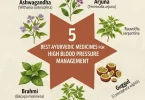
Herbs like Arjuna contain natural co-enzyme Q10 and flavonoids. These act as Inotropic agents—they strengthen the heart’s contraction without making it work harder for oxygen. Sarpagandha acts on the nervous system to turn off the “fight or flight” switch.The Everyday Analogy: The Battery Charger
Think of your heart as a rechargeable battery. Modern meds often force the battery to work slower. Ayurvedic herbs like Arjuna act like a smart charger; they optimize the battery’s health so it doesn’t need to struggle to power the “pump.”Scientific Study Callout: A study published in the Journal of Ethnopharmacology confirmed that Terminalia Arjuna (Arjuna) significantly reduces systolic blood pressure and improves left ventricular function in patients with chronic heart issues.
Mechanism vs Impact: Ayurvedic Heart Remedies
| Remedy | Mechanism (How it works) | Impact (The Result) |
|---|---|---|
| Arjuna Ksheer Pak | Medicinal milk decoction extracts fat-soluble compounds. | Strengthens cardiac muscle and lowers BP. |
| Ashwagandha | Reduces Serum Cortisol (Stress Hormone). | Prevents BP spikes during stressful work. |
| Punarnava | Natural diuretic; flushes excess sodium via kidneys. | Reduces blood volume and edema (swelling). |
| Garlic (Lashuna) | Allicin promotes nitric oxide production. | Relaxes artery walls (Vasodilation). |
The Ayurvedic Diet: Eating for Arterial Health

The Medical Science of Shad Rasa (Six Tastes)
Ayurveda suggests that Astringent and Bitter tastes “scrape” the arteries. In modern terms, high-fiber bitter greens and astringent fruits contain polyphenols that reduce atherosclerosis (the buildup of plaque).The Everyday Analogy: The Clogged Drain
If your kitchen sink is slow, you don’t just pump harder; you use a cleaner to dissolve the grease. Heavy, oily foods are like “grease” in your arteries. Bitter foods like Turmeric and Bitter Melon act like natural drain cleaners, keeping the path clear so the “pump” (heart) doesn’t have to work as hard.Dr. Akram’s Practical Advice: The Garlic Secret
To maximize garlic’s effect on BP: Crush, Wait, and Swallow. Crushing activates ‘Allicin’. Waiting 10 minutes allows the enzymes to peak. Swallowing with warm water prevents the “Pitta heat” from irritating your stomach. Do this every morning.
Lifestyle and “Dinacharya”: The Rhythm of Recovery

The Medical Science of Circadian Rhythms
Hypertension is often a Vata disorder, and Vata thrives on routine. Irregular sleep and eating patterns keep the sympathetic nervous system in a “high alert” state. Abhyanga (oil massage) stimulates the Vagus nerve, which is the “brake pedal” for your heart rate.The Everyday Analogy: The Rocking Cradle
Imagine a baby crying. If you rock the cradle erratically, the baby gets more upset. If you rock it in a steady, predictable rhythm, the baby falls asleep. Your heart is that baby. Dinacharya (daily routine) is the steady rocking that calms your internal system.Practical Implementation Steps:
- Wake Before Sunrise: The morning air is ‘Sattvic’—it naturally lowers blood pressure.
- The 10 PM Rule: Be in bed by 10 PM to allow the liver to detoxify your blood during the ‘Pitta’ window.
- Foot Massage: Apply warm sesame oil to soles for 5 minutes before bed. This “grounds” excess Vata.
Yoga and Pranayama: Healing Through Breath

The Medical Science of Prana
Nadi Shodhana (Alternate Nostril Breathing) balances the left (parasympathetic) and right (sympathetic) brain. Bhramari (Humming Bee Breath) creates vibrations that increase Nitric Oxide in the sinuses, a powerful vasodilator that relaxes blood vessels.Prof. Dr. Akram’s Clinical Insights: “I’ve seen BP drop by 10-15 points in just 15 minutes of Shavasana (Corpse Pose). Most patients ‘squeeze’ their arteries with mental tension. When the mind surrenders, the arteries expand. It’s a physical response to a mental state.”
Clinical FAQ: Patient Concerns & Myths
1. Can Ayurveda replace my BP medication immediately?
No. Never stop meds abruptly. Ayurveda is a complementary therapy. As your health improves, your GP may reduce your dosage over time.2. Is high BP always “silent”?
In Ayurveda, we look for ‘whispers’: ringing in ears, metallic taste, or sudden irritability. These are signs of Rakta-Pitta imbalance before the number gets high.3. Why is salt so restricted in Ayurveda?
Excess salt is ‘Ushna’ (hot) and ‘Vidahi’ (burning). It heats the blood and causes water retention. Use small amounts of Saindhava Lavana (Himalayan salt) instead.4. Can Ashwagandha raise blood pressure?
Usually, it lowers it by reducing stress. However, if you have high Pitta (intense heat/anger), it should be taken with cooling milk or balanced with Arjuna.5. How long to see results?
Lifestyle changes show in 2 weeks; stable herbal results usually take 3 to 6 months of consistent practice.6. Is Amla (Gooseberry) good for BP?
Yes. Amla is a potent ‘Rasayana’ (rejuvenator). It is cooling and rich in Vitamin C, which strengthens the inner lining of blood vessels.7. Does tea or coffee affect BP in Ayurveda?
Yes. Caffeine is ‘Rajasic’—it overstimulates the heart and creates ‘jagged’ Vata movement. Switch to Hibiscus or Lemongrass tea.8. Can Panchakarma cure hypertension?
Shirodhara and Basti are highly effective ‘hard resets’ for the nervous system, but they must be followed by a proper diet for lasting effects.9. Is Hibiscus tea as good as medicine?
Clinical trials show Hibiscus acts as a natural ACE inhibitor. One cup daily is a powerful supportive remedy.10. Should I avoid spicy food?
Yes. Pungent (spicy) food increases heart rate and body heat, aggravating both Pitta and Vata hypertension.11. What is the best time to take Arjuna?
Take Arjuna Ksheer Pak (with milk) in the morning on an empty stomach for maximum absorption into the Rakta (blood) tissue.12. Does weight loss help in Ayurveda?
Reducing ‘Medas’ (fat) reduces ‘Kapha’ obstruction. As the body lightens, the blood flows more easily through the vessels.13. Is honey safe for BP patients?
Yes, raw honey is a ‘Yogavahi’—it helps carry the medicinal properties of herbs like Cinnamon or Garlic deeper into the tissues.14. Can Shirodhara lower BP instantly?
It induces a state of ‘Turiya’ (deep calm), which has been shown to lower systolic pressure during and after the treatment session.15. Why use a copper vessel for water?
Copper (Tamra) has a scraping effect on ‘Ama’ (toxins). Storing water in copper overnight can help balance Kapha-type hypertension.16. Are there side effects to Sarpagandha?
It is very powerful. Overuse can cause nasal stuffiness or depression. Never take Sarpagandha without an Ayurvedic doctor’s prescription.17. Is walking good for BP?
Brisk walking for 30 minutes (Balaardha) is excellent. Avoid intense running that makes you pant, as that aggravates Vata.18. Does Brahmi help?
Brahmi is a ‘Medhya’ herb. It calms the brain’s signals to the heart. Use it if your BP is caused by overthinking or mental stress.19. Can I take Ayurvedic herbs with Beta-Blockers?
Often yes, but you must monitor your BP closely. Some herbs enhance the effect of meds, which could make your BP drop *too* low.20. Why does alcohol raise BP in Ayurveda?
Alcohol is ‘Tikshna’ (sharp) and ‘Ushna’ (hot). It instantly aggravates Pitta and Rakta, causing the heart to pump with violent force.Practical Home Remedies: Your Kitchen First Aid Kit
The 7-Minute Daily Heart Hack
- Morning (Min 1-2): Swallow one crushed garlic clove with warm water.
- Afternoon (Min 3-5): Drink 1 cup of Hibiscus tea (no sugar).
- Evening (Min 6-7): 5 minutes of ‘Bhramari’ Pranayama (Humming) before bed.
- Bonus: Eat 4 stalks of Celery as a snack. It relaxes arterial smooth muscle.
Recovery Roadmap: Building a Sattvic Heart
Healing is not a destination; it is a way of living. Ayurveda teaches that you are the architect of your internal environment. By choosing grounding foods, stillness, and the wisdom of herbs, you steer your life toward balance.⚠️ CRITICAL MEDICAL DISCLAIMER & EMERGENCY RED FLAGS
This guide is for educational purposes only and not a substitute for professional medical advice. If you experience a BP reading over 180/120, sudden chest pain, blurred vision, or severe headache, go to the Emergency Room immediately. This is a ‘Hypertensive Crisis’ and requires acute medical intervention. Never stop prescribed medications without consulting your primary cardiologist.
Medically Reviewed by Prof. Dr. Akram
Orthopedic Surgeon | Professor | Senior Medical Specialist
Prof. Dr. Akram is a distinguished surgeon with over 15 years of clinical expertise. Having served as a lead Emergency Specialist at Complex International Government Hospital, he currently leads a specialized team of 13 medical professionals at his private hospital. As a Professor at top medical universities, he ensures that every article on WellHealthOrg.com meets rigorous clinical standards.
Medical Disclaimer:
The information provided is for educational purposes only and is not a substitute for professional medical advice, diagnosis, or treatment. Always consult your physician for any medical concerns.
Our content is rigorously fact-checked by our 13-member Editorial Team under the clinical supervision of Prof. Dr. Akram.