Medically Reviewed by Prof. Dr. Akram
Chief Medical Content Strategist | Senior Neurologist | WellHealthOrg Clinical Lead
In my three decades of clinical practice, I have often seen patients present with “vague” symptoms: restless legs, brain fog, or persistent fatigue. More often than not, the culprit is a silent deficiency in Magnesium. As a neurologist, I call it the “Spark Plug of the Human Body.” Without it, the engine of your metabolism simply won’t fire. This guide is designed to help you bridge the gap between clinical science and your dinner plate.
The Master Mineral: Why Magnesium is Non-Negotiable
Magnesium is an essential mineral responsible for over 300 biochemical reactions in the human body. From the rhythmic beating of your heart to the complex firing of neurons in your brain, Magnesium is the silent conductor of the biological orchestra. Despite its ubiquity, nearly 50% of the population in modern urban environments fails to meet the recommended daily intake. This is not just a nutritional “suggestion”; it is a clinical requirement for longevity.
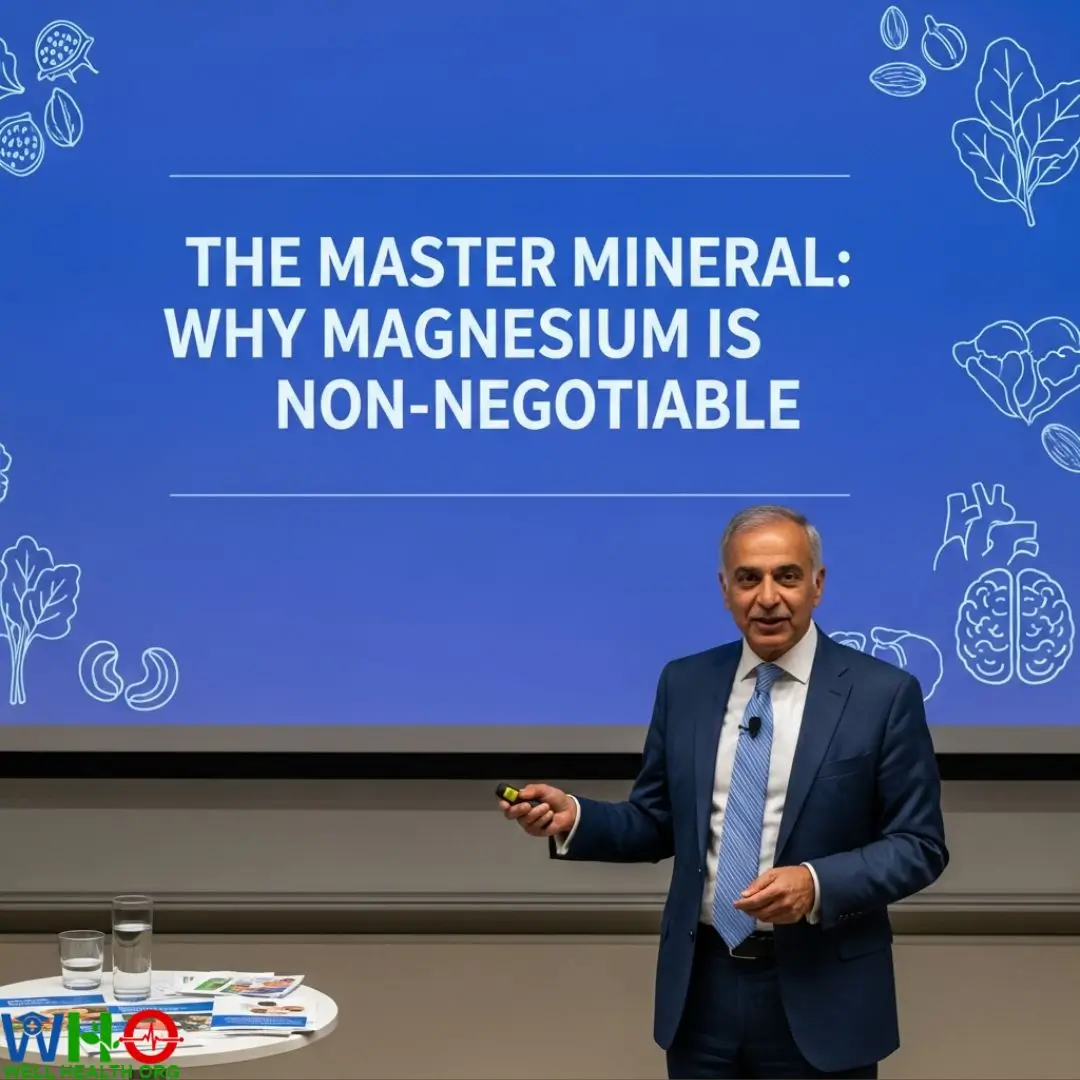
Magnesium Rich Foods
When we look at the cellular level, Magnesium acts as a cofactor—a “helper molecule”—that assists enzymes in performing their jobs. Whether you are building DNA or contracting a muscle to walk, Magnesium is there. When it’s missing, the system starts to stutter. We see this manifest as high blood pressure, type 2 diabetes, and even osteoporosis. In this powerhouse article, we will explore how to reclaim your health through the 10 best magnesium-rich foods.
Asaan Alfaz mein Summary (हिंदी सारांश) – Click to Expand
- मैग्नीशियम शरीर के लिए एक बेहद जरूरी खनिज (Mineral) है।
- यह शरीर की 300 से ज्यादा प्रक्रियाओं (Processes) में मदद करता है।
- दिल की धड़कन और नसों की मजबूती के लिए यह बहुत जरूरी है।
- पालक जैसे हरे पत्तेदार साग मैग्नीशियम का सबसे अच्छा स्रोत हैं।
- बादाम, काजू और कद्दू के बीज (Pumpkin Seeds) रोज खाना फायदेमंद है।
- रागी और क्विनोआ जैसे अनाज मैग्नीशियम से भरपूर होते हैं।
- यह बेहतर नींद (Sleep) लाने और तनाव कम करने में मदद करता है।
- शुगर (Diabetes) के मरीजों के लिए यह इंसुलिन सुधारने में काम आता है।
- मांसपेशियों में खिंचाव या दर्द होने पर मैग्नीशियम की कमी हो सकती है।
- हड्डियों की मजबूती के लिए सिर्फ कैल्शियम नहीं, मैग्नीशियम भी चाहिए।
- डार्क चॉकलेट का एक छोटा टुकड़ा भी मैग्नीशियम दे सकता है।
- अगर आपको किडनी की बीमारी है, तो मैग्नीशियम सप्लीमेंट बिना डॉक्टर के न लें।
- डॉ. अकरम की सलाह: अपनी डाइट में रोज एक मुट्ठी नट्स जरूर शामिल करें।
- मैग्नीशियम की कमी से माइग्रेन (सिरदर्द) की समस्या बढ़ सकती है।
- ताजी सब्जियां और साबुत अनाज ही सेहत की असली चाबी हैं।
Quick Insights in Hinglish (Roman Hindi) – Click to Expand
- Magnesium ko “Master Mineral” kaha jata hai kyunki ye 300+ enzymes ko chalata hai.
- Nerve function aur heart health ke liye ye ek “Electrician” ki tarah kaam karta hai.
- Spinach (Paalak) aur leafy greens magnesium ke powerhouse hain.
- Almonds aur Cashews snack mein lene se energy boost hoti hai.
- Ragi aur Quinoa jaise grains diabetes control karne mein help karte hain.
- Agar aapko neend nahi aati, toh Magnesium melatonin ko regulate karta hai.
- Muscle cramps aur thakawat Magnesium ki kami ke signs ho sakte hain.
- Bone health ke liye Calcium ke saath Magnesium lena zaruri hai.
- Dark Chocolate (low sugar) ek healthy magnesium source ho sakti hai.
- BP aur heart rate ko balance rakhne mein ye mineral madad karta hai.
- Whole wheat flour use karein bajaye maida (refined flour) ke.
- Brazil nuts thyroid health ke liye bhi ache hain.
- Dr. Akram says: “Food is the best medicine, supplement ki zarurat nahi padegi.”
- Migraine patients ke liye magnesium intake badhana ek clinical strategy hai.
- Daily diet mein seeds aur nuts add karna sabse simple “hack” hai.
Pillar 1: Neurological Health—The Electrician of the Nerves

Magnesium Rich Foods (1)
As a neurologist, my first concern is how minerals affect the nervous system. Magnesium regulates the movement of ions across cell membranes. Specifically, it acts as a “guard” for the NMDA receptor, which is involved in learning and memory. Without enough magnesium, these receptors can become over-stimulated, leading to nerve damage and cognitive decline.
Pillar 2: Metabolic Management—The Insulin Key

Magnesium Rich Foods (2)
Magnesium plays a critical role in glucose metabolism. It helps the body process sugar and improves insulin sensitivity. Low levels are frequently found in individuals with metabolic syndrome and type 2 diabetes. When magnesium is low, the “locks” on your cells (insulin receptors) become rusty, making it harder for sugar to enter and provide energy.
Pillar 3: The Leafy Green Foundation—Nature’s Multi-Vitamin
Chlorophyll, the pigment that makes plants green, has a magnesium atom at its very center. This is why green leafy vegetables are the gold standard for this mineral. Spinach and collard greens are not just food; they are bioavailable mineral supplements in their purest form.
Clinical Breakdown: Spinach vs. Collard Greens
| Metric (per 100g) | Spinach (Raw) | Collard Greens |
|---|---|---|
| Magnesium Content | 79 mg | 40 mg |
| Glycemic Index | 15 (Very Low) | Low |
| Primary Benefit | Nerve & Bone Support | Digestion & Immunity |
Pillar 4: Ancient Grains & Millets—Stable Energy Sources
Refined flours (like maida) have the bran and germ removed, which is where 80% of the magnesium lives. Switching to whole grains like Quinoa, Ragi (Finger Millet), and Whole Wheat can transform your metabolic health. Quinoa is particularly impressive because it is a “complete protein,” containing all nine essential amino acids.
Pillar 5: Nuts & Brain Fuel—Portable Mineral Kits
Almonds, Cashews, and Brazil Nuts are more than just snacks; they are dense packages of minerals, healthy fats, and antioxidants. For instance, just 23 almonds provide nearly 20% of your daily magnesium requirement. Brazil nuts offer the added benefit of Selenium, which is vital for thyroid health.
Pillar 6: Bone & Muscle Synergy—Beyond Calcium
Most people focus solely on Calcium for bone health, but Magnesium is the silent partner. It is required to convert Vitamin D into its active form, which then allows for calcium absorption. Furthermore, magnesium is what allows muscles to relax after they contract. This is why athletes use it to prevent cramping and improve recovery.
The Magnesium Food Comparison Matrix
| Food Source | Portion Size | Magnesium (mg) | Health Focus |
|---|---|---|---|
| Spinach | 100g (Cooked) | 150 mg | Energy & Blood |
| Pumpkin Seeds | 28g | 156 mg | Prostate & Sleep |
| Ragi (Finger Millet) | 100g | 137 mg | Bone Strength |
| Dark Chocolate (85%) | 28g | 64 mg | Mood & Heart |
| Almonds | 28g | 80 mg | Brain Health |
20+ Expert FAQs: Clearing the Myths
Can I get too much magnesium from food?
It is almost impossible for healthy kidneys to overdose on magnesium from food sources. The body simply excretes the excess. However, supplements are a different story and require caution.
Why am I tired even though I eat magnesium-rich foods?
Magnesium needs co-factors. If you are severely deficient in Vitamin B6 or Vitamin D, your body cannot use the magnesium effectively. It’s about the whole system, not just one mineral.
Does coffee deplete magnesium?
Yes, excessive caffeine acts as a diuretic, which can cause you to flush out minerals like magnesium through urine. Moderation is the clinical key.
Is it true that magnesium helps with anxiety?
Yes. Magnesium facilitates the synthesis of GABA, a neurotransmitter that has a calming effect on the brain. Think of it as ‘Valium from nature.’
What is the best time to eat magnesium foods?
For sleep benefits, include them in your dinner. A small bowl of pumpkin seeds or a piece of dark chocolate can signal the body to prepare for rest.
Do pregnant women need more magnesium?
Yes, significantly. It helps prevent pre-eclampsia and supports the development of the baby’s bones and nervous system. Consult your OB-GYN for specific dosages.
Are magnesium supplements better than food?
Food is always superior because it comes with fiber, phytochemicals, and vitamins that aid absorption. Supplements should only be used to correct a diagnosed clinical deficiency.
Can magnesium prevent migraines?
Clinical studies show that 400-600mg of magnesium can reduce the frequency of migraines by stabilizing the electrical threshold of brain cells.
Why do my muscles twitch after exercise?
This is often ‘Fasciculation,’ a sign that the electrical balance in the muscle is off, likely due to sweating out your magnesium stores.
How does alcohol affect magnesium?
Alcohol is a major antagonist. It forces the kidneys to excrete magnesium at 2-3 times the normal rate, leading to chronic depletion in heavy drinkers.
Are there signs of magnesium deficiency on the skin?
Chronic deficiency can lead to increased inflammation, manifesting as eczema or acne, as the body loses its ability to regulate inflammatory cytokines.
Can I absorb magnesium through my skin?
Epsom salt baths are popular, and while some absorption occurs, it is not efficient enough to replace dietary intake. It is better for local muscle relief.
Is brown rice better than white rice for magnesium?
Significantly. Brown rice contains roughly 80mg per cup, whereas white rice has only about 20mg. The ‘shell’ (bran) is where the treasure is.
Does magnesium help with asthma?
In clinical emergencies, IV magnesium is used as a bronchodilator. Diets rich in magnesium may help keep the airways relaxed in chronic asthma patients.
Does sugar destroy magnesium?
Processing sugar requires magnesium. For every molecule of sugar you eat, it takes about 54 molecules of magnesium for your body to process it. High sugar = low magnesium.
Are bananas high in magnesium?
They are moderate (about 32mg). While famous for potassium, nuts and seeds are much more concentrated sources of magnesium.
Can children take magnesium?
Children need magnesium for growth, but it should come from whole foods like ragi or yogurt rather than pills, unless prescribed by a pediatrician.
Is magnesium good for the heart?
Yes, it prevents arrhythmias (irregular heartbeats) by ensuring the electrical signals in the heart muscle stay steady.
Does magnesium cause diarrhea?
Only in large supplement doses. In food form, the fiber usually balances the effect, leading to healthy digestion instead.
What is the RDA for magnesium?
Roughly 400-420mg for men and 310-320mg for women. Most people struggle to hit even 250mg without intentional effort.
Dr. Akram’s Action Plan for Success
The 7-Day Magnesium Reset:
- Replace white bread with whole wheat or ragi rotis.
- Add a cup of steamed spinach to your lunch.
- Carry a small pouch of unsalted almonds and pumpkin seeds for mid-day cravings.
- Swap sugary desserts for one square of 85% dark chocolate.
- Monitor your sleep quality and muscle tension—you’ll be surprised at the change.
MEDICAL DISCLAIMER:
The information provided here is for educational purposes only and is not a substitute for professional medical advice, diagnosis, or treatment. Always seek the advice of your physician or other qualified health provider with any questions you may have regarding a medical condition. Magnesium can interact with certain medications, including antibiotics and blood pressure drugs. Do not start high-dose supplements if you have kidney disease without consulting a specialist.
Medically Reviewed by Prof. Dr. Akram
Orthopedic Surgeon | Professor | Senior Medical Specialist
Prof. Dr. Akram is a distinguished surgeon with over 15 years of clinical expertise. Having served as a lead Emergency Specialist at Complex International Government Hospital, he currently leads a specialized team of 13 medical professionals at his private hospital. As a Professor at top medical universities, he ensures that every article on WellHealthOrg.com meets rigorous clinical standards.
Medical Disclaimer:
The information provided is for educational purposes only and is not a substitute for professional medical advice, diagnosis, or treatment. Always consult your physician for any medical concerns.
Our content is rigorously fact-checked by our 13-member Editorial Team under the clinical supervision of Prof. Dr. Akram.