
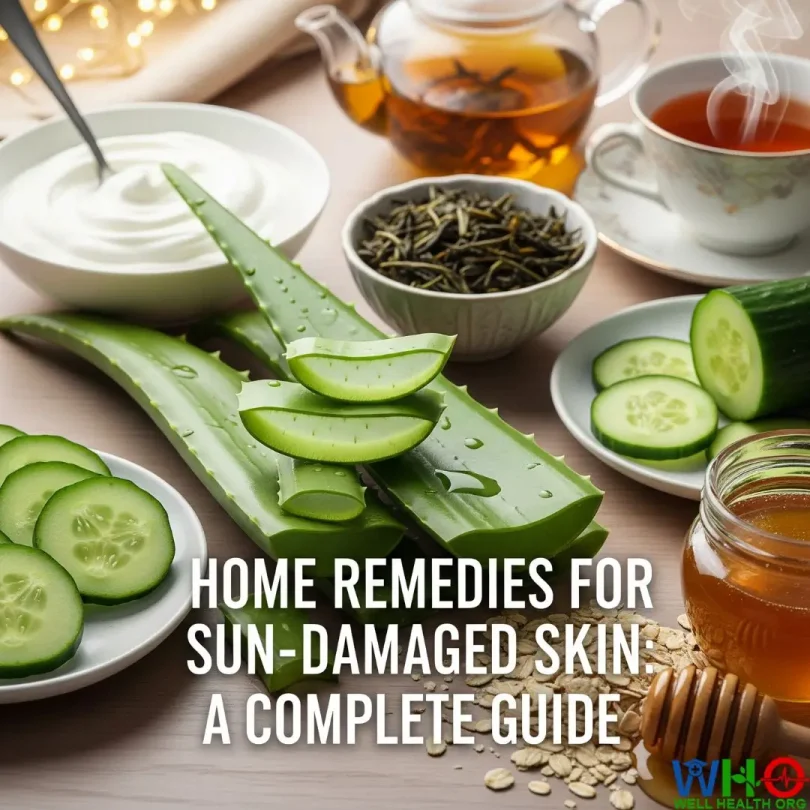
🌿 From Photoaging to Radiance: How to Restore Your Skin’s Health Using Proven Natural Treatments
We cherish those bright, sunny days—they lift our spirits, encourage outdoor activity, and are essential for Vitamin D synthesis. However, the very rays that bring us joy can, over time, inflict significant and lasting harm upon our skin. This cumulative exposure leads to a condition widely known as photoaging, or sun-damaged skin. It’s a telltale sign of environmental stress, manifesting visibly as stubborn fine lines and deep wrinkles, a loss of youthful elasticity, persistent dark spots (hyperpigmentation), and an overall uneven, leathery texture.
- 🌿 From Photoaging to Radiance: How to Restore Your Skin’s Health Using Proven Natural Treatments
- Understanding the Enemy: The Molecular Science of Photoaging
- The Duo of Destruction: UVA and UVB Rays
- 1. UVA Rays: The Silent Deep Penetrator (“A” for Aging)
- 2. UVB Rays: The Epidermal Incendiary (“B” for Burning)
- Photoaging vs. Chronological Aging: A Critical Distinction
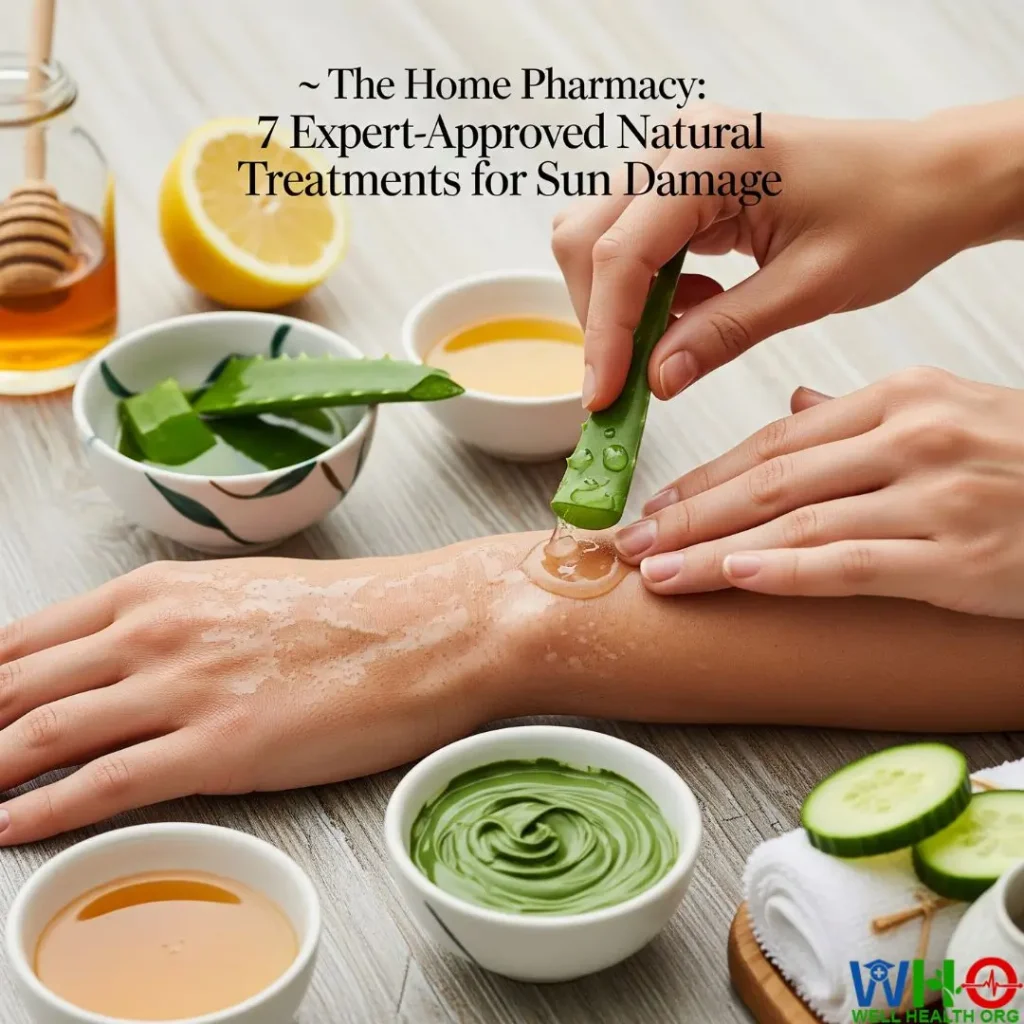
- 🍯 The Home Pharmacy: 7 Expert-Approved Natural Treatments for Sun Damage
- 1. Aloe Vera: The Essential Post-Sun Repair Agent
- 2. Green Tea: The Free Radical Fighter
- 3. Apple Cider Vinegar (ACV): The Gentle Resurfacer
- 4. Raw Honey: The Regenerative Humectant
- 5. Turmeric (Curcumin): The Brightening Anti-Inflammatory Spice
- 6. Lemon Juice and Sugar Scrub: Targeted Brightening (Use with Extreme Caution)
- 7. Oatmeal and Milk Mask: Soothing Barrier Repair
- 🔬 Beyond the Surface: Essential Supplements and Diet for Internal Repair
- 1. Vitamin C (Ascorbic Acid)
- 2. Vitamin E (Tocopherol)
- 3. Lycopene
- 4. Omega-3 Fatty Acids
- 🛡️ Prevention: The Non-Negotiable Foundation for Skin Health
- The Daily Sun Protection Protocol
- 1. The SPF Rule: Broad-Spectrum Daily
- 2. Physical Blockers and Clothing
- 3. Avoid Tanning Beds and Unprotected Tanning
- 👩⚕️ When the Damage Needs a Dermatologist: Seeking Professional Help
- Non-Negotiable Reasons to See a Doctor
- 🌟 Conclusion: Embracing a Holistic and Sustainable Future for Skin Health
- ❓ Frequently Asked Questions (FAQs) About Natural Skin Repair
- 1. How quickly do natural remedies typically work to fade sunspots?
- 2. Can I combine several natural remedies in one routine?
- 3. Is topical Vitamin C (ascorbic acid) essential for sun-damaged skin?
- 4. What is the most effective internal supplement for increasing sun resilience?
- 5. Why do my sunspots get worse after using certain treatments?
While it is true that severe photoaging may necessitate professional medical intervention, there is a wealth of simple yet remarkably effective home remedies available. These natural treatments can soothe inflammation, accelerate cellular repair, and significantly improve the skin’s visible appearance, all from the comfort and convenience of your home.
This comprehensive, expert-level guide will serve as your definitive resource for naturally treating sun-damaged skin. We will deeply explore the science behind how common, accessible ingredients work on a molecular level, provide detailed, easy-to-follow instructions and practical application tips, and, most importantly, provide an expanded framework for preventing any future deterioration. Prepare to discover how you can actively restore your skin’s health, resilience, and natural radiance.
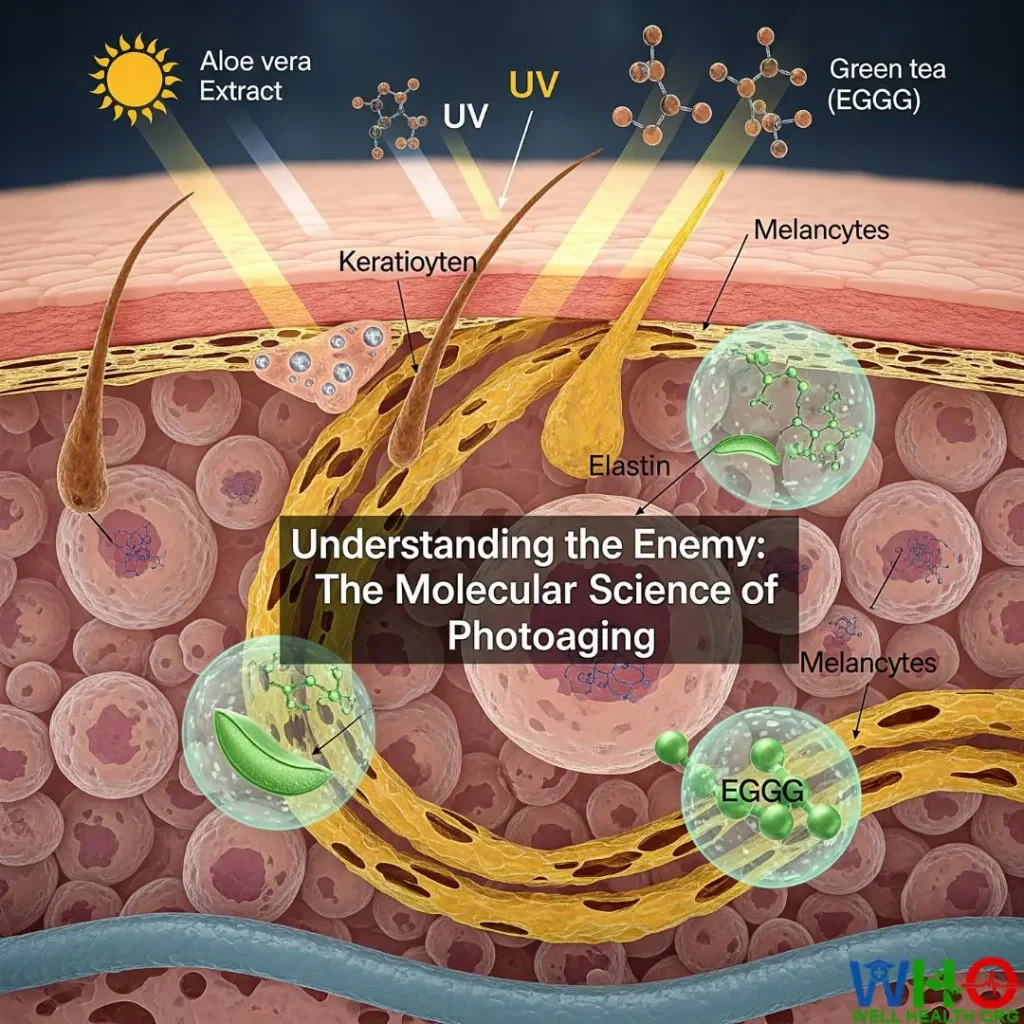
Understanding the Enemy: The Molecular Science of Photoaging
Before diving into solutions, true expertise requires understanding the mechanism of damage. Sun damage is not merely a superficial tanning or burning; it is a profound assault on the very structure and DNA of your skin cells, initiated by ultraviolet (UV) radiation.
The Duo of Destruction: UVA and UVB Rays
The sun emits UV radiation that reaches the Earth’s surface and is categorized into two primary types that affect the skin differently:
1. UVA Rays: The Silent Deep Penetrator (“A” for Aging)
UVA rays constitute about 95% of the UV radiation reaching the Earth. They are the same intensity year-round, can penetrate clouds and glass, and are the primary culprit behind long-term aging effects.
- The Target: UVA rays penetrate deep into the dermis, the underlying layer of the skin responsible for its structural integrity.
- The Damage: They generate high levels of Reactive Oxygen Species (ROS), commonly known as free radicals. These free radicals attack and break down collagen (the skin’s main structural protein) and elastin (the protein responsible for flexibility and ‘snap-back’).
- The Result: The degradation of these proteins leads directly to the formation of deep wrinkles, sagging skin, and a general loss of firmness and contour.
2. UVB Rays: The Epidermal Incendiary (“B” for Burning)
UVB rays primarily affect the epidermis, the outer layer of the skin. Their intensity fluctuates greatly depending on the season, time of day, and altitude.
- The Target: The upper layers of the skin and the melanocytes (pigment-producing cells).
- The Damage: UVB rays are the primary cause of sunburn and inflammation. They also directly damage cellular DNA, contributing significantly to the development of skin cancers.
- The Result: Sunburn, redness, blistering, and the stimulation of melanocytes, leading to an overproduction of melanin, which results in dark spots (solar lentigines) and uneven pigmentation.
Photoaging vs. Chronological Aging: A Critical Distinction
Chronological Aging is the natural, inevitable process governed by genetics, where cell turnover slows down and collagen naturally diminishes with age. Photoaging, however, is premature aging caused almost entirely by external, controllable factors. While the skin naturally ages over time, photoaging dramatically accelerates the process, making a person’s skin look far older than their biological age. Understanding this distinction provides immense hope: while you cannot fully halt time, you can actively work to repair and mitigate the damage caused by UV exposure.
🍯 The Home Pharmacy: 7 Expert-Approved Natural Treatments for Sun Damage
Nature provides an incredible arsenal of ingredients rich in antioxidants, anti-inflammatories, and reparative compounds. Integrating these into your routine offers a gentle yet effective path to skin recovery.
1. Aloe Vera: The Essential Post-Sun Repair Agent
Aloe vera is a staple, renowned worldwide for its immediate soothing properties. But its benefits extend far beyond a simple sunburn treatment.
- Mechanism of Action (Expertise): Aloe vera contains key compounds called polysaccharides, which aid in skin moisture retention and binding. More importantly, it contains aloesin and aloin, compounds that have been shown to inhibit tyrosinase, the enzyme responsible for melanin production. By inhibiting this enzyme, aloe vera can help fade existing sunspots (hyperpigmentation).
- Application (Experience):
- The Best Source: Always use fresh gel directly squeezed from a mature leaf of an Aloe Vera plant, as commercial gels often contain alcohol or perfumes that can irritate damaged skin.
- How to Use it: Cut a leaf, let the yellowish sap drain (this can be slightly irritating), then slit the leaf open and scoop out the clear gel. Apply a generous, cool layer directly to the sun-damaged areas. Leave it on for 30 minutes.
- Tip: Store the harvested gel in an airtight container in the refrigerator for an intensely cooling and inflammation-reducing mask.
2. Green Tea: The Free Radical Fighter
Green tea is more than just a beverage; it is a potent topical remedy, packed with powerful antioxidants known as polyphenols, particularly epigallocatechin-3-gallate (EGCG).
- Mechanism of Action (Expertise): EGCG has been proven to possess remarkable photoprotective and DNA repair properties. When applied topically, it scavenges the harmful free radicals generated by UVA rays and reduces the inflammation caused by UVB rays. Some research even suggests EGCG can help prevent the collagen breakdown caused by UV radiation.
- Application (Experience):
- Preparation: Brew two bags of high-quality green tea in a small amount of water. Let it steep for 5-7 minutes to maximize the EGCG concentration. Cool completely (this is essential, as heat can worsen inflammation).
- How to Use it: Soak cotton pads or a soft, clean compress cloth in the chilled tea. Apply the compress to your entire face or specific areas of sun damage (like the chest or back of hands). Leave it on for 15-20 minutes.
- Tip: Using cooled, steeped tea bags directly on dark spots or under the eyes can provide targeted treatment and soothing relief.
3. Apple Cider Vinegar (ACV): The Gentle Resurfacer
Raw, unfiltered Apple Cider Vinegar has been a traditional skin remedy for centuries due to its acidic profile.
- Mechanism of Action (Expertise): ACV naturally contains alpha-hydroxy acids (AHAs), notably acetic and malic acids. These mild acids work as gentle exfoliants, dissolving the “glue” that holds dead, damaged skin cells together. This process helps to shed the upper layer of pigmented cells, revealing lighter, newer skin underneath, which is excellent for fading sunspots (lentigines). It also helps restore the skin’s natural, slightly acidic pH mantel.
- Application (Experience and Warning):
- Crucial Step: ACV must be diluted before applying to the face. The strong acidity can cause chemical burns if used undiluted.
- How to Use it: Start with a mix of one part ACV to three or four parts purified water. After cleansing, use a cotton swab to dab the mixture directly onto dark spots or areas of uneven tone. Leave it on for only 5 minutes initially, and then rinse thoroughly.
- Warning: Always perform a patch test on a small, discreet area first. If irritation occurs, discontinue use or dilute further. This remedy is best used at night, as AHAs can increase sun sensitivity.
4. Raw Honey: The Regenerative Humectant
Honey, particularly raw, unpasteurized honey, is a powerhouse for damaged skin because it addresses two major concerns: moisture loss and chronic inflammation.
- Mechanism of Action (Expertise): Honey is a natural humectant, meaning it actively attracts and binds moisture from the air into the skin. Sun-damaged skin is often dehydrated and prone to a compromised barrier. Honey repairs this by creating a moist healing environment. Furthermore, honey contains mild antiseptic and anti-inflammatory compounds, which help calm redness and support cell turnover.
- Application (Experience):
- Source: Opt for raw, organic, ideally Manuka honey, due to its superior healing properties.
- How to Use it: Apply a thin, even layer of honey to the facial skin. Allow it to sit as a nourishing mask for 20-30 minutes. Rinse gently with lukewarm water.
- Tip: For an enhanced treatment, mix honey with finely ground oatmeal (colloidal oats). Oatmeal provides gentle physical exfoliation while also containing anti-inflammatory compounds, making this combination ideal for soothing and smoothing rough, sun-damaged texture.
5. Turmeric (Curcumin): The Brightening Anti-Inflammatory Spice
The vibrant yellow spice, turmeric, contains the active compound curcumin, a molecule with extraordinary healing potential.
- Mechanism of Action (Expertise): Curcumin is a powerhouse antioxidant that directly scavenges free radicals. Crucially, it can interfere with the signaling pathways that lead to collagen degradation. For hyperpigmentation, curcumin also acts as a potent tyrosinase inhibitor (similar to aloe), actively working to brighten and fade dark spots and improve overall skin elasticity.
- Application (Experience and Warning):
- How to Use it: Mix one teaspoon of high-quality turmeric powder with enough plain Greek yogurt (lactic acid aids exfoliation) or fresh milk to form a creamy paste. Apply to the skin and leave it on for 10-15 minutes.
- Warning: Curcumin is a strong dye. To minimize temporary yellow staining, rinse thoroughly with a mild cleanser and follow up with a toner. Using it before bed is often advisable.
6. Lemon Juice and Sugar Scrub: Targeted Brightening (Use with Extreme Caution)
Lemon juice contains high concentrations of ascorbic acid (Vitamin C) and citric acid, a natural AHA, making it a powerful natural bleaching and exfoliating agent.
- Mechanism of Action (Expertise): The citric acid exfoliates the top layer of dead, pigmented cells, while the Vitamin C acts as a powerful antioxidant and also helps inhibit melanin synthesis, making it effective for treating age spots.
- Application (Extreme Caution):
- Use it Locally: This remedy should only be applied directly to a small, specific dark spot using a cotton swab, and never to the whole face.
- How to Use it: Mix a few drops of fresh lemon juice with a pinch of fine sugar to create a micro-scrub. Gently massage the scrub onto the dark spot for 30 seconds, and rinse immediately.
- Major Warning: Lemon juice makes skin extremely photosensitive. Never use this remedy during the day or before sun exposure. Use it only at night and wear a high SPF the next day. Due to the high risk of irritation, many experts recommend avoiding lemon juice entirely, opting instead for professional Vitamin C serums.
7. Oatmeal and Milk Mask: Soothing Barrier Repair
Sun-damaged skin often suffers from an impaired skin barrier, leading to chronic dryness, flakiness, and sensitivity.
- Mechanism of Action (Expertise): Colloidal oatmeal contains natural saponins that cleanse the skin, and more importantly, anti-inflammatory compounds that immediately soothe irritation and redness. Milk contains lactic acid, a gentle AHA that hydrates and exfoliates, promoting a softer texture.
- Application (Experience):
- How to Use it: Mix 2 tablespoons of finely ground plain oatmeal with enough whole milk (or yogurt) to form a thick, creamy paste. Apply the mask to the face and leave it on for 20 minutes.
- Benefit: This mask is intensely restorative and calming, making it perfect for skin that feels tight, sensitive, or rough from environmental exposure.
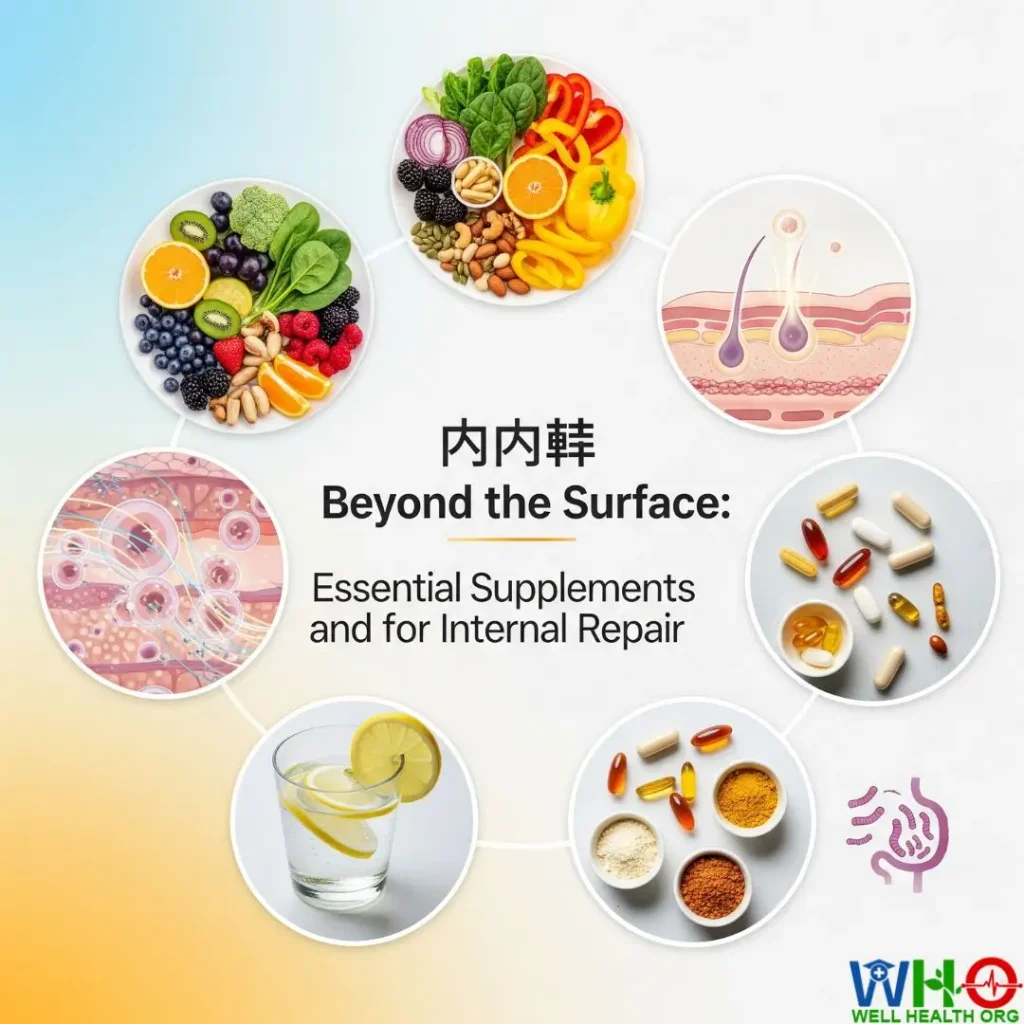
🔬 Beyond the Surface: Essential Supplements and Diet for Internal Repair
Repairing photoaging isn’t just about what you put on your skin; it’s crucially about what you put into your body. Internal nutrition provides the fundamental building blocks and antioxidant defense mechanisms necessary for cellular repair.
1. Vitamin C (Ascorbic Acid)
As a powerful antioxidant, Vitamin C is essential for both protection and repair.
- Role in Skin: Vitamin C is the only antioxidant proven to directly stimulate the synthesis of new collagen. It also plays a key role in regulating melanin production, thereby fading dark spots.
- Dietary Sources: Citrus fruits (oranges, lemons), bell peppers, strawberries, broccoli. Supplementation is highly recommended for therapeutic levels, both orally and in high-quality topical serums.
2. Vitamin E (Tocopherol)
Vitamin E works synergistically with Vitamin C.
- Role in Skin: It is a lipid-soluble antioxidant that protects the fatty cell membranes from free radical damage, preventing the chain reaction that leads to cell destruction. It is particularly effective at protecting against UVB damage.
- Dietary Sources: Almonds, sunflower seeds, spinach, avocado.
3. Lycopene
This potent carotenoid is found in red and pink fruits and vegetables.
- Role in Skin: Lycopene is an excellent internal photoprotective agent. Regular consumption can increase the skin’s tolerance to UV radiation by helping to scavenge UV-induced free radicals, though it should never replace sunscreen.
- Dietary Sources: Cooked tomatoes (cooking increases bioavailability), watermelon, pink grapefruit.
4. Omega-3 Fatty Acids
Found in fatty fish and flaxseeds, these healthy fats are vital anti-inflammatories.
- Role in Skin: Omega-3s help maintain the integrity of the skin’s lipid barrier. A healthy barrier is less prone to moisture loss and inflammation, which accelerates photoaging. They soothe the redness and reactivity often seen in sun-damaged skin.
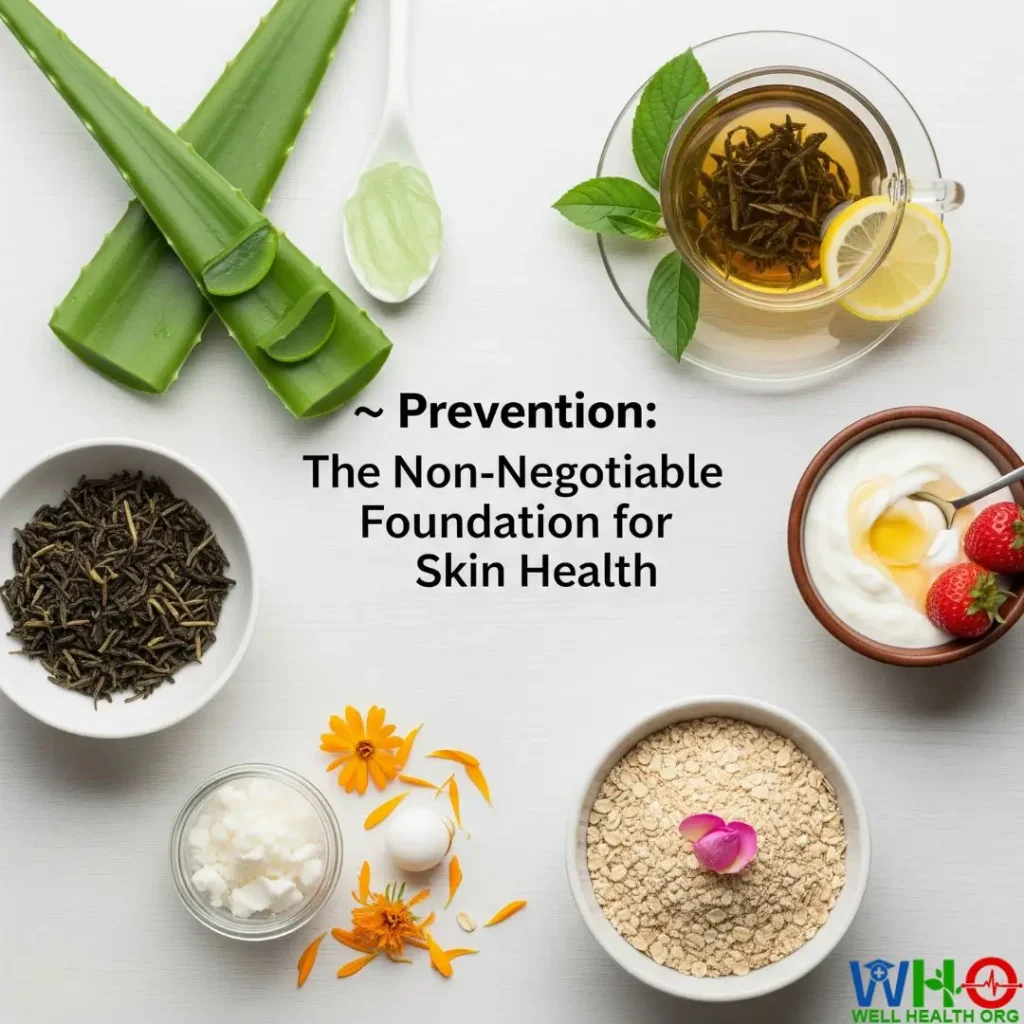
🛡️ Prevention: The Non-Negotiable Foundation for Skin Health
No matter how effective the home remedies are, they will fail if you continue to expose your skin to damaging UV rays without protection. Prevention is, unequivocally, the best and most cost-effective remedy for sun damage.
The Daily Sun Protection Protocol
1. The SPF Rule: Broad-Spectrum Daily
- Apply a broad-spectrum sunscreen (protects against both UVA and UVB) with an SPF of 30 or higher every single morning, 365 days a year, regardless of the weather or whether you plan to be indoors. UVA rays penetrate clouds and standard window glass.
- Reapplication: This is where most people fail. Sunscreen degrades quickly. Reapply a teaspoon-sized amount to the face and neck every two hours of continuous sun exposure, or immediately after sweating heavily or swimming.
2. Physical Blockers and Clothing
- Seek Shade: Avoid direct sun exposure during peak UV hours, typically between 10 a.m. and 4 p.m.
- Wear a Hat: A wide-brimmed hat (at least 3 inches all around) is essential to shield the face, ears, and neck, areas highly susceptible to photoaging and skin cancer.
- UPF Clothing: Invest in clothing rated with an Ultraviolet Protection Factor (UPF). A shirt with UPF 50 blocks 98% of UV rays, offering far superior protection to a standard T-shirt.
3. Avoid Tanning Beds and Unprotected Tanning
Tanning beds emit intense UVA radiation, which penetrates deeply and accelerates collagen breakdown faster than natural sunlight. There is no such thing as a “safe” indoor tan. This is a crucial warning for all ages.
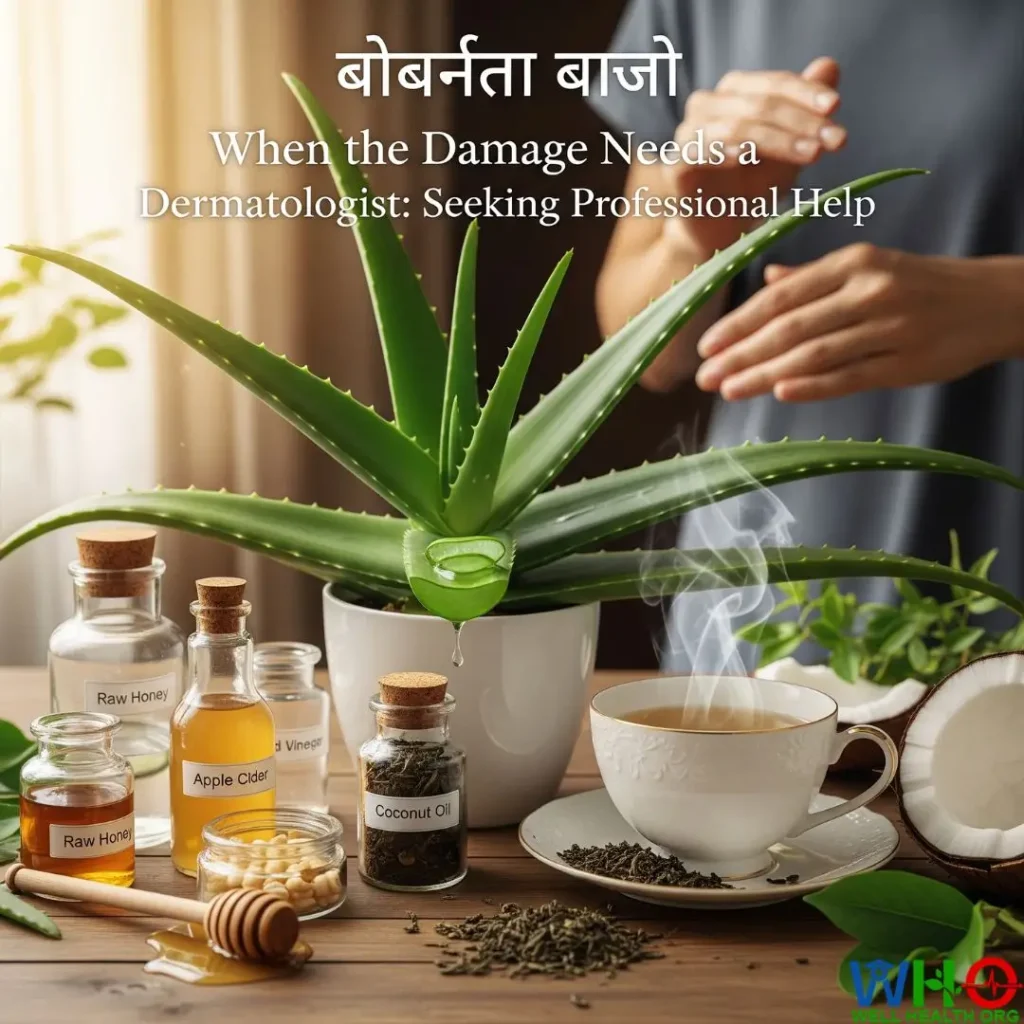
👩⚕️ When the Damage Needs a Dermatologist: Seeking Professional Help
Home remedies are transformative for mild to moderate sun damage, hyperpigmentation, and texture issues. However, sun damage carries health risks that necessitate professional oversight.
Non-Negotiable Reasons to See a Doctor
You must consult a dermatologist immediately if you notice any of the following changes, as they could indicate potentially cancerous lesions:
- The ABCDEs of Melanoma: Be vigilant about new or changing moles or spots according to these criteria:
- A – Asymmetry: One half of the spot doesn’t match the other half.
- B – Border: The edges are irregular, ragged, notched, or blurred.
- C – Color: The color is not uniform; it may include shades of brown, black, white, red, or blue.
- D – Diameter: The spot is larger than 6 millimeters (about the size of a pencil eraser) or is growing.
- E – Evolving: The spot looks different from others, or it is changing in size, shape, or color.
- Non-Healing Sores: Any spot on the skin that bleeds, scabs, and fails to heal completely.
- Severe Aesthetic Concerns: For advanced photoaging—deep, static wrinkles, significant skin laxity, or severe, widespread mottled pigmentation—a dermatologist can recommend clinical treatments:
- Topical Retinoids: The gold standard for reversing cellular damage and promoting collagen production.
- Chemical Peels: To aggressively resurface the skin and remove multiple layers of damaged, pigmented cells.
- Laser Therapy: To target specific pigment deep within the skin or stimulate dramatic new collagen synthesis.
🌟 Conclusion: Embracing a Holistic and Sustainable Future for Skin Health
Sun damage doesn’t have to define your skin’s future. By shifting your focus from simply reacting to flaws to proactively supporting your skin’s natural repair mechanisms, you can build a robust defense against further photoaging and actively restore your skin’s resilience.
The journey to healthier skin involves understanding that true radiance comes from within and without. Natural ingredients, rich in antioxidants and repair compounds, provide a trustworthy path to easing discoloration, enhancing recovery, and improving your overall quality of life. Crucially, foundational lifestyle shifts like daily sun protection are the non-negotiable pillars of long-term success.
By integrating these simple, powerful steps into your daily life and pairing them with a diligent approach to sun protection, you are investing in a future defined by strength, flexibility, and natural beauty.
❓ Frequently Asked Questions (FAQs) About Natural Skin Repair
1. How quickly do natural remedies typically work to fade sunspots?
Fading sunspots (hyperpigmentation) is a process that requires patience and consistency. Unlike professional laser treatments, natural remedies work by gently inhibiting melanin production and accelerating the exfoliation of pigmented skin cells.
- Expectation: You might start to see subtle improvements in texture and tone within 4 to 6 weeks. However, significant fading of stubborn dark spots typically requires 2 to 3 months of consistent, daily application of remedies like turmeric, aloe vera, or diluted ACV.
- The Key: Always pair these treatments with absolute daily sun protection, as even minor sun exposure can reactivate pigment production and undo weeks of effort.
2. Can I combine several natural remedies in one routine?
Yes, combining remedies often provides a synergistic effect, but this must be done strategically to avoid overwhelming the skin.
- Example of a Synergistic Routine: Use an exfoliating remedy like diluted ACV or a lemon juice spot treatment at night. In the morning, use antioxidant protection by applying cool green tea topically before moisturizing. Use a hydrating remedy like a raw honey mask once or twice a week for deep nourishment.
- Warning: Never combine highly acidic remedies (ACV, lemon) with harsh scrubs or other potent exfoliants, as this can severely irritate sun-damaged skin.
3. Is topical Vitamin C (ascorbic acid) essential for sun-damaged skin?
While home remedies provide Vitamin C, using a stable, high-quality topical Vitamin C serum is widely considered essential for reversing and protecting against photoaging.
- Why it Matters: Topical Vitamin C is a phenomenal antioxidant that neutralizes free radicals caused by UV exposure. Furthermore, it is the only topical ingredient proven to help boost the synthesis of new collagen and actively brightens hyperpigmentation.
- Action Plan: Apply a serum every morning before your sunscreen. It acts as an invaluable secondary layer of defense against environmental stressors.
4. What is the most effective internal supplement for increasing sun resilience?
While no supplement can replace sunscreen, Lycopene is highly recommended for increasing the skin’s internal tolerance to UV damage. Lycopene is a potent carotenoid (found in cooked tomatoes and watermelon) that acts as an extremely powerful antioxidant within the skin’s lipid barrier. Consistent consumption helps reduce the oxidative stress and inflammation that UV exposure causes at a cellular level.
5. Why do my sunspots get worse after using certain treatments?
If sunspots appear to worsen after using a treatment, it is almost always due to one of two reasons:
- Increased Photosensitivity: Acidic exfoliants (like lemon juice or high concentrations of ACV) can make the skin more sensitive to the sun. If you don’t use adequate sunscreen afterwards, the sun will cause more damage, leading to rebound hyperpigmentation.
- Initial Shedding: Sometimes, as the skin begins to repair and exfoliate, deep, old pigment rises to the surface before being shed, making the spots temporarily look darker. If there is no accompanying redness or irritation, this is often a normal, temporary part of the process.
Medically Reviewed by Prof. Dr. Akram
Orthopedic Surgeon | Professor | Senior Medical Specialist
Prof. Dr. Akram is a distinguished surgeon with over 15 years of clinical expertise. Having served as a lead Emergency Specialist at Complex International Government Hospital, he currently leads a specialized team of 13 medical professionals at his private hospital. As a Professor at top medical universities, he ensures that every article on WellHealthOrg.com meets rigorous clinical standards.
Medical Disclaimer:
The information provided is for educational purposes only and is not a substitute for professional medical advice, diagnosis, or treatment. Always consult your physician for any medical concerns.
Our content is rigorously fact-checked by our 13-member Editorial Team under the clinical supervision of Prof. Dr. Akram.







