
Blackheads — those tiny dark dots that love to camp out on your nose, chin, and forehead — are one of the most frustrating skincare problems. They always seem to appear right before an important event, and no matter how many times you wash your face, they just won’t go away for good.
- Understanding Blackheads: What’s Really Happening Beneath Your Skin
- Why Blackheads Form: The Hidden Causes Behind Clogged Pores
- 1. Excess Sebum (Oil) Production
- 2. Hormonal Changes
- 3. Improper Skin Exfoliation
- 4. Bacteria and Environmental Pollutants
- 5. Skincare or Makeup Products
- 6. Poor Lifestyle Habits
- Home Remedies for Removing Blackheads Naturally
- 1. Steam Therapy: Open and Purify Your Pores
- 2. Gentle Exfoliation: Buff Away Dead Skin Cells
- Homemade Scrubs
- Chemical Exfoliants (for a deeper cleanse)
- 3. Pore Strips: Instant, Though Temporary, Relief
- 4. Natural Face Masks: Deep Cleansing and Healing
- Honey and Lemon Mask
- Yogurt and Oatmeal Mask
- Activated Charcoal Mask
- 5. Clay Masks: Nature’s Oil Absorber
- 6. Apple Cider Vinegar Toner: Balancing and Antibacterial
- 7. Tea Tree Oil: Nature’s Pore Purifier
- Powerful Skincare Ingredients to Include in Your Routine
- Salicylic Acid (BHA): The Blackhead Breaker
- Retinoids: The Cell-Renewing Powerhouse
- Niacinamide: The Gentle Balancer
- Benzoyl Peroxide: The Bacteria Fighter
- Lifestyle Tips to Prevent Blackheads from Coming Back
- 1. Follow a Consistent Skincare Routine
- 2. Moisturize Regularly
- 3. Always Remove Makeup Before Bed
- 4. Use Non-Comedogenic Products
- 5. Maintain a Healthy Diet and Hydration
- 6. Avoid Touching or Picking at Your Face
- 7. Change Pillowcases and Towels Frequently
- Professional Treatments for Stubborn Blackheads
- 1. Chemical Peels
- 2. Microdermabrasion
- 3. Extraction Facials
- 4. Laser Therapy
- Your Step-by-Step Routine for Clear, Blackhead-Free Skin
- Conclusion: The Road to Radiant, Clear Skin
- FAQs
The good news? You can get rid of blackheads safely and effectively at home with the right combination of natural remedies, smart skincare habits, and consistent treatment. This comprehensive guide covers everything you need to know — what blackheads are, why they form, how to remove them, and how to prevent them from returning.
We’ll also explore dermatologist-approved ingredients, DIY face masks, exfoliation techniques, and daily habits that can keep your skin clearer, smoother, and naturally radiant — without spending a fortune on salon treatments.
Understanding Blackheads: What’s Really Happening Beneath Your Skin
Before diving into treatments, it’s essential to understand what blackheads actually are. Blackheads, or open comedones, are small, clogged pores that appear dark on the surface of your skin. Each pore (or hair follicle) contains a sebaceous gland that produces oil called sebum, which helps keep your skin hydrated and soft.
When excess oil mixes with dead skin cells and other debris, it can clog the opening of the pore. If the top of the pore stays open, the material inside reacts with oxygen in the air — a process called oxidation — turning the plug dark. That’s what creates a blackhead.
Contrary to popular belief, that dark color isn’t dirt — it’s oxidized oil and dead skin cells. Unlike whiteheads, which are closed comedones covered by a thin layer of skin, blackheads remain open, making them more visible.
Blackheads are most common on oily areas like the nose, chin, forehead, neck, chest, and back, though they can appear anywhere. They’re not dangerous, but they can be stubborn and can affect confidence, especially when they cluster together or return frequently.
Why Blackheads Form: The Hidden Causes Behind Clogged Pores
Several factors influence the formation of blackheads, and understanding them helps you prevent future breakouts.
1. Excess Sebum (Oil) Production
If your skin produces too much sebum, it can easily mix with dead cells and block pores. This is especially common in people with oily or combination skin types. Hormonal fluctuations — such as puberty, menstruation, or stress — can also trigger increased oil production.
2. Hormonal Changes
During teenage years or hormonal cycles, androgens (a type of hormone) increase sebum production. This explains why blackheads often appear in adolescents and can also resurface in adults during pregnancy, menopause, or times of stress.
3. Improper Skin Exfoliation
When dead skin cells aren’t shed regularly, they build up on the surface and clog pores. Without proper exfoliation, even the best cleansers can’t penetrate deeply enough to clear them out.
4. Bacteria and Environmental Pollutants
Exposure to bacteria like Propionibacterium acnes or daily pollutants can worsen clogged pores. These irritants mix with oil and dead skin, forming hardened plugs that resist normal washing.
5. Skincare or Makeup Products
Some creams, sunscreens, and foundations contain comedogenic ingredients that clog pores. Always check labels for the term “non-comedogenic,” which means they’re formulated not to block pores.
6. Poor Lifestyle Habits
A diet high in sugar, dairy, or refined carbohydrates may contribute to oil imbalance and inflammation in the skin. Insufficient hydration, lack of sleep, and frequent touching of the face also worsen blackheads.
Home Remedies for Removing Blackheads Naturally
You don’t need expensive spa treatments or harsh chemical peels to manage blackheads. Several safe, effective home remedies can clear out clogged pores, reduce oil buildup, and improve your skin’s overall texture.
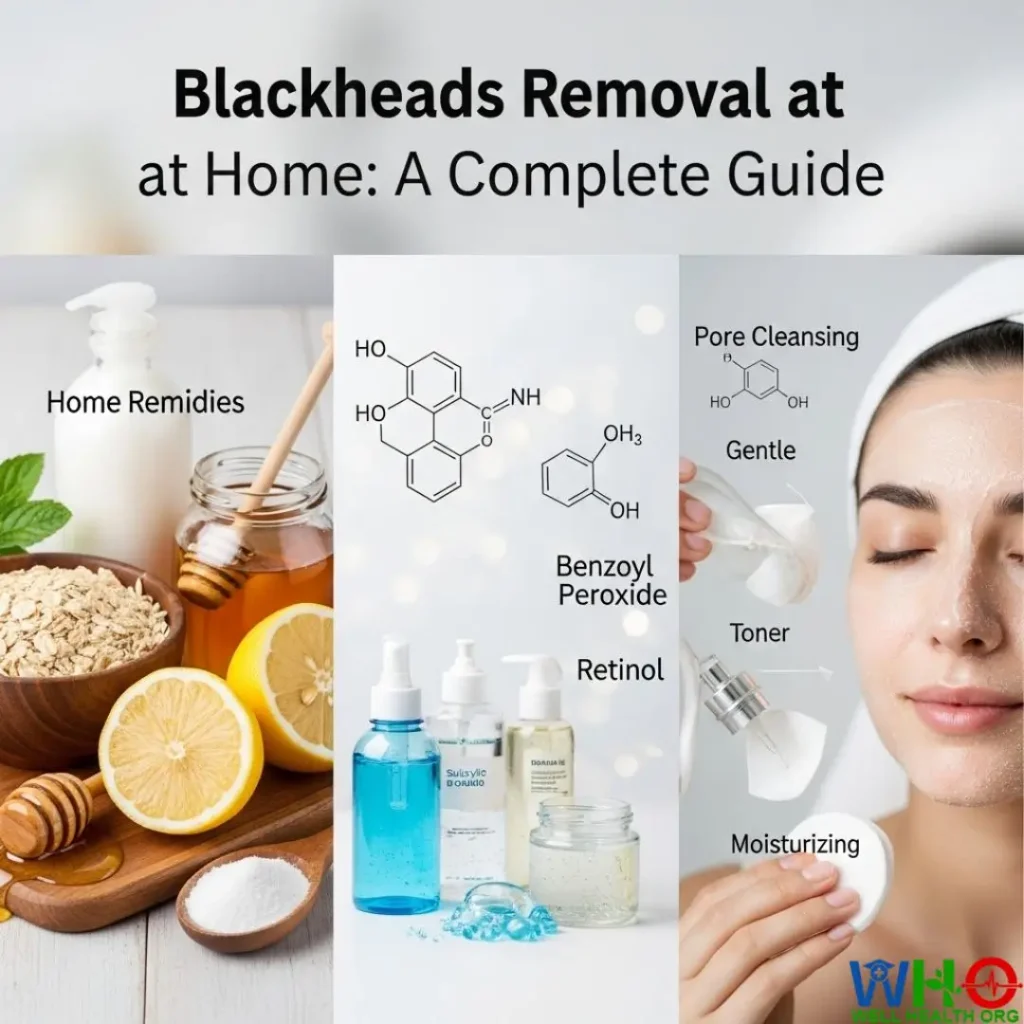
Let’s look at the best methods you can start using today.
1. Steam Therapy: Open and Purify Your Pores
Steaming is one of the oldest and most effective ways to loosen up stubborn blackheads. The warmth helps soften the hardened sebum and dirt trapped inside pores, making it easier to clean them out afterward.
How to do it:
- Fill a bowl with hot water (not boiling).
- Place a towel over your head and lean over the bowl, keeping your face about 8–10 inches away.
- Steam for 5–10 minutes, allowing the warmth to open up your pores.
- Gently pat your skin dry and immediately follow up with exfoliation or a mask for best results.
Pro tip: Add a few drops of tea tree oil, chamomile, or eucalyptus essential oil to the water for antibacterial and calming effects.
Why it works: Steaming enhances circulation, hydrates the skin, and softens blackheads, making them easier to remove without force or irritation.
2. Gentle Exfoliation: Buff Away Dead Skin Cells
Exfoliating removes the dead skin cells that clog your pores and lead to blackheads. You can use both physical exfoliants (like scrubs) and chemical exfoliants (like acids), but moderation is key.
Homemade Scrubs
- Sugar and Coconut Oil Scrub:
Mix one tablespoon of sugar with one teaspoon of coconut or olive oil. Gently massage in circular motions for about 30 seconds, then rinse with lukewarm water. - Green Tea Paste:
Mix one teaspoon of dry green tea leaves with water to form a paste. This antioxidant-rich scrub helps control oil production and reduce inflammation.
Chemical Exfoliants (for a deeper cleanse)
Look for products with salicylic acid (BHA) or glycolic acid (AHA). These ingredients dissolve oil and dead skin cells without harsh scrubbing.
Caution: Limit exfoliation to 2–3 times a week. Over-exfoliating can strip your skin, trigger excess oil production, and worsen blackheads.
3. Pore Strips: Instant, Though Temporary, Relief
Pore strips can remove surface-level blackheads and impurities in one satisfying peel. They work by adhering to the debris in your pores and pulling it out when removed.
How to use:
- Clean your face and wet your nose area.
- Apply the pore strip and press it firmly.
- Wait for 10–15 minutes until it hardens.
- Gently peel it off starting from the edges.
Tip: Follow with a hydrating toner or aloe vera gel to calm the skin afterward.
Important: Don’t overuse pore strips — limit them to once a week to avoid damaging your pores or causing irritation.
4. Natural Face Masks: Deep Cleansing and Healing
Natural masks can help absorb excess oil, pull impurities from pores, and restore balance to your skin.
Honey and Lemon Mask
Mix 1 tablespoon of raw honey with ½ teaspoon of lemon juice. Apply the mixture evenly across your face, avoiding your eyes. Leave it for 15 minutes before rinsing.
Honey is a natural antibacterial and humectant, while lemon acts as a mild exfoliant that brightens dull skin.
Yogurt and Oatmeal Mask
Blend 2 tablespoons of plain yogurt with 1 tablespoon of ground oatmeal. Apply it to your face and leave it on for 15 minutes. Yogurt’s lactic acid gently dissolves dead skin cells, while oatmeal soothes irritation and balances oil production.
Activated Charcoal Mask
Activated charcoal is a powerful detoxifier. Mix 1 teaspoon of activated charcoal powder with 1 tablespoon of aloe vera gel or rose water. Apply it to the T-zone, leave for 10 minutes, and rinse with warm water.
These masks not only help with blackheads but also improve overall skin clarity when used consistently.
5. Clay Masks: Nature’s Oil Absorber
Clay masks are a holy grail for oily and acne-prone skin. They pull out impurities, absorb excess sebum, and minimize the appearance of enlarged pores — all while giving your skin a refreshed, matte finish.
Best clays for blackhead-prone skin:
- Bentonite clay: Ideal for deep detoxification and oil control.
- Kaolin clay: Gentler and suitable for sensitive or dry skin.
- French green clay: Rich in minerals that tighten and tone the skin.
How to use:
- Mix 1–2 tablespoons of clay powder with rose water, apple cider vinegar, or plain water to form a smooth paste.
- Apply it evenly to your face, focusing on the nose, chin, and forehead (T-zone).
- Let it sit until it’s nearly dry — about 10–15 minutes — then rinse with warm water.
- Follow up with a moisturizer to prevent dryness.
Pro tip: Don’t let the mask dry completely; when it cracks, it can dehydrate your skin. Remove it while it’s slightly damp for maximum benefit.
Regular use (1–2 times weekly) keeps pores clear and helps prevent new blackheads from forming.
6. Apple Cider Vinegar Toner: Balancing and Antibacterial
Apple cider vinegar (ACV) works as a natural toner that helps restore your skin’s pH balance and kill acne-causing bacteria. It also gently exfoliates due to its natural acid content.
How to make and use it:
- Mix 1 part ACV with 3 parts water (for sensitive skin, use 1:4).
- Apply with a cotton pad after cleansing your face.
- Let it sit for a minute, then rinse or follow with your moisturizer.
Note: Always dilute ACV before use. Applying it directly can cause irritation or burns, especially for sensitive skin types.
7. Tea Tree Oil: Nature’s Pore Purifier
Tea tree oil is a potent antibacterial essential oil that targets the bacteria and excess sebum contributing to blackheads and acne.
How to use it safely:
- Mix 2–3 drops of tea tree oil with 1 teaspoon of a carrier oil (like jojoba, coconut, or almond oil).
- Apply it to affected areas using a cotton swab.
- Leave it on overnight and rinse in the morning.
Alternatively, you can add a drop to your daily moisturizer or clay mask for enhanced results.
Why it works: Tea tree oil penetrates deep into pores, disinfecting them and preventing future blockages without overly drying your skin.
Powerful Skincare Ingredients to Include in Your Routine
If you want long-term results, pairing home remedies with dermatologist-approved ingredients can dramatically improve skin texture and prevent blackheads from recurring.
Let’s look at the top-performing ingredients backed by science.
Salicylic Acid (BHA): The Blackhead Breaker
This beta hydroxy acid (BHA) is one of the most effective ingredients for clearing blackheads. Unlike water-based exfoliants, salicylic acid is oil-soluble, meaning it penetrates deep into pores to dissolve the buildup of sebum and dead cells.
How to use it:
- Choose a cleanser, toner, or serum containing 0.5–2% salicylic acid.
- Start with a low concentration to avoid over-drying your skin.
- Use it 2–3 times a week and increase gradually.
Regular use keeps pores clear, smooths texture, and prevents new blackheads from forming.
Retinoids: The Cell-Renewing Powerhouse
Retinoids (vitamin A derivatives) are considered the gold standard for preventing clogged pores. They speed up cell turnover, helping your skin shed dead cells faster and preventing buildup.
How to use them effectively:
- Apply a pea-sized amount of retinoid (like Differin gel or Retinol) at night.
- Use every other night at first to let your skin adjust.
- Always follow with a moisturizer to combat dryness and irritation.
Pro tip: Retinoids make your skin more sensitive to sunlight, so use sunscreen daily to protect against damage.
Niacinamide: The Gentle Balancer
Niacinamide (vitamin B3) regulates oil production, soothes redness, and strengthens the skin’s natural barrier. It doesn’t unclog pores directly but helps prevent them from becoming congested in the first place.
How to use: Apply a serum containing 5–10% niacinamide daily after cleansing and toning. It layers well with most other skincare ingredients and is safe for sensitive skin.
Benzoyl Peroxide: The Bacteria Fighter
For stubborn blackheads that border on acne, benzoyl peroxide can be a game-changer. It kills bacteria on the skin’s surface, helping to clear pores and reduce inflammation.
Caution: Use in moderation, as it can cause dryness or irritation. Start with a 2.5% concentration and apply it only to problem areas.
Lifestyle Tips to Prevent Blackheads from Coming Back
Treating blackheads is only half the battle — keeping them away for good requires consistent care and lifestyle adjustments.
1. Follow a Consistent Skincare Routine
Cleanse twice daily using a gentle, non-comedogenic cleanser. Avoid harsh soaps that strip away natural oils, as they can trigger rebound oil production.
2. Moisturize Regularly
Even oily skin needs hydration. Use a light, water-based moisturizer to balance oil levels and keep your skin barrier strong.
3. Always Remove Makeup Before Bed
Sleeping with makeup on is one of the fastest ways to clog pores. Use a micellar water or oil-free makeup remover before washing your face.
4. Use Non-Comedogenic Products
Look for labels that say “oil-free,” “non-comedogenic,” or “won’t clog pores.” These products are designed to minimize blackhead formation.
5. Maintain a Healthy Diet and Hydration
A balanced diet rich in vitamins A, E, zinc, and antioxidants can improve skin health. Reduce your intake of processed foods, dairy, and sugary snacks, which may trigger excess oil production.
Drink at least 2 liters of water daily to flush out toxins and keep your skin hydrated.
6. Avoid Touching or Picking at Your Face
Popping or squeezing blackheads might seem satisfying but can cause scarring, redness, and even deeper blockages. If you must remove them, use a sterilized comedone extractor or seek professional help from a dermatologist.
7. Change Pillowcases and Towels Frequently
Dirty pillowcases harbor oil, sweat, and bacteria — all culprits behind recurring blackheads. Wash them at least once a week in hot water to maintain a clean surface for your skin.
Professional Treatments for Stubborn Blackheads
If your blackheads persist despite a solid skincare routine, professional treatments can offer advanced results.
1. Chemical Peels
Dermatologists use controlled doses of glycolic, lactic, or salicylic acid to exfoliate your skin deeply and dissolve blackhead-causing debris.
2. Microdermabrasion
This non-invasive procedure removes the top layer of dead skin cells, leaving your pores clear and smooth.
3. Extraction Facials
Performed by trained aestheticians, professional extractions safely remove blackheads without damaging your skin.
4. Laser Therapy
Advanced laser treatments can reduce oil production and minimize pore size, making it harder for blackheads to return.
Your Step-by-Step Routine for Clear, Blackhead-Free Skin
Here’s a simple daily and weekly plan to maintain smooth, glowing skin:
| Routine Type | Morning | Night | Weekly |
|---|---|---|---|
| Cleanse | Gentle foaming or gel cleanser | Oil-free cleanser | — |
| Tone | ACV or niacinamide toner | BHA toner | — |
| Treat | Niacinamide or vitamin C serum | Retinoid or salicylic acid serum | Clay mask (1–2x) |
| Moisturize | Lightweight moisturizer | Hydrating gel cream | — |
| Protect | Sunscreen SPF 30+ | — | Exfoliate (2–3x) |
Consistency is key — your pores need time to adapt and purge impurities before results become visible.
Conclusion: The Road to Radiant, Clear Skin
Blackheads may be persistent, but they’re not unbeatable. By combining smart daily skincare, natural remedies, and targeted active ingredients, you can eliminate them safely at home and prevent their return.
Remember — achieving clearer skin doesn’t happen overnight. Be patient, stay consistent, and listen to your skin’s needs. If you maintain a healthy routine, hydrate well, and avoid overloading your pores, your complexion will gradually become smoother, brighter, and more confident than ever.
Your journey to blackhead-free, glowing skin starts today — and with the right care, you can make the results last a lifetime.
FAQs
1. Are blackheads and whiteheads the same thing?
Not exactly. Blackheads are open pores with oxidized debris, while whiteheads are closed pores covered by skin. Both result from clogged follicles.
2. How long does it take to get rid of blackheads?
With consistent care, visible improvements can appear in 2–4 weeks. More stubborn blackheads may take longer or need professional treatments.
3. Can toothpaste or baking soda remove blackheads?
These are popular DIY hacks, but dermatologists caution against them. They can be too harsh and disrupt your skin’s natural pH balance.
4. Is it okay to extract blackheads manually?
If done improperly, it can cause scarring or infection. Always use sterilized tools or see a licensed aesthetician for professional extractions.
5. Do blackheads go away naturally?
Sometimes — especially if you maintain clean, balanced skin. However, most blackheads require gentle exfoliation or treatment to clear completely.
Medically Reviewed by Prof. Dr. Akram
Orthopedic Surgeon | Professor | Senior Medical Specialist
Prof. Dr. Akram is a distinguished surgeon with over 15 years of clinical expertise. Having served as a lead Emergency Specialist at Complex International Government Hospital, he currently leads a specialized team of 13 medical professionals at his private hospital. As a Professor at top medical universities, he ensures that every article on WellHealthOrg.com meets rigorous clinical standards.
Medical Disclaimer:
The information provided is for educational purposes only and is not a substitute for professional medical advice, diagnosis, or treatment. Always consult your physician for any medical concerns.
Our content is rigorously fact-checked by our 13-member Editorial Team under the clinical supervision of Prof. Dr. Akram.







