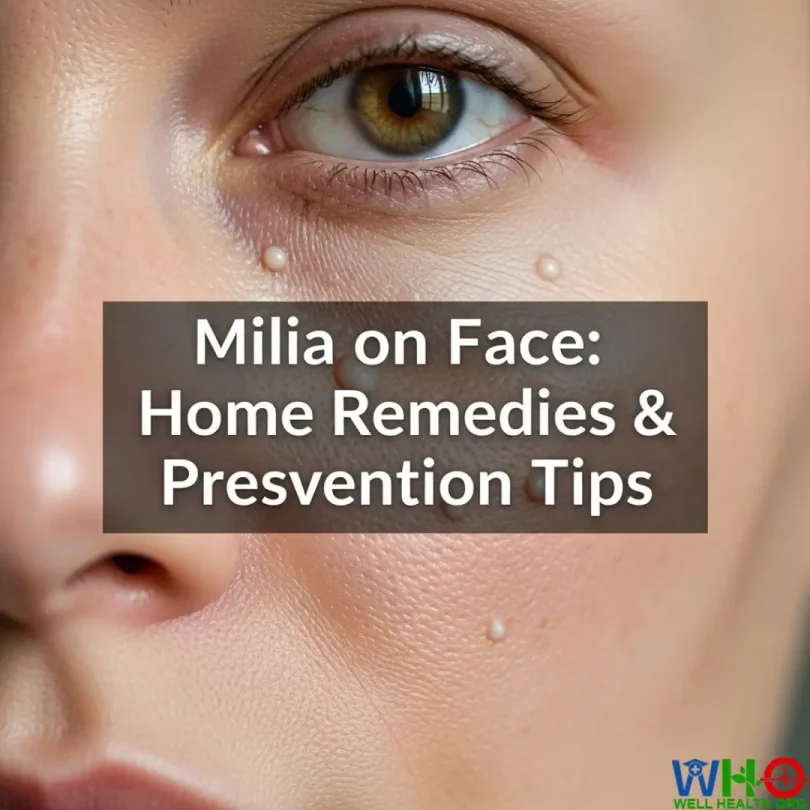
Milia on Face
Those tiny, pearly-white bumps that seem impossible to get rid of? They’re called milia, and while completely harmless, they can be frustratingly persistent. The good news: with the right care and patience, you can minimize and even prevent them—naturally.
- Milia on Face
- What Exactly Are Milia?
- Common Causes of Milia in Adults
- 7 Safe and Effective Home Remedies for Milia
- 1. Gentle Exfoliation (Key for Prevention)
- 2. Steam Therapy to Soften Skin
- 3. Warm Compress for Stubborn Bumps
- 4. Honey and Rosewater Mask (Natural Soothing Remedy)
- 5. Retinoid Creams for Cell Turnover
- 6. Daily Sun Protection
- 7. Gentle, Consistent Cleansing
- Ingredients to Avoid If You’re Prone to Milia
- When to See a Dermatologist
- Long-Term Milia Prevention Tips
- Frequently Asked Questions (FAQs)
- Final Thoughts: Clearer Skin Starts with Gentle Care
Below, we’ll go beyond the basics to explore safe, dermatologist-approved home remedies, lifestyle tips, and prevention strategies so you can reclaim smoother, healthier-looking skin.
What Exactly Are Milia?
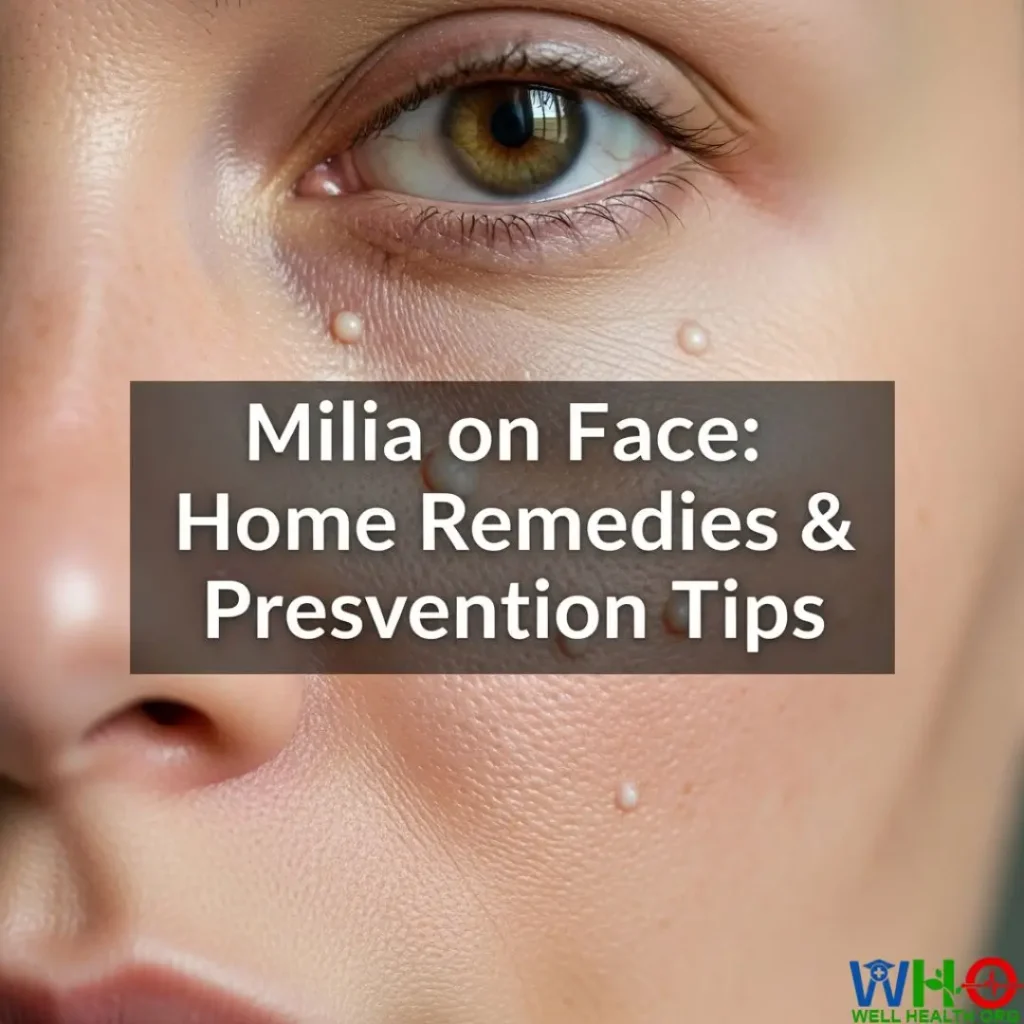
Milia (singular: milium) are small, white, hard cysts that form just under the skin when keratin (a protein found in skin and hair) becomes trapped. They’re most common on the face—especially the cheeks, eyelids, and nose—but can appear anywhere.
Unlike acne or whiteheads, milia are not caused by oil, dirt, or bacteria, so squeezing or popping them won’t help (and can actually make things worse).
Common Causes of Milia in Adults
Knowing what’s behind those bumps can help you prevent them in the first place.
- Heavy skincare or makeup products – Thick, oily formulas can clog pores and trap dead skin.
- Sun damage – UV exposure thickens your skin over time, making it harder for cells to shed.
- Aging – Slower cell turnover and less exfoliation can lead to buildup.
- Skin injury – Burns, rashes, or even certain laser or peel treatments can trigger milia formation.
- Genetics and skin conditions – People with rosacea or sensitive skin are more prone.
7 Safe and Effective Home Remedies for Milia
1. Gentle Exfoliation (Key for Prevention)
Regular exfoliation removes dead skin cells before they can become trapped. Opt for chemical exfoliants rather than harsh scrubs:
- Salicylic acid (BHA) – Penetrates deep into pores, helping dissolve trapped keratin.
- Glycolic acid (AHA) – Smooths the skin’s surface and promotes renewal.
- Lactic acid – A mild option suitable for sensitive skin.
✅ How to use:
Start once a week, then increase gradually to 2–3 times a week as tolerated. Always follow with a hydrating moisturizer and sunscreen.
2. Steam Therapy to Soften Skin
Steam loosens debris, softens hardened keratin, and opens pores.
✅ How to do it:
- Boil water and pour it into a bowl.
- Let it cool slightly to avoid burns.
- Drape a towel over your head and hover above the steam for 5–8 minutes.
- Rinse your face with lukewarm water and pat dry.
Do this once or twice a week before applying gentle exfoliants or masks.
3. Warm Compress for Stubborn Bumps
A warm compress encourages milia to surface naturally.
✅ How to do it:
- Soak a clean cloth in warm (not hot) water.
- Apply to affected areas for 5–10 minutes daily.
- Finish with a light, non-comedogenic moisturizer.
This promotes healing without damaging your skin barrier.
4. Honey and Rosewater Mask (Natural Soothing Remedy)
Honey has antibacterial and moisturizing properties, while rosewater tones and calms irritation.
✅ DIY Mask:
- Mix 2 tbsp raw honey with 1 tbsp rosewater.
- Apply evenly to clean skin.
- Leave on for 15–20 minutes, then rinse with warm water.
Repeat 2–3 times per week to keep your skin soft and clear.
5. Retinoid Creams for Cell Turnover
Retinoids (vitamin A derivatives) increase cell renewal, preventing keratin buildup.
✅ How to use:
- Apply a pea-sized amount of an over-the-counter retinol cream at night.
- Start 2–3 times per week, then increase as your skin adjusts.
- Always wear SPF 30+ during the day—retinoids make your skin more sensitive to sunlight.
Note: Avoid retinoids during pregnancy unless cleared by your doctor.
6. Daily Sun Protection
UV rays thicken skin and slow cell turnover, worsening milia. Daily sunscreen is essential.
✅ Choose:
- A lightweight, non-comedogenic formula
- Broad-spectrum protection (SPF 30 or higher)
- Mineral sunscreens with zinc oxide or titanium dioxide for sensitive skin
Reapply every 2 hours when outdoors.
7. Gentle, Consistent Cleansing
Keep pores clear by removing makeup and sunscreen every night.
✅ How to cleanse:
- Use a fragrance-free, paraben-free cleanser twice daily.
- Avoid harsh soaps or scrubs that can cause irritation.
- Pat dry—never rub your face.
This prevents product buildup and supports natural skin turnover.
Ingredients to Avoid If You’re Prone to Milia
🚫 Heavy oils and waxes: petroleum jelly, lanolin, cocoa butter, and thick mineral oils
🚫 Harsh exfoliants: crushed shells or walnut scrubs can cause micro-tears
🚫 Comedogenic ingredients: certain silicones, isopropyl myristate, and some coconut oils
Instead, choose non-comedogenic, gel-based, or light cream formulations that let your skin breathe.
When to See a Dermatologist
Home care works well for mild to moderate milia, but if you notice:
- Bumps that persist after 6–8 weeks of consistent care
- A large cluster of milia (especially around eyes)
- Discomfort, redness, or irritation
Then, it’s time to consult a professional.
Dermatologists can safely remove milia using:
- Sterile extraction with a fine needle
- Chemical peels
- Laser treatments or cryotherapy (freezing)
- Prescription-strength retinoids
These methods offer quick, scar-free results under sterile conditions.
Long-Term Milia Prevention Tips
- Exfoliate regularly but gently—don’t overdo it.
- Cleanse twice daily to remove excess oil and residue.
- Avoid sleeping in makeup or heavy night creams.
- Moisturize wisely with light, non-comedogenic formulas.
- Protect your skin from UV damage every day.
Consistency is key—your skin renews itself every 28 days, so visible improvements take time.
Frequently Asked Questions (FAQs)
1. Can I pop milia at home?
No. Popping can lead to infection, scarring, or deeper cysts. Always let them resolve naturally or seek professional removal.
2. How long do milia take to go away?
With consistent care, most milia clear in a few weeks to a couple of months. Persistent ones may need dermatologist extraction.
3. Are milia contagious?
No, they’re not infections—so you can’t spread them to others.
4. Can children or babies get milia?
Yes. In infants, they often appear at birth and resolve on their own within a few weeks.
5. What’s the best way to prevent them long-term?
Daily gentle cleansing, regular exfoliation, sunscreen use, and avoiding heavy products are your best defenses.
Final Thoughts: Clearer Skin Starts with Gentle Care
Milia may be small, but they’re a clear signal your skin needs gentle exfoliation, hydration, and protection. You don’t need harsh treatments or picking—just patience and consistency.
By adopting these simple home remedies and mindful skincare habits, you’ll not only reduce milia but also improve your overall skin texture and glow.
Your journey to smoother, clearer skin begins with small, daily steps—treat your skin kindly, and it will reward you with lasting radiance.
Medically Reviewed by Prof. Dr. Akram
Orthopedic Surgeon | Professor | Senior Medical Specialist
Prof. Dr. Akram is a distinguished surgeon with over 15 years of clinical expertise. Having served as a lead Emergency Specialist at Complex International Government Hospital, he currently leads a specialized team of 13 medical professionals at his private hospital. As a Professor at top medical universities, he ensures that every article on WellHealthOrg.com meets rigorous clinical standards.
Medical Disclaimer:
The information provided is for educational purposes only and is not a substitute for professional medical advice, diagnosis, or treatment. Always consult your physician for any medical concerns.
Our content is rigorously fact-checked by our 13-member Editorial Team under the clinical supervision of Prof. Dr. Akram.