
The Search for Quick Constipation Relief
Constipation is one of the most common digestive complaints, affecting people of all ages and lifestyles. When the discomfort, bloating, and heaviness become unbearable, the desire for immediate relief can drive people to extreme measures. Among the more controversial options gaining attention on wellness blogs and social media are homemade enemas—a practice that involves inserting liquids into the rectum to stimulate a bowel movement.
- The Search for Quick Constipation Relief
- What Is an Enema and How Does It Work?
- Medical vs. Homemade Enemas: The Key Differences
- Why People Turn to Homemade Enemas
- The Appeal of Immediate Relief
- Influence of Online Health Trends
- Misinformation and False Safety Perception
- Understanding the Serious Risks of Homemade Enemas
- 1. Electrolyte Imbalance
- 2. Bowel and Rectal Injuries
- 3. Infection Risks
- 4. Damage to the Colon Lining
- 5. Dependency and Long-Term Bowel Dysfunction
- Dangerous Ingredients Often Used in DIY Enemas
- 1. Coffee Enemas
- 2. Vinegar or Lemon Juice
- 3. Hydrogen Peroxide
- 4. Soap and Alcohol-Based Mixtures
- 5. Essential Oils or Herbal Extracts
- Real-Life Complications: When Homemade Enemas Go Wrong
- Safer and Evidence-Based Alternatives to Enemas
- 1. Dietary Modifications for Natural Relief
- 2. Hydration: The Unsung Hero
- 3. Over-the-Counter Relief Options
- 4. Lifestyle Adjustments That Support Healthy Bowel Movements
- Establish a Regular Bathroom Routine
- Exercise Regularly
- Manage Stress
- Improve Toilet Posture
- When Medical Supervision Is Essential
- Medically Supervised Enema Options
- 1. Saline Enema
- 2. Mineral Oil Enema
- 3. Warm Water Enema
- Solutions and Substances to Avoid Entirely
- Critical Safety Guidelines for Medically Supervised Enemas
- 1. Maintain Temperature Control
- 2. Use Only Sterile Equipment
- 3. Proper Body Positioning
- 4. Control Volume and Retention Time
- Warning Signs of Complications: When to Seek Emergency Help
- Professional Alternatives for Chronic or Severe Constipation
- 1. Medically Administered Enemas
- 2. Prescription Medications
- 3. Pelvic Floor Therapy and Biofeedback
- 4. Advanced Treatments
- Taking Control of Your Digestive Health
- Bottom Line
- Medical Disclaimer
On the surface, it sounds like a quick, natural fix. But the reality is far more complicated—and potentially dangerous. While enemas do have legitimate medical uses, performing one at home without professional guidance can result in serious complications, from infections and electrolyte imbalances to internal injuries. Yet, desperate for fast results, many individuals attempt DIY versions using substances like coffee, lemon juice, or vinegar, unaware of the hidden risks.
This article takes a deep dive into the dangers of homemade enemas, explaining what happens to your body when you use them, and outlining safer, medically approved alternatives for constipation relief. By understanding the science—and the risks—you’ll be better equipped to make informed, health-conscious decisions for your digestive well-being.
What Is an Enema and How Does It Work?
An enema involves inserting a fluid solution into the rectum and colon via the anus. The liquid softens stool, stimulates bowel contractions, and encourages evacuation. In medical settings, this is typically done before surgeries, colonoscopies, or when other constipation treatments have failed. The procedure is performed using sterile equipment, precise liquid formulations, and under professional supervision to ensure safety.
In contrast, homemade enemas are self-administered, often with improvised tools or non-sterile ingredients. People might use plastic bottles, tubing kits from pharmacies, or even improvised containers. While the goal is the same—stimulating bowel movement—the lack of medical oversight introduces risks that most people underestimate.
Medical vs. Homemade Enemas: The Key Differences
| Aspect | Medical Enema | Homemade Enema |
|---|---|---|
| Sterility | Performed with sterile, single-use tools | Often uses non-sterile or reused equipment |
| Solution Type | Precisely formulated saline or oil-based solutions | Random household ingredients or internet recipes |
| Supervision | Monitored by healthcare professionals | Done without oversight |
| Risk Level | Controlled and low when performed correctly | High, with increased infection and injury risks |
The key distinction lies in control and safety. A healthcare provider knows the correct temperature, volume, and chemical concentration needed for a safe procedure—knowledge most people don’t have. That’s why performing an enema at home, without expert instruction, can quickly turn dangerous
.
Why People Turn to Homemade Enemas
Despite the warnings, thousands of people search online each month for “DIY enema,” “coffee enema benefits,” or “natural colon cleansing.” The internet is filled with tutorials promising detoxification, instant weight loss, or “gut reset” miracles. But what drives this growing trend?
The Appeal of Immediate Relief
Constipation can be distressing, both physically and mentally. The sensation of fullness, discomfort, and lack of control can make people desperate for quick solutions. Since enemas can produce rapid results, the promise of fast relief seems appealing—especially for those who’ve tried laxatives, fiber, or hydration without success.
Influence of Online Health Trends
Influencers and alternative wellness advocates often promote enemas as part of detox routines or cleansing diets. Coffee enemas, for example, have gained a cult following for their supposed liver-cleansing benefits. Unfortunately, these claims lack credible scientific evidence, and the risks far outweigh any theoretical benefits.
Misinformation and False Safety Perception
Many assume that because something is “natural,” it must be safe. In reality, inserting untested substances into your colon can be just as harmful as ingesting dangerous chemicals. The colon’s delicate lining is not designed to withstand harsh or unbalanced solutions, and once damaged, it can lead to serious, sometimes irreversible, complications.
Understanding the Serious Risks of Homemade Enemas
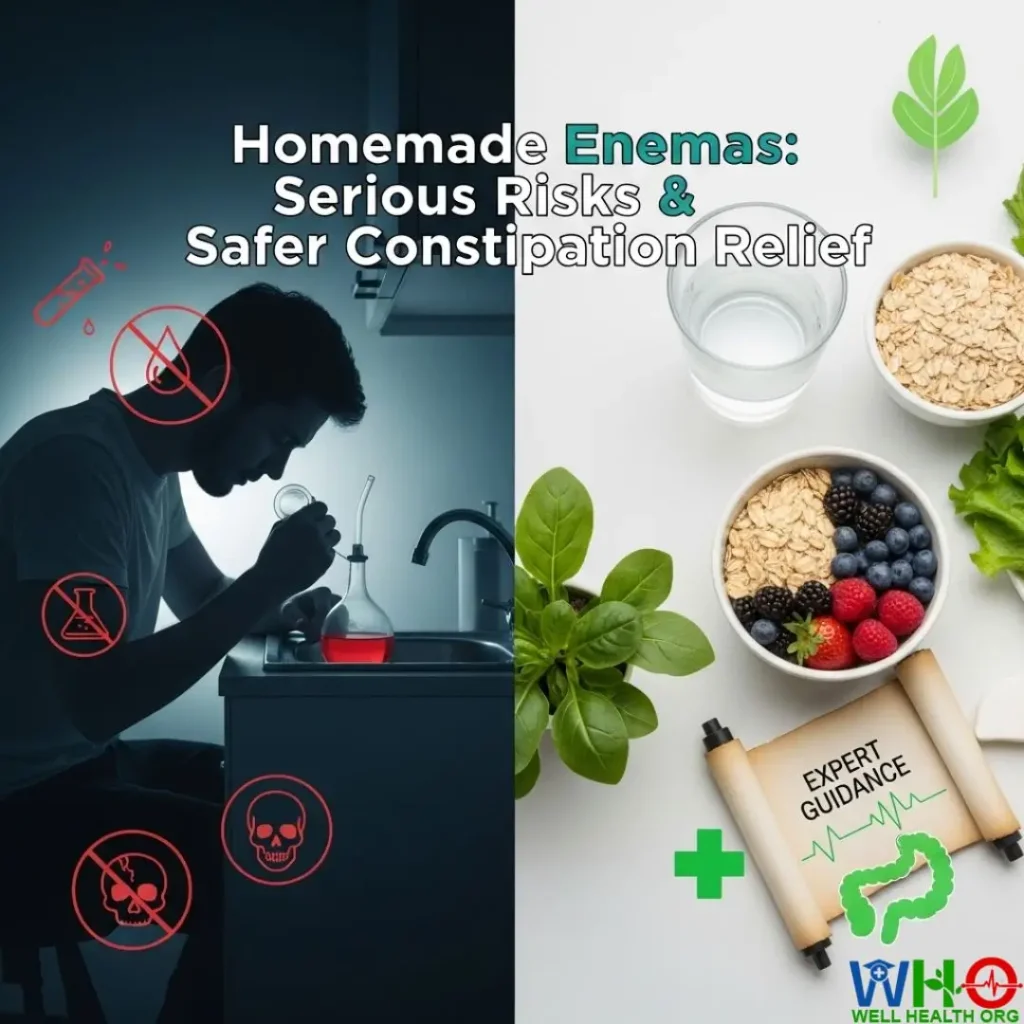
While the concept of a homemade enema may seem harmless or even “natural,” the risks associated with DIY administration are both serious and potentially life-threatening. The colon and rectum are highly sensitive organs that require a delicate balance of pressure, temperature, and chemical composition to function properly. When that balance is disrupted—especially by incorrect or unsafe enema practices—the consequences can be severe.
Let’s explore the most common and medically recognized dangers of homemade enemas.
1. Electrolyte Imbalance
One of the most serious complications of DIY enemas is electrolyte imbalance. The colon is capable of absorbing fluids and minerals very efficiently. When someone introduces a solution that contains salt, baking soda, coffee, or other chemical compounds, those substances can enter the bloodstream rapidly.
If the concentration is too high or too low, it disrupts the body’s electrolyte balance—specifically sodium, potassium, and chloride levels. This can trigger:
- Irregular heartbeat or arrhythmia
- Muscle weakness and fatigue
- Confusion or dizziness
- Seizures
- In extreme cases, cardiac arrest or death
Older adults, children, and individuals with kidney or heart conditions are particularly vulnerable. Even a small miscalculation in the amount of salt or other minerals can cause a dangerous shift in blood chemistry, leading to hospitalization.
2. Bowel and Rectal Injuries
The rectum and colon are not built to tolerate the kind of physical force or pressure that can occur during a poorly administered enema. People who insert nozzles, tubes, or homemade devices risk:
- Rectal tears or lacerations
- Perforation of the colon wall (a hole that allows waste to leak into the abdominal cavity)
- Internal bleeding
- Severe pain and cramping
A colon perforation is a medical emergency that often requires immediate surgery. Unfortunately, it’s not uncommon in cases where unsterile or makeshift tools are used. Even inserting the nozzle too far or at the wrong angle can cause lasting damage to the anal canal and rectum.
3. Infection Risks
Your colon contains billions of beneficial bacteria that maintain gut balance and immunity. Introducing contaminated fluids or equipment disrupts this environment and can allow harmful pathogens to enter your body.
Common outcomes include:
- Bacterial infections, such as E. coli or Salmonella
- Fungal overgrowth
- Sepsis, a potentially fatal systemic infection
Non-sterile tubing, reusing equipment, or preparing the solution with tap water (which may contain bacteria or chlorine byproducts) all increase these risks. Infections that start in the rectum can spread quickly through the bloodstream, especially in people with weakened immune systems.
4. Damage to the Colon Lining
The colon’s inner lining, or mucosa, is extremely sensitive. Homemade enemas often use acidic or harsh ingredients such as vinegar, lemon juice, or coffee—believed by some to “detoxify” the colon. In reality, these substances can burn or inflame the mucosa, leading to:
- Chemical burns
- Chronic irritation
- Scarring or narrowing of the colon
- Long-term digestive dysfunction
Once the mucosal barrier is damaged, it becomes harder for your body to reabsorb water properly, potentially worsening constipation rather than solving it.
5. Dependency and Long-Term Bowel Dysfunction
Repeated use of enemas—especially without medical necessity—can train your colon to rely on external stimulation to initiate bowel movements. Over time, this can lead to a condition known as lazy bowel syndrome, where the muscles of the colon weaken and lose their natural rhythm.
People who use enemas frequently may find that they can’t have a bowel movement without one, creating a dangerous cycle of dependency that undermines long-term digestive health.
Dangerous Ingredients Often Used in DIY Enemas
It’s not just the process of administering a homemade enema that’s risky—the ingredients themselves can be hazardous. Online “recipes” often call for items that are completely unsuitable for internal use.
1. Coffee Enemas
Coffee enemas have gained popularity in detox circles, but there’s no scientific evidence supporting their safety or benefits. In fact, medical case reports have documented instances of electrolyte imbalance, colitis, and even fatalities linked to this practice. Caffeine is absorbed rapidly through the colon, which can cause heart palpitations, dehydration, or caffeine toxicity.
2. Vinegar or Lemon Juice
These substances are acidic and can cause chemical burns or severe irritation when introduced to the colon. Even diluted forms can disrupt the natural pH balance of your intestines, killing beneficial bacteria and increasing infection risk.
3. Hydrogen Peroxide
Sometimes touted as a “cleansing” agent, hydrogen peroxide is extremely dangerous when used internally. It can release oxygen gas inside the colon, leading to gas embolisms—bubbles that travel through the bloodstream and can be fatal.
4. Soap and Alcohol-Based Mixtures
Soaps and alcohols are irritants. When inserted into the rectum, they can strip away protective mucus and cause intense burning, inflammation, or bleeding. These substances have no place in digestive care.
5. Essential Oils or Herbal Extracts
Even though they’re natural, essential oils are highly concentrated chemicals. Many contain compounds that can cause chemical burns or allergic reactions in the colon. Similarly, untested herbal infusions can harbor bacteria or cause unpredictable reactions.
Real-Life Complications: When Homemade Enemas Go Wrong
Medical journals have documented multiple cases of severe injury and even death from homemade enemas. Some examples include:
- A woman who suffered colon perforation after using a vinegar enema promoted online as a detox cure.
- An elderly patient hospitalized with sepsis following a contaminated herbal enema.
- A case of electrolyte collapse and cardiac arrest after repeated coffee enemas for “liver cleansing.”
These are not isolated incidents—they highlight how easily a seemingly harmless at-home procedure can spiral into a life-threatening emergency.
Even when the immediate effects are mild, chronic irritation and mucosal damage can lead to long-term complications, such as recurring constipation, infections, or inflammatory bowel disease.
Safer and Evidence-Based Alternatives to Enemas
Before turning to enemas—especially homemade ones—medical experts strongly recommend starting with safer, proven, and non-invasive approaches to relieve constipation.
1. Dietary Modifications for Natural Relief
Constipation often stems from a lack of dietary fiber or insufficient hydration. Start by incorporating more fiber-rich foods that promote stool bulk and stimulate bowel movement naturally:
- Fresh fruits like apples, pears, prunes, and berries
- Vegetables such as broccoli, carrots, spinach, and sweet potatoes
- Whole grains including oats, barley, quinoa, and brown rice
- Legumes like beans, lentils, and chickpeas
Aim for 25–35 grams of fiber per day, and increase intake gradually to avoid bloating or discomfort.
2. Hydration: The Unsung Hero
Water plays a critical role in maintaining soft stool consistency. Without enough fluid, stool hardens and becomes difficult to pass. Try to drink 8–10 glasses of water daily, and include hydrating foods like cucumbers, watermelon, and citrus fruits in your diet.
Warm beverages—such as herbal teas or warm water with lemon—can also stimulate the digestive tract gently.
3. Over-the-Counter Relief Options
When dietary changes alone aren’t enough, several safe OTC options can provide effective relief:
- Fiber supplements (psyllium husk, methylcellulose)
- Stool softeners (docusate sodium)
- Osmotic laxatives (polyethylene glycol, magnesium hydroxide)
- Stimulant laxatives (senna, bisacodyl) – best used short-term only
These treatments are formulated to work with your body’s natural processes, and they’re clinically tested for safety when used as directed.
4. Lifestyle Adjustments That Support Healthy Bowel Movements
Small changes in your daily habits can dramatically improve digestive function and reduce the likelihood of constipation—without the dangers of homemade enemas.
Establish a Regular Bathroom Routine
Try to go to the bathroom at the same time each day, ideally after a meal when your colon is most active (thanks to the gastrocolic reflex). Consistency helps “train” your bowels to move regularly.
Avoid ignoring the urge to go—delaying bowel movements can lead to harder stools and chronic constipation.
Exercise Regularly
Physical activity stimulates intestinal contractions, helping stool move through the colon more efficiently.
Simple daily activities like walking, light jogging, or yoga can make a noticeable difference. Even 10–15 minutes of walking after meals can improve digestion and bowel regularity.
Manage Stress
Chronic stress affects your gut through the brain-gut axis, slowing digestion and increasing discomfort.
Incorporate relaxation techniques like:
- Deep breathing or meditation
- Progressive muscle relaxation
- Gentle stretching or yoga
- Mindful eating practices
Reducing stress can indirectly relieve constipation and prevent unhealthy habits like relying on enemas for relief.
Improve Toilet Posture
Sitting on a toilet in a more natural “squat” position helps align the colon for easier passage of stool.
You can use a small footstool (like a Squatty Potty®) to elevate your knees above your hips, reducing strain and encouraging complete evacuation.
When Medical Supervision Is Essential
If constipation persists despite home remedies, consult a healthcare provider before resorting to any enema or laxative overuse.
A doctor can determine whether your symptoms stem from dietary factors, medication side effects, or underlying gastrointestinal disorders like IBS, hypothyroidism, or colorectal dysfunction.
If an enema is medically indicated, it should be performed under professional supervision using sterile equipment and safe, controlled solutions.
Medically Supervised Enema Options
When recommended by a physician, certain enemas can provide safe and effective relief for severe constipation or medical preparation (such as before surgery or a colonoscopy).
The key is precise formulation, controlled technique, and sterile conditions.
1. Saline Enema
A sterile salt-water solution draws water into the colon to soften stool and stimulate bowel movement. Medical professionals use carefully measured saline concentrations to prevent electrolyte disruption.
2. Mineral Oil Enema
This type lubricates and softens impacted stool, making it easier to pass. However, it must be administered carefully—if mineral oil is inhaled into the lungs, it can cause aspiration pneumonia, so professional monitoring is crucial.
3. Warm Water Enema
A gentle, temperature-controlled warm water solution can sometimes be used under medical instruction. The temperature (around 98–100°F / 37–38°C) is critical—too cold can cause cramps and shock, while too hot can burn intestinal tissue.
Solutions and Substances to Avoid Entirely
Certain enema “recipes” circulating online are dangerous and potentially deadly. Never use these substances for any type of enema, regardless of what alternative health sources may claim:
| Substance | Risk | Medical Explanation |
|---|---|---|
| Coffee | Causes electrolyte imbalances, burns, heart palpitations | Caffeine and acidic oils irritate the colon and overstimulate the body |
| Lemon juice / vinegar | Chemical burns, inflammation | Acidic pH damages the mucosal lining |
| Hydrogen peroxide | Gas embolism, severe tissue injury | Releases oxygen bubbles in bloodstream |
| Soap suds | Rectal irritation, inflammation | Detergents disrupt mucosal protection |
| Alcohol or spirits | Tissue necrosis, alcohol poisoning | Toxic to cells and absorbed rapidly |
| Essential oils | Chemical burns, allergic reactions | Concentrated compounds are unsafe internally |
Even when diluted, these ingredients can cause irreversible injury to your colon and systemic toxicity if absorbed.
Critical Safety Guidelines for Medically Supervised Enemas
If your doctor explicitly approves or administers an enema, follow these essential rules to minimize risks:
1. Maintain Temperature Control
Ensure the solution remains close to body temperature—between 98°F and 100°F (37–38°C).
Hot water can burn tissue, while cold water can trigger spasms, cramps, or even fainting.
2. Use Only Sterile Equipment
Never reuse enema bags or tubing without sterilization. Ideally, use medical-grade, single-use equipment:
- Sterile enema bag or bottle
- Disposable tubing
- Lubricant packets
- Medical gloves
Contamination at any stage can introduce dangerous bacteria into the colon.
3. Proper Body Positioning
The safest position for an enema is the left lateral position—lying on your left side with knees drawn toward your chest.
This allows the enema fluid to move naturally through the descending colon.
Insert the nozzle gently, no more than 2–4 inches, using slow, steady pressure. Never force the tube or ignore pain signals.
4. Control Volume and Retention Time
Always use the exact amount prescribed by your healthcare provider (typically between 250–1000 mL, depending on age and condition).
Hold the fluid for no longer than 5–10 minutes before releasing it. Overfilling the colon or retaining fluid too long increases the risk of rupture or electrolyte absorption.
Warning Signs of Complications: When to Seek Emergency Help
Stop the enema immediately and seek emergency medical attention if you experience:
- Sharp or severe abdominal pain
- Persistent nausea or vomiting
- Fever, chills, or body aches
- Rectal bleeding or discharge
- Dizziness, confusion, or fainting
- Chest pain or irregular heartbeat
- Difficulty breathing
These may indicate a bowel perforation, infection, or electrolyte imbalance, all of which require immediate medical care.
Professional Alternatives for Chronic or Severe Constipation
If home remedies and dietary changes aren’t effective, a doctor may suggest professional-grade interventions that are both safe and evidence-based.
1. Medically Administered Enemas
Performed in a clinical setting with sterile tools and precisely formulated solutions. The risk of infection, injury, or chemical imbalance is minimal compared to homemade versions.
2. Prescription Medications
Modern constipation treatments are far safer and more effective than enemas. Common options include:
- Lubiprostone (Amitiza®) – increases intestinal fluid secretion
- Linaclotide (Linzess®) – stimulates intestinal movement
- Prucalopride (Motegrity®) – enhances colonic motility
These drugs target the root cause of constipation rather than offering short-term evacuation.
3. Pelvic Floor Therapy and Biofeedback
Some constipation cases stem from dysfunctional pelvic muscles that fail to relax properly. Pelvic floor therapy, guided by a physical therapist, retrains these muscles for normal bowel function.
4. Advanced Treatments
In severe, chronic cases unresponsive to medication, doctors may recommend:
- Transanal irrigation systems (medical-grade equipment for controlled colon cleansing)
- Surgical evaluation (for structural abnormalities or obstruction)
Taking Control of Your Digestive Health
Homemade enemas may seem like a quick fix, but they come with serious and unnecessary risks—from infections and burns to life-threatening electrolyte imbalances.
Fortunately, most constipation can be managed safely through dietary improvements, hydration, gentle exercise, and medically approved therapies.
If you’re struggling with constipation or digestive discomfort:
- Start by increasing fiber and fluid intake.
- Add daily physical movement and manage stress.
- Use OTC remedies as directed if needed.
- If symptoms persist beyond a few days or are accompanied by pain, bleeding, or nausea, consult a healthcare provider promptly.
A doctor can pinpoint underlying causes and design a treatment plan that’s both effective and safe—without risking your health through dangerous home experiments.
Bottom Line
Homemade enemas are not a safe or recommended solution for constipation.
The colon is a delicate organ that should only be treated under medical supervision when necessary.
Prioritize proven, low-risk methods such as fiber-rich diets, hydration, exercise, and professionally guided treatments.
Your digestive system is designed to heal and regulate itself with the right support—there’s no need to take risks that could lead to lasting harm.
Medical Disclaimer
This article is for informational purposes only and should not be considered medical advice. Always consult a licensed healthcare professional before attempting any enema or home remedy for constipation. Homemade enemas carry serious risks, including infection, electrolyte imbalance, and colon injury. Use only medically approved treatments under professional supervision.
Medically Reviewed by Prof. Dr. Akram
Orthopedic Surgeon | Professor | Senior Medical Specialist
Prof. Dr. Akram is a distinguished surgeon with over 15 years of clinical expertise. Having served as a lead Emergency Specialist at Complex International Government Hospital, he currently leads a specialized team of 13 medical professionals at his private hospital. As a Professor at top medical universities, he ensures that every article on WellHealthOrg.com meets rigorous clinical standards.
Medical Disclaimer:
The information provided is for educational purposes only and is not a substitute for professional medical advice, diagnosis, or treatment. Always consult your physician for any medical concerns.
Our content is rigorously fact-checked by our 13-member Editorial Team under the clinical supervision of Prof. Dr. Akram.