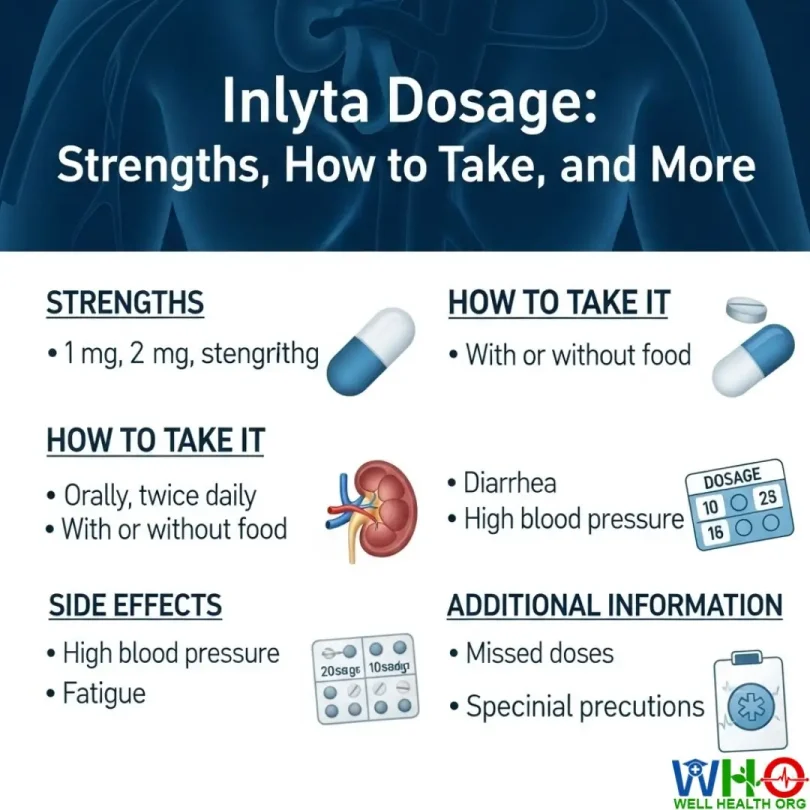
Living with advanced kidney cancer can feel overwhelming, especially when it comes to understanding your treatment options. One of the medications often prescribed for advanced renal cell carcinoma (RCC) is Inlyta (axitinib), a targeted therapy that works differently than traditional chemotherapy. If your doctor has recommended Inlyta, one of the first questions you’ll likely have is about the dosage, how to take it, and what to expect during treatment.
- 1. What Is Inlyta?
- When Doctors Prescribe Inlyta
- Key Facts About Inlyta
- 2. How Does Inlyta Work in the Body?
- Why Dosage Matters
- 3. Available Forms and Strengths of Inlyta
- Tablet Appearance
- 4. Standard Dosage Guidelines for Inlyta
- A. Inlyta as a Standalone Treatment
- B. Inlyta Combined with Immunotherapy
- Important Considerations
- 5. Factors That Can Influence Your Inlyta Dosage
- 1. Your Overall Health
- 2. Other Medications You’re Taking
- 3. Side Effects You Experience
- 4. Treatment Response
- 5. Age and Weight
- 6. How to Take Inlyta Safely and Effectively
- General Administration Guidelines
- Practical Tips for Taking Inlyta
- Cautions
- 7. What to Do If You Miss a Dose
- If You Miss a Dose
- If You Vomit After Taking a Dose
- Best Practices for Avoiding Missed Doses
- 8. Risks of Overdosing on Inlyta
- Symptoms of Inlyta Overdose
- What to Do in Case of Overdose
- Why Overdose Is Dangerous
- 9. Long-Term Use of Inlyta: What to Expect
- Duration of Treatment
- Monitoring During Long-Term Use
- Signs You May Need a Dose Adjustment
- 10. Lifestyle and Self-Care Tips While Taking Inlyta
- Diet and Nutrition
- Managing Blood Pressure
- Activity and Rest
- Emotional Well-Being
- When to Call Your Doctor
- 11. Common and Serious Side Effects of Inlyta
- Most Common Side Effects
- Less Common but Serious Side Effects
- Managing Side Effects
- 12. Drug Interactions with Inlyta
- Drugs That Increase Inlyta Levels (CYP3A4 Inhibitors)
- Drugs That Decrease Inlyta Levels (CYP3A4 Inducers)
- Other Considerations
- 13. Special Populations: Who Needs Extra Caution?
- Older Adults
- Patients with Liver Impairment
- Patients with Heart Problems
- Pregnant or Breastfeeding Individuals
- Patients on Multiple Medications
- 14. Safety Precautions While on Inlyta
- Before Starting Inlyta
- During Treatment
- Lifestyle Adjustments
- 15. Frequently Asked Questions About Inlyta
- Q1: How long does it take for Inlyta to start working?
- Q2: Can I drink alcohol while on Inlyta?
- Q3: What if my cancer stops responding to Inlyta?
- Q4: Can I take supplements while on Inlyta?
- Q5: How often will I see my doctor while taking Inlyta?
This comprehensive guide breaks down everything you need to know about Inlyta, including its strengths, typical dosages, safe administration, factors that influence dosing, and common questions patients have. By the end, you’ll feel more confident and informed about how Inlyta fits into your cancer care journey.
1. What Is Inlyta?
Inlyta (axitinib) is a prescription cancer medication approved by the U.S. Food and Drug Administration (FDA) for treating advanced renal cell carcinoma (RCC) — the most common form of kidney cancer in adults. RCC often goes undetected in early stages, and when it becomes advanced or spreads to other parts of the body, specialized treatments like Inlyta may be necessary.
Unlike chemotherapy, which kills rapidly dividing cells (both healthy and cancerous), Inlyta belongs to a class of drugs called tyrosine kinase inhibitors (TKIs). Specifically, it is a vascular endothelial growth factor receptor (VEGFR) inhibitor. In simpler terms, this means that Inlyta works by blocking signals tumors use to create new blood vessels (a process called angiogenesis). Since tumors need blood supply to grow and spread, Inlyta essentially “starves” the cancer cells by cutting off their nutrient pathway.
When Doctors Prescribe Inlyta
Doctors may prescribe Inlyta in different treatment scenarios:
- First-line therapy (initial treatment): Inlyta is sometimes combined with immunotherapy drugs like Keytruda (pembrolizumab) or Bavencio (avelumab) for patients newly diagnosed with advanced RCC.
- Second-line therapy (after prior treatment): If your cancer does not respond well to a previous medication, your oncologist may switch you to Inlyta as a standalone therapy.
Key Facts About Inlyta
- Form: Oral tablet (taken by mouth, not infusion).
- Strengths available: 1 mg and 5 mg.
- Frequency: Typically taken twice daily, 12 hours apart.
- Availability: Brand-name only (no generic form as of now).
Inlyta is designed for long-term use, meaning patients often continue treatment for months or years as long as it remains effective and tolerable.
2. How Does Inlyta Work in the Body?
To fully understand the importance of dosage, it helps to know how Inlyta functions inside the body.
Cancer cells thrive by hijacking the body’s natural systems. One of their favorite tricks is releasing signals called vascular endothelial growth factors (VEGF). These signals tell the body to grow new blood vessels, which then feed the tumor with oxygen and nutrients.
Inlyta blocks this process by inhibiting VEGFR-1, VEGFR-2, and VEGFR-3, the key receptors that respond to VEGF. When these receptors are blocked:
- Tumors struggle to develop new blood vessels.
- Cancer cell growth slows down.
- In some cases, tumors may shrink.
Why Dosage Matters
The effectiveness of Inlyta depends heavily on maintaining the right concentration of the drug in your bloodstream. Too little, and it won’t block VEGF effectively. Too much, and the risk of side effects increases significantly. That’s why oncologists carefully monitor your blood pressure, liver function, and side effects before adjusting your dosage.
Think of it like walking a tightrope: the dosage must be high enough to fight cancer but balanced enough to protect your overall health.
3. Available Forms and Strengths of Inlyta
Inlyta is available only in oral tablet form, making it convenient for patients compared to intravenous (IV) treatments. Currently, it comes in two strengths:
- 1 mg tablet (used for fine-tuning dosage, especially in patients with side effects or liver issues).
- 5 mg tablet (most common starting dose for adults with RCC).
Both tablets are designed to be swallowed whole with water. They should not be crushed, chewed, split, or dissolved, as this could interfere with how the drug is absorbed in the body.
Tablet Appearance
- 1 mg tablet: Typically a small red, round tablet.
- 5 mg tablet: Larger, pink, oval-shaped tablet.
These differences help patients and caregivers easily identify the correct strength.
4. Standard Dosage Guidelines for Inlyta
The exact dosage of Inlyta varies depending on whether it’s used alone or in combination with other cancer therapies. Here’s what you can expect:
A. Inlyta as a Standalone Treatment
- Starting dose: 5 mg twice daily (about every 12 hours).
- Possible increase: After about 2 weeks, if you’re tolerating the medication well (no serious side effects, stable blood pressure, and not needing new blood pressure medication), your doctor may increase the dose to 7 mg twice daily.
- Maximum increase: If still tolerated, the dose may be raised further to 10 mg twice daily.
B. Inlyta Combined with Immunotherapy
When Inlyta is used with Keytruda (pembrolizumab) or Bavencio (avelumab):
- Starting dose: Still 5 mg twice daily.
- Dose increases: More cautious — doctors usually wait at least 6 weeks or longer before increasing the dose to avoid overlapping toxicities from the combined treatments.
Important Considerations
- Dose increases are never automatic. Your healthcare team will evaluate your response and side effects before making adjustments.
- Not every patient reaches the maximum dose. Some may remain at 5 mg or 7 mg if that’s what balances effectiveness with tolerability.
- Dose reductions are common. If side effects become too severe, your oncologist may lower the dose (sometimes as low as 2 mg twice daily).
5. Factors That Can Influence Your Inlyta Dosage
Not every patient receives the same dose of Inlyta. Several factors play a role in determining the right amount for you:
1. Your Overall Health
Patients with moderate liver impairment often require a reduced starting dose because the liver processes Inlyta. If your liver isn’t functioning at full capacity, higher drug levels could accumulate and increase side effects.
2. Other Medications You’re Taking
Inlyta is metabolized in the body by enzymes called CYP3A4 and CYP3A5. Certain medications can interfere with these enzymes:
- CYP3A4 inhibitors (like ketoconazole, clarithromycin, or grapefruit juice) can increase Inlyta levels, raising side effect risks.
- CYP3A4 inducers (like rifampin or St. John’s wort) can decrease Inlyta levels, making it less effective.
Your doctor will review your medication list carefully to avoid dangerous interactions.
3. Side Effects You Experience
If you develop high blood pressure, bleeding issues, severe fatigue, or heart-related side effects, your doctor may:
- Lower your dose.
- Temporarily stop the medication.
- Restart at a lower dose once symptoms improve.
4. Treatment Response
Patients who show good tumor response and tolerate the drug may be candidates for dose escalation. On the other hand, those with stable disease but manageable side effects may remain at their current dose long-term.
5. Age and Weight
Although Inlyta dosing is not strictly based on age or weight, older adults and patients with smaller body frames may experience side effects sooner, prompting closer monitoring and possible dose adjustments.
6. How to Take Inlyta Safely and Effectively
Taking Inlyta correctly is just as important as the dosage itself. Since this medication is designed to maintain steady drug levels in your system, consistency is key.
General Administration Guidelines
- Swallow whole: Take Inlyta tablets whole with a full glass of water. Never chew, crush, dissolve, or split them, as this can interfere with the way your body absorbs the medication.
- With or without food: Inlyta can be taken on an empty stomach or with meals. Choose whichever option feels more comfortable for you, but try to stick with the same routine daily.
- Timing: Doses are usually taken 12 hours apart (e.g., morning and evening). This spacing helps maintain consistent blood levels of the drug.
- Consistency: Try to take it at the same times every day. Using a reminder system, such as setting alarms or using a pill organizer, can reduce the risk of missed doses.
Practical Tips for Taking Inlyta
- Pair your medication with a daily habit, like brushing your teeth or eating breakfast/dinner, to create a strong routine.
- Keep a treatment journal to track your doses, side effects, and doctor visits.
- If swallowing tablets is difficult, talk to your healthcare team. They may suggest swallowing techniques, but do not alter the tablet yourself.
Cautions
- Avoid grapefruit or grapefruit juice, as it interacts with the CYP3A4 enzyme and can dangerously increase Inlyta levels.
- Do not suddenly stop taking Inlyta unless directed by your oncologist. Discontinuing the medication without medical supervision can reduce its effectiveness against cancer.
7. What to Do If You Miss a Dose
It’s normal to forget a dose occasionally, especially with twice-daily schedules. The good news is that missing one dose is usually not dangerous, but how you handle it matters.
If You Miss a Dose
- Take it as soon as you remember.
- If it’s almost time for your next scheduled dose, skip the missed dose and continue with your regular schedule.
- Never take two doses at once to make up for a missed one — this could increase the risk of severe side effects like high blood pressure, dizziness, or bleeding.
If You Vomit After Taking a Dose
- Do not take another tablet. Simply wait for your next scheduled dose.
- Vomiting shortly after taking Inlyta may reduce absorption, but doubling up can create overdose risks.
Best Practices for Avoiding Missed Doses
- Use a pillbox with morning and evening compartments.
- Set up automated phone reminders or alarms.
- If traveling, carry your medication in your hand luggage to avoid disruptions.
8. Risks of Overdosing on Inlyta
Taking more Inlyta than prescribed can lead to dangerous or even life-threatening complications. Because the medication directly affects blood vessels, overdosing can quickly destabilize your cardiovascular system.
Symptoms of Inlyta Overdose
- Severe dizziness or fainting
- Rapid or dangerously high blood pressure
- Bleeding events (such as coughing up blood, vomiting blood, or unusual bruising)
- Seizures
- Shortness of breath or chest pain
What to Do in Case of Overdose
- Call your doctor immediately if you suspect you’ve taken too much.
- If symptoms are severe (such as loss of consciousness, seizures, or severe bleeding), call 911 or emergency services right away.
- Do not wait to “see if it gets better.” Prompt medical attention is essential.
Why Overdose Is Dangerous
Since Inlyta is processed through the liver and affects blood vessel growth, overdose can overwhelm your body’s ability to regulate blood flow, oxygen delivery, and clotting. This makes early intervention critical.
9. Long-Term Use of Inlyta: What to Expect
Inlyta is not a short-term therapy. Most patients remain on the medication as long as it is effective and tolerable.
Duration of Treatment
- Some patients take Inlyta for months or even years if their cancer responds well and side effects remain manageable.
- Doctors may adjust dosages over time depending on your tolerance and overall health.
Monitoring During Long-Term Use
Your oncologist will schedule regular check-ups to evaluate how well the treatment is working and monitor for side effects. These check-ups may include:
- Blood pressure monitoring (since hypertension is a common side effect).
- Blood tests to assess liver function and blood counts.
- Scans or imaging tests to track tumor size and disease progression.
- Side effect assessments to ensure you’re tolerating the drug safely.
Signs You May Need a Dose Adjustment
- Persistent high blood pressure despite treatment.
- Severe fatigue affecting daily life.
- Liver-related issues showing up on bloodwork.
- Significant bleeding or clotting problems.
If these occur, your doctor may temporarily pause treatment, reduce your dose, or change your therapy plan.
10. Lifestyle and Self-Care Tips While Taking Inlyta
Taking Inlyta doesn’t just involve swallowing a pill — it requires ongoing adjustments to your lifestyle to minimize side effects and improve your overall quality of life.
Diet and Nutrition
- Stay hydrated — drink plenty of water throughout the day.
- Eat a balanced diet rich in fruits, vegetables, lean proteins, and whole grains to support healing and energy.
- Avoid grapefruit and grapefruit juice, as they interact with Inlyta metabolism.
- Limit alcohol, which can stress the liver and worsen side effects like fatigue or nausea.
Managing Blood Pressure
Since Inlyta can raise blood pressure, it’s vital to:
- Check your blood pressure regularly at home.
- Limit high-salt foods that can worsen hypertension.
- Follow your doctor’s advice about blood pressure medications if prescribed.
Activity and Rest
- Light to moderate exercise (walking, yoga, stretching) can improve energy levels and mood.
- Avoid overexertion, especially during the first few weeks of treatment.
- Prioritize sleep — fatigue is a common side effect, and good rest can help manage it.
Emotional Well-Being
- Joining a support group for kidney cancer patients can provide encouragement and coping strategies.
- Consider mindfulness techniques like meditation or journaling to reduce stress.
When to Call Your Doctor
Report side effects such as:
- Uncontrolled high blood pressure
- Unusual bleeding or bruising
- Chest pain, shortness of breath, or heart palpitations
- Severe fatigue that interferes with daily activities
11. Common and Serious Side Effects of Inlyta
Like all cancer medications, Inlyta can cause side effects. Some are mild and manageable, while others may require medical attention or dosage adjustments.
Most Common Side Effects
- High blood pressure (hypertension): One of the most frequent side effects. Your doctor may prescribe blood pressure medication to manage this.
- Diarrhea: Can lead to dehydration if not managed properly. Drinking fluids and following a bland diet often helps.
- Fatigue: A common challenge for cancer patients on long-term therapies.
- Decreased appetite: Some patients experience weight loss due to appetite suppression.
- Nausea or vomiting: Can often be controlled with anti-nausea medication.
- Hoarseness or voice changes: Because Inlyta affects blood vessels, some patients notice changes in vocal quality.
Less Common but Serious Side Effects
- Bleeding events: Including nosebleeds, coughing up blood, or gastrointestinal bleeding.
- Blood clots: Can cause deep vein thrombosis (DVT) or pulmonary embolism.
- Heart problems: Irregular heartbeat, chest pain, or heart failure in rare cases.
- Liver issues: Indicated by yellowing of the skin/eyes, dark urine, or abnormal liver blood tests.
- Thyroid dysfunction: Inlyta may affect thyroid hormone levels, requiring monitoring.
Managing Side Effects
- Blood pressure: Regular home monitoring, a low-salt diet, and prescribed medications.
- Diarrhea: Eat simple foods (rice, bananas, toast) and stay hydrated.
- Fatigue: Schedule rest periods, light exercise, and prioritize sleep.
- Appetite loss: Small, frequent meals and nutritional supplements may help.
Always report new or worsening side effects to your healthcare provider promptly.
12. Drug Interactions with Inlyta
Because Inlyta is metabolized by the liver, particularly through the CYP3A4 enzyme pathway, drug interactions are an important safety concern.
Drugs That Increase Inlyta Levels (CYP3A4 Inhibitors)
These drugs can raise Inlyta levels in your body, leading to more severe side effects:
- Ketoconazole (antifungal)
- Clarithromycin (antibiotic)
- Ritonavir (HIV medication)
- Grapefruit and grapefruit juice
Drugs That Decrease Inlyta Levels (CYP3A4 Inducers)
These drugs can lower Inlyta effectiveness by speeding up metabolism:
- Rifampin (antibiotic for TB)
- Phenytoin (anti-seizure medication)
- Carbamazepine (for epilepsy and mood disorders)
- St. John’s wort (herbal supplement for depression)
Other Considerations
- Blood pressure medications: Some may interact with Inlyta, requiring careful selection.
- Blood thinners (like warfarin): May increase bleeding risk when combined with Inlyta.
- Immunotherapies: Combination therapies require careful monitoring due to overlapping toxicities.
Your oncologist will always review your full medication list before prescribing Inlyta. Never start or stop a drug without consulting your care team.
13. Special Populations: Who Needs Extra Caution?
Not all patients respond to Inlyta the same way. Certain groups may need adjusted dosages or closer monitoring.
Older Adults
- May be more sensitive to side effects like high blood pressure and fatigue.
- Extra monitoring for heart and kidney function is common.
Patients with Liver Impairment
- Since Inlyta is processed by the liver, those with moderate liver damage usually require lower doses.
- Severe liver impairment may make Inlyta unsafe.
Patients with Heart Problems
- Those with existing heart conditions (arrhythmias, heart failure, or recent heart attack) require extra precautions.
Pregnant or Breastfeeding Individuals
- Inlyta is not safe during pregnancy as it can harm fetal development.
- Breastfeeding is not recommended, since it’s unknown whether the drug passes into breast milk.
Patients on Multiple Medications
- Those taking drugs that affect the CYP3A4 enzyme pathway must be carefully evaluated for dosage adjustments.
14. Safety Precautions While on Inlyta
To maximize benefits and minimize risks, follow these safety precautions:
Before Starting Inlyta
- Share your full medical history with your oncologist, especially heart, liver, or bleeding disorders.
- Provide a complete list of medications, including herbal supplements.
During Treatment
- Monitor blood pressure at least once a week.
- Attend all follow-up appointments for blood work and scans.
- Report unusual symptoms like chest pain, dizziness, or severe headaches immediately.
- Avoid high-risk activities that could cause injury or bleeding, such as contact sports.
Lifestyle Adjustments
- Stop smoking, as it worsens cardiovascular risks.
- Reduce alcohol consumption to protect liver health.
- Eat a balanced diet to maintain strength and support recovery.
15. Frequently Asked Questions About Inlyta
Q1: How long does it take for Inlyta to start working?
Inlyta begins acting on blood vessel growth after the first dose. However, you won’t feel immediate changes. Your doctor will monitor progress using scans and bloodwork over weeks to months.
Q2: Can I drink alcohol while on Inlyta?
Light alcohol consumption may be allowed, but since Inlyta stresses the liver, it’s best to limit or avoid alcohol. Always check with your oncologist.
Q3: What if my cancer stops responding to Inlyta?
If Inlyta is no longer effective, your oncologist may switch you to another targeted therapy or immunotherapy. Treatment plans are highly individualized.
Q4: Can I take supplements while on Inlyta?
Some supplements, like St. John’s wort, interact negatively with Inlyta. Always consult your doctor before adding any vitamins or herbal remedies.
Q5: How often will I see my doctor while taking Inlyta?
Initially, you may have appointments every 2–4 weeks for monitoring. Once stable, visits may become less frequent, but regular check-ins remain essential.
Medically Reviewed by Prof. Dr. Akram
Orthopedic Surgeon | Professor | Senior Medical Specialist
Prof. Dr. Akram is a distinguished surgeon with over 15 years of clinical expertise. Having served as a lead Emergency Specialist at Complex International Government Hospital, he currently leads a specialized team of 13 medical professionals at his private hospital. As a Professor at top medical universities, he ensures that every article on WellHealthOrg.com meets rigorous clinical standards.
Medical Disclaimer:
The information provided is for educational purposes only and is not a substitute for professional medical advice, diagnosis, or treatment. Always consult your physician for any medical concerns.
Our content is rigorously fact-checked by our 13-member Editorial Team under the clinical supervision of Prof. Dr. Akram.