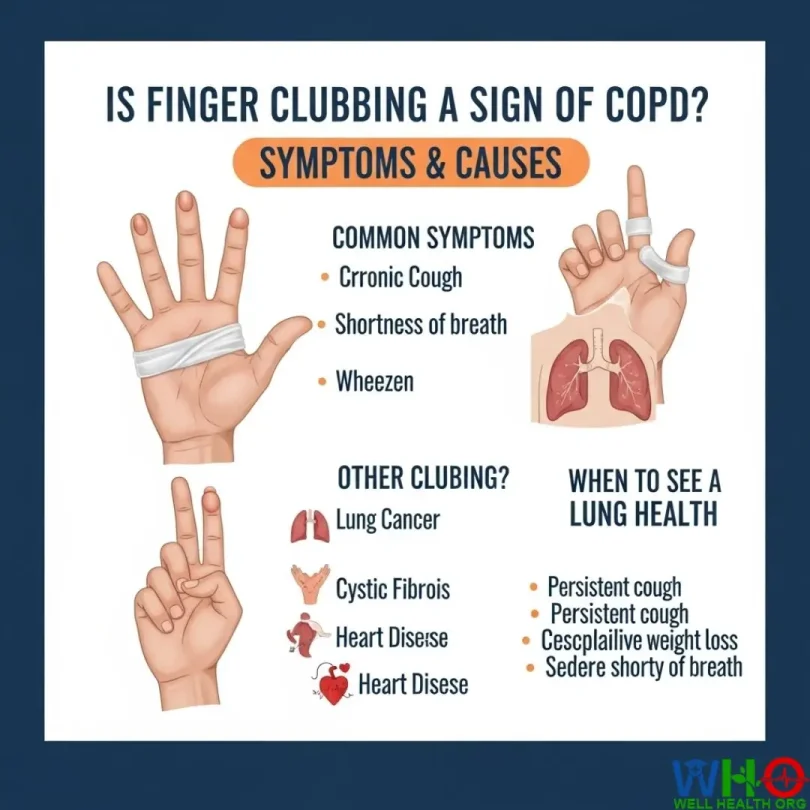
Chronic obstructive pulmonary disease (COPD) is a progressive lung condition that makes breathing increasingly difficult. Millions of people worldwide live with COPD, and recognizing its early signs can make a huge difference in treatment and quality of life.
- What is Finger Clubbing?
- Typical features of finger clubbing include:
- The Link Between Finger Clubbing and COPD
- What COPD Really Does to the Nails
- Common Symptoms of COPD
- Other Causes of Finger Clubbing
- 1. Lung Diseases
- 2. Heart Diseases
- 3. Liver Diseases
- 4. Gastrointestinal Conditions
- When to See a Doctor
- Diagnosing and Treating COPD
- Treatment for COPD
- Take Control of Your Lung Health
- FAQs About COPD and Finger Clubbing
But here’s a question many people ask when they notice changes in their hands or nails:
👉 Can finger clubbing be a sign of COPD?
The short answer is: finger clubbing is not a typical feature of COPD. While it can occur in some lung conditions, its presence in someone with COPD often suggests another underlying disease may be at play.
In this in-depth guide, we’ll break down:
- What finger clubbing is and how it develops
- Whether COPD actually causes finger clubbing
- Other more common causes of clubbing
- Key COPD symptoms you should focus on instead
- When to see a doctor and what to expect from diagnosis
- Treatments for COPD and how to protect your lung health
What is Finger Clubbing?
Finger clubbing, also called digital clubbing or Hippocratic fingers, refers to noticeable changes in the shape of the fingertips and fingernails. It’s not painful, but it can be alarming if you’ve never seen it before.
Typical features of finger clubbing include:
- Soft, spongy nail beds when pressed
- Bulbous enlargement at the tips of fingers or toes
- Downward curving nails that may look like the back of a spoon
- Widened and rounded fingertips resembling tiny balloons or drumsticks
Clubbing often develops gradually over months or years, but in some conditions, it can appear more quickly. Importantly, it usually affects both hands and feet symmetrically.
For some people, finger clubbing can be a harmless inherited trait that runs in families. But in most cases, it is considered a clinical sign of an underlying disease, particularly those affecting the lungs, heart, or liver.
The Link Between Finger Clubbing and COPD
So, does COPD cause finger clubbing?
The medical consensus is: rarely, if ever.
While COPD causes significant lung damage, it does not usually lead to the structural nail changes seen in finger clubbing. Research confirms that finger clubbing is an uncommon finding in COPD patients.
- A study published in Respiratory Medicine found that only about 3–4% of people with COPD exhibited clubbing.
- The American Thoracic Society notes that clubbing is far more common in other lung conditions such as lung cancer, pulmonary fibrosis, or bronchiectasis.
- The COPD Foundation emphasizes that when finger clubbing does occur in someone with COPD, it’s usually a sign of another disease occurring alongside COPD.
👉 In short: If you have COPD and notice finger clubbing, your doctor will likely investigate further to rule out other serious conditions.
What COPD Really Does to the Nails
Although COPD doesn’t typically cause finger clubbing, it can affect the nails in another way. Low oxygen levels in the blood, a condition called hypoxemia, may cause:
- Cyanosis: A bluish or purplish tint to the nails, lips, or skin.
- Fluctuating color changes: Nails may look normal some days and discolored on others, depending on oxygen levels.
Unlike clubbing, these changes are directly related to oxygen deprivation rather than structural changes in the nail bed.
Common Symptoms of COPD
Since finger clubbing is not a reliable sign of COPD, it’s much more important to recognize the core symptoms of this disease.
Key signs include:
- Persistent shortness of breath (especially during physical activity)
- Chronic cough, often producing mucus
- Wheezing or whistling sound while breathing
- Tightness or heaviness in the chest
- Frequent respiratory infections (like colds, flu, or pneumonia)
- Low energy and fatigue
These symptoms usually develop slowly and worsen over time, particularly if COPD is not diagnosed and managed early.
Other Causes of Finger Clubbing
If COPD doesn’t usually cause clubbing, what does? Finger clubbing is often associated with serious systemic diseases, especially those affecting oxygen levels and circulation.
1. Lung Diseases
- Lung Cancer: The most common cause of acquired finger clubbing. Research suggests that 5–15% of patients with lung cancer develop clubbing.
- Interstitial Lung Disease (ILD): A group of lung disorders that cause scarring (fibrosis). Studies show 7–42% of ILD patients experience clubbing.
- Bronchiectasis: Chronic widening of airways that traps mucus and leads to infection.
2. Heart Diseases
- Congenital Heart Disease: Birth defects that affect oxygen circulation can cause long-term clubbing.
- Infective Endocarditis: Infection of the heart lining or valves often leads to clubbing.
3. Liver Diseases
- Cirrhosis and chronic hepatitis may lead to nail and fingertip changes due to poor circulation and oxygen delivery.
4. Gastrointestinal Conditions
- Inflammatory Bowel Disease (IBD): Especially Crohn’s disease, which is linked to systemic inflammation.
When to See a Doctor
Finger clubbing by itself is not an emergency, but it should never be ignored. Since it can signal serious underlying disease, medical evaluation is essential.
Seek medical advice if you notice:
- Fingertips that are becoming bulbous or rounded
- Downward-curving nails that weren’t there before
- Nail beds that feel soft or spongy
- Clubbing along with chronic cough, shortness of breath, chest pain, or weight loss
A doctor will perform a physical exam and may order:
- Spirometry (lung function test): To check for COPD.
- Chest X-ray or CT scan: To look for lung disease or cancer.
- Blood tests: To assess oxygen levels and rule out systemic diseases.
Diagnosing and Treating COPD
If your doctor suspects COPD, diagnosis usually begins with spirometry, a simple breathing test that measures airflow and lung function. Other tests may include:
- Chest imaging (X-ray or CT scan)
- Arterial blood gases to measure oxygen and carbon dioxide
- Pulse oximetry for quick oxygen level checks
Treatment for COPD
While COPD cannot be cured, effective treatments can relieve symptoms, slow progression, and improve quality of life.
- Bronchodilators: Relax airway muscles and make breathing easier.
- Inhaled or oral steroids: Reduce inflammation in the airways.
- Oxygen therapy: Helps patients with low oxygen levels.
- Pulmonary rehabilitation: A structured program of exercise, education, and support.
- Lifestyle changes: Quitting smoking, avoiding pollutants, and exercising regularly.
Take Control of Your Lung Health
Finger clubbing is not a typical sign of COPD. If you notice clubbing, it’s more likely to be related to another underlying condition, such as lung cancer, pulmonary fibrosis, or heart disease.
COPD has its own set of hallmark symptoms — shortness of breath, cough, wheezing, and fatigue — which should be your primary focus.
👉 The key takeaway: If you have COPD and notice finger clubbing, don’t panic, but don’t ignore it either. Talk to your doctor so they can investigate further and rule out other causes.
FAQs About COPD and Finger Clubbing
1. Does COPD cause finger clubbing?
Not typically. Only 3–4% of COPD patients develop clubbing, and it usually suggests another disease is also present.
2. What do nails look like in COPD patients?
Instead of clubbing, COPD more often causes bluish discoloration of nails and lips (cyanosis) due to low oxygen.
3. Is finger clubbing reversible?
Yes, if the underlying condition is treated successfully. If not, it may remain permanent.
4. Should I see a doctor if I notice finger clubbing?
Yes. Clubbing can signal serious conditions like lung cancer, heart disease, or interstitial lung disease.
5. How is COPD diagnosed if I don’t have clubbing?
Doctors use breathing tests, imaging scans, and blood oxygen levels — not finger clubbing — to confirm COPD.
✨ Bottom line: Finger clubbing is rarely caused by COPD but is an important sign that deserves medical attention. If you notice changes in your fingers along with breathing problems, don’t delay a check-up. Early diagnosis saves lives.
Medically Reviewed by Prof. Dr. Akram
Orthopedic Surgeon | Professor | Senior Medical Specialist
Prof. Dr. Akram is a distinguished surgeon with over 15 years of clinical expertise. Having served as a lead Emergency Specialist at Complex International Government Hospital, he currently leads a specialized team of 13 medical professionals at his private hospital. As a Professor at top medical universities, he ensures that every article on WellHealthOrg.com meets rigorous clinical standards.
Medical Disclaimer:
The information provided is for educational purposes only and is not a substitute for professional medical advice, diagnosis, or treatment. Always consult your physician for any medical concerns.
Our content is rigorously fact-checked by our 13-member Editorial Team under the clinical supervision of Prof. Dr. Akram.