Introduction: Tests for Stroke
When it comes to a stroke, every minute counts. A stroke occurs when the blood and oxygen supply to a part of the brain is suddenly interrupted—either due to a blockage or bleeding. This disruption can cause brain cells to start dying within minutes, leading to serious and sometimes irreversible damage. Common symptoms include sudden weakness on one side of the body, slurred speech, loss of balance, or confusion.
- Introduction: Tests for Stroke
- 1. The Physical Examination: The First Step in Identifying a Stroke
- 1.1 What the NIH Stroke Scale Measures
- 1.2 Key Areas of Assessment
- 1.3 Why the Physical Exam Matters
- 2. Imaging Tests for the Brain: Seeing What’s Happening Inside
- 2.1 CT (Computed Tomography) Scan
- 2.2 MRI (Magnetic Resonance Imaging)
- 2.3 Angiography: Mapping the Brain’s Blood Vessels
- 3. Blood Tests: Understanding the Underlying Causes
- 3.1 Complete Blood Count (CBC)
- 3.2 Blood Clotting Tests
- 3.3 Cholesterol and Lipid Profile
- 3.4 Additional Blood Tests
- 4. Heart Tests: Linking Cardiac Health to Stroke Risk
- 4.1 Electrocardiogram (ECG or EKG)
- 4.2 Echocardiogram
- 5. Next Steps After Stroke Diagnosis: From Emergency Treatment to Recovery
- 5.1 The Golden Hour: Why Speed Is Everything
- 5.2 Treatment for Ischemic Stroke
- a) Clot-Busting Medication (tPA)
- b) Mechanical Thrombectomy
- 5.3 Treatment for Hemorrhagic Stroke
- a) Controlling Bleeding
- b) Surgery and Other Procedures
- c) Managing Blood Pressure and Brain Swelling
- 5.4 Supportive and Rehabilitation Care
- Physical Therapy
- Speech and Language Therapy
- Occupational Therapy
- Emotional and Cognitive Support
- 6. Why Time Is Brain: Understanding the Urgency of Stroke Care
- 6.1 Recognizing the FAST Acronym
- 6.2 Why Early Action Saves Lives
- 7. Prevention: Reducing the Risk of Future Strokes
- 7.1 Managing Underlying Conditions
- 7.2 Adopting a Healthier Lifestyle
- 7.3 Regular Health Screenings
- 8. Understanding Diagnostic Advances in Stroke Detection
- 8.1 Advanced Imaging Techniques
- 8.2 Artificial Intelligence (AI) in Stroke Diagnosis
- 8.3 Mobile Stroke Units
- 9. Life After Stroke: The Road to Recovery
- 9.1 The Importance of Early Rehabilitation
- 9.2 Building a Strong Support System
- 9.3 Long-Term Monitoring
- Conclusion: Act Fast, Save a Brain, Save a Life
- Frequently Asked Questions (FAQs)
Recognizing these warning signs and seeking immediate medical attention can mean the difference between recovery and permanent disability—or even life and death. However, rapid treatment depends entirely on how quickly and accurately a stroke is diagnosed. Doctors must determine not only whether a stroke has occurred but also what kind of stroke it is, where in the brain it happened, and how severe it is.
There are two main types of strokes:
- Ischemic Stroke: Caused by a blood clot blocking an artery supplying the brain.
- Hemorrhagic Stroke: Caused by bleeding from a ruptured blood vessel within or around the brain.
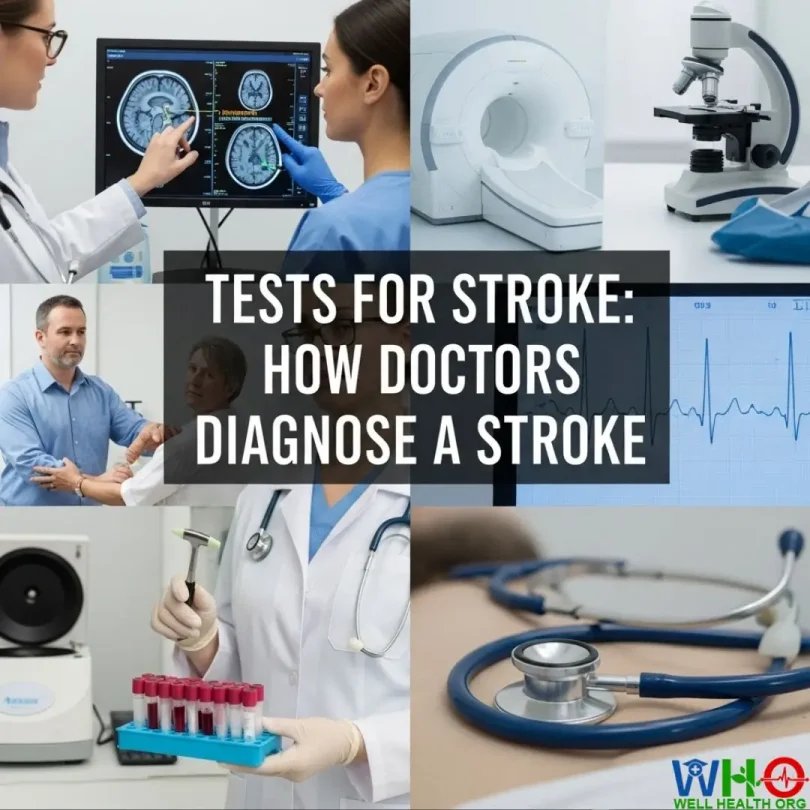
Because treatments differ dramatically between the two, precise diagnosis is crucial. Doctors rely on a combination of physical examinations, imaging scans, and blood or heart tests to uncover the cause.
In this comprehensive guide, we’ll explore each of these diagnostic methods in depth—helping you understand what happens when someone arrives at the hospital with stroke symptoms and why immediate action can save precious brain tissue.
1. The Physical Examination: The First Step in Identifying a Stroke
When a person arrives at the emergency room with possible stroke symptoms, the first step is a comprehensive physical and neurological examination. This initial assessment helps doctors quickly evaluate which parts of the brain may be affected and how severe the symptoms are.
The process begins with a rapid but detailed check of the patient’s vital signs—heart rate, blood pressure, and breathing—to ensure they’re stable. Then, the medical team assesses brain and nerve function using standardized tools like the National Institutes of Health Stroke Scale (NIHSS).
1.1 What the NIH Stroke Scale Measures
The NIHSS is a globally recognized scoring system that helps clinicians objectively measure the severity of a stroke. It evaluates multiple aspects of brain function, including consciousness, vision, motor strength, coordination, and language. Each category receives a score, and the total determines how serious the stroke is—ranging from minor (1–4) to severe (21+).
1.2 Key Areas of Assessment
Doctors and nurses assess:
- Level of Consciousness: Is the patient awake, responsive, and able to answer questions like their name, location, and the current date?
- Vision: Are both eyes moving correctly? Can the patient see objects across their entire visual field?
- Facial Movement: Is there noticeable drooping on one side of the face or difficulty smiling?
- Motor Function: Can the patient lift their arms or legs evenly, or is there weakness on one side?
- Sensation: Does the patient feel light touches equally on both sides of the body?
- Language and Speech: Can they speak clearly, form complete sentences, and understand instructions?
This exam provides immediate clues about which area of the brain is affected. For example, slurred speech and drooping on the right side of the face often indicate damage to the left side of the brain, where language centers are located.
1.3 Why the Physical Exam Matters
The physical exam serves as both a diagnostic and time-saving tool. In many cases, treatment begins based on this initial evaluation—even before imaging results are complete. The faster doctors can pinpoint the likely stroke type, the sooner they can initiate life-saving therapy.
Real-life example: A patient rushed to the ER with sudden right-arm weakness and slurred speech may immediately receive a preliminary diagnosis of a left-sided ischemic stroke. While imaging is still pending, doctors can prepare clot-busting medication or alert the neuro-interventional team for potential clot removal.
2. Imaging Tests for the Brain: Seeing What’s Happening Inside
Imaging tests are the cornerstone of stroke diagnosis. These scans allow doctors to visualize the brain in real time, confirming not only the presence of a stroke but also its type, location, and extent. Since treatment for ischemic and hemorrhagic strokes differs drastically, imaging helps avoid dangerous mistakes.
2.1 CT (Computed Tomography) Scan
A CT scan is almost always the first imaging test performed in a suspected stroke. The reason? It’s fast, widely available, and highly effective at detecting bleeding inside the brain.
Purpose:
The primary goal of an emergency CT scan is to rule out hemorrhagic stroke, where bleeding occurs due to a ruptured blood vessel. Identifying bleeding early is critical because using clot-busting medication in a hemorrhagic stroke could worsen the bleeding and become fatal.
Procedure:
The test is non-invasive. The patient lies flat on a table that slides into a circular scanner. Within minutes, X-ray images are taken from multiple angles and processed into detailed cross-sectional images of the brain.
Advantages:
- Fast results (often within 5–10 minutes).
- Excellent at detecting brain bleeding or skull fractures.
- Helps determine eligibility for immediate treatments like tPA (tissue plasminogen activator).
Limitations:
CT scans may not detect very early or small ischemic strokes—especially within the first few hours. That’s where MRI scans play a critical role.
2.2 MRI (Magnetic Resonance Imaging)
An MRI provides a far more detailed view of brain tissue compared to CT. It’s especially useful for detecting early or small ischemic strokes that CT might miss.
Purpose:
MRI helps identify even subtle changes in brain tissue, often within minutes of a blockage occurring. It’s particularly valuable for patients with mild or ambiguous symptoms, helping confirm a diagnosis that might otherwise be uncertain.
Procedure:
During the scan, the patient lies in a tube-like machine that uses powerful magnets and radio waves to generate highly detailed images. MRI scans can take between 20 to 45 minutes, depending on the type and number of sequences performed.
Advantages:
- Detects ischemic strokes earlier than CT.
- Provides high-resolution images of both the brain and blood vessels.
- No exposure to ionizing radiation.
Limitations:
- Takes longer than CT and is less accessible in smaller hospitals.
- Not suitable for patients with certain implants or metal devices.
2.3 Angiography: Mapping the Brain’s Blood Vessels
Cerebral angiography allows doctors to see the blood vessels in the brain and neck in precise detail. It’s critical for finding blockages, narrowing, aneurysms, or malformed vessels that could cause a stroke.
Types of Angiography:
- CT Angiography (CTA): Combines a CT scan with contrast dye to produce detailed images of blood vessels.
- MR Angiography (MRA): Uses magnetic fields instead of X-rays, often without contrast dye.
- Conventional (Catheter-Based) Angiography: Involves inserting a thin catheter through an artery (usually in the groin) and threading it up to the brain. Contrast dye is then injected, and real-time X-ray images are captured.
Purpose:
Angiography helps pinpoint the exact location and size of a blockage, guiding doctors on the best course of treatment. For instance, if a large clot is identified, a mechanical thrombectomy—a procedure where the clot is physically removed—can be performed immediately.
Real-World Example:
In major stroke centers, a patient may go straight from a CT scan to a CTA to check for large vessel blockages. If one is found, they’re rushed to the angiography suite for emergency clot removal—all within the “golden window” of a few hours.
3. Blood Tests: Understanding the Underlying Causes
While imaging reveals what’s happening inside the brain, blood tests help doctors uncover why it happened. They provide essential information about a patient’s overall health, risk factors, and ability to safely undergo treatment.
3.1 Complete Blood Count (CBC)
A CBC measures the number and types of cells in the blood—red cells, white cells, and platelets.
- Low red blood cells may indicate anemia, reducing oxygen supply to the brain.
- High white blood cells could suggest infection or inflammation.
- Abnormal platelet counts might increase bleeding or clotting risk.
3.2 Blood Clotting Tests
Tests like PT/INR and aPTT measure how quickly blood clots. These are crucial for patients on blood thinners such as warfarin, as abnormal levels can complicate treatment. For instance, a high INR increases bleeding risk, while a low INR may allow clots to form more easily.
3.3 Cholesterol and Lipid Profile
High levels of LDL (“bad”) cholesterol and triglycerides can lead to plaque buildup in arteries, raising the risk of ischemic strokes. These tests help evaluate cardiovascular health and guide long-term prevention strategies.
3.4 Additional Blood Tests
Doctors may also order:
- Blood sugar tests to check for diabetes or hypoglycemia.
- Electrolyte panels to monitor sodium and potassium levels that affect brain and heart function.
- Toxicology screening in younger patients to rule out drug-related causes.
Together, these blood tests create a clearer picture of the patient’s condition, ensuring treatments are both safe and effective.
4. Heart Tests: Linking Cardiac Health to Stroke Risk
The brain and heart are closely connected. Many strokes originate from heart-related conditions—particularly irregular heart rhythms or damaged heart valves that allow clots to form and travel to the brain. To uncover these underlying issues, doctors perform several key cardiac tests.
4.1 Electrocardiogram (ECG or EKG)
An ECG records the heart’s electrical activity through small electrodes placed on the chest and limbs.
Purpose:
It helps detect irregular rhythms such as atrial fibrillation (AFib)—a common cause of stroke. AFib allows blood to pool and form clots in the heart’s upper chambers. If a clot dislodges, it can travel to the brain and block blood flow.
Advantages:
- Quick (takes only a few minutes).
- Non-invasive and painless.
- Provides instant results.
Real-Life Insight:
Many people discover they have AFib only after a stroke. Routine ECG screenings can help detect it early, enabling preventive treatment with medications that reduce clot formation.
4.2 Echocardiogram
An echocardiogram uses ultrasound waves to create moving images of the heart.
Purpose:
It assesses the heart’s structure and function—checking how well blood pumps through the chambers and valves. Doctors look for clots, valve defects, or heart wall motion abnormalities that could contribute to stroke risk.
Types:
- Transthoracic Echocardiogram (TTE): A standard, non-invasive test performed externally.
- Transesophageal Echocardiogram (TEE): A small probe is inserted down the throat to get clearer images of the heart’s interior structures.
Both tests provide vital clues that guide prevention strategies and long-term management after a stroke.
5. Next Steps After Stroke Diagnosis: From Emergency Treatment to Recovery
Once a stroke has been confirmed and classified, doctors must act immediately to restore blood flow or stop bleeding. The type of stroke determines the treatment plan—and every minute that passes can mean the loss of millions of brain cells.
5.1 The Golden Hour: Why Speed Is Everything
Doctors often refer to the “golden hour”—the first 60 minutes after stroke symptoms begin—as the most crucial period for treatment. The faster a stroke is diagnosed, the better the chances of minimizing brain damage and improving recovery.
Even before all test results are finalized, treatment often begins if doctors are confident in the diagnosis. Rapid decision-making can be lifesaving.
5.2 Treatment for Ischemic Stroke
Ischemic strokes, which make up roughly 85% of all strokes, occur when a blood clot blocks blood flow to a part of the brain. The main treatment goals are to dissolve or remove the clot and restore circulation as quickly as possible.
a) Clot-Busting Medication (tPA)
The most common emergency treatment is tissue plasminogen activator (tPA)—a powerful drug that dissolves clots. It must be administered within 4.5 hours from the start of symptoms to be effective and safe.
- How It Works: tPA activates the body’s natural clot-dissolving system, reopening the blocked artery.
- Eligibility: Not all patients qualify. Doctors rule out hemorrhagic stroke through imaging before use since tPA can worsen bleeding.
- Success Rate: When given on time, tPA significantly increases the chances of full recovery.
b) Mechanical Thrombectomy
For larger clots in major brain arteries, doctors may perform a mechanical thrombectomy—a minimally invasive procedure that physically removes the blockage.
- A catheter is inserted through a blood vessel (usually in the groin) and navigated to the blocked artery.
- A small device traps and extracts the clot, restoring blood flow almost immediately.
This treatment can be performed up to 24 hours after symptom onset in select patients, depending on imaging results.
5.3 Treatment for Hemorrhagic Stroke
Hemorrhagic strokes, though less common, can be even more dangerous because they involve bleeding in or around the brain. The focus here is to control the bleeding, reduce pressure, and prevent further complications.
a) Controlling Bleeding
If the patient is on blood thinners, these medications are immediately stopped, and specific drugs or transfusions are given to reverse their effects.
b) Surgery and Other Procedures
In severe cases, surgery may be required to:
- Remove accumulated blood (hematoma).
- Repair ruptured blood vessels.
- Relieve pressure on the brain caused by swelling.
Minimally invasive techniques, like endovascular coiling or surgical clipping, are used to repair aneurysms and prevent re-bleeding.
c) Managing Blood Pressure and Brain Swelling
Medications may be prescribed to control high blood pressure, which can worsen bleeding. In some cases, doctors use osmotic agents or insert a drain to relieve pressure inside the skull.
5.4 Supportive and Rehabilitation Care
Once the patient is stabilized, attention shifts from emergency treatment to rehabilitation and recovery. Stroke can affect mobility, speech, memory, and daily functioning—but early rehabilitation improves long-term outcomes.
Physical Therapy
Helps patients regain muscle strength, coordination, and balance. Exercises may include assisted walking, stretching, and strength training.
Speech and Language Therapy
For patients with speech or swallowing difficulties, therapy focuses on rebuilding communication skills and safe swallowing techniques.
Occupational Therapy
Teaches strategies to adapt to daily activities, such as dressing, cooking, and writing, even with lingering physical limitations.
Emotional and Cognitive Support
Depression and memory issues are common after stroke. Counseling, cognitive training, and support groups play a vital role in recovery and mental health.
6. Why Time Is Brain: Understanding the Urgency of Stroke Care
There’s a saying among neurologists: “Time is brain.” This means that for every minute a stroke goes untreated, the brain loses nearly 1.9 million neurons. The faster treatment begins, the more brain tissue can be saved, reducing disability and improving recovery chances.
6.1 Recognizing the FAST Acronym
To help the public identify stroke symptoms quickly, doctors promote the FAST acronym:
- F – Face: Ask the person to smile. Does one side droop?
- A – Arms: Ask them to raise both arms. Does one drift downward?
- S – Speech: Is speech slurred, strange, or absent?
- T – Time: Time to call emergency services immediately.
6.2 Why Early Action Saves Lives
The average stroke patient loses around 120 million neurons per hour during an untreated stroke. Quick recognition, calling emergency services, and reaching a hospital with a dedicated stroke unit can dramatically improve survival rates and reduce complications.
Real-life example: Patients who arrive at a stroke center within 90 minutes are twice as likely to recover with minimal disability compared to those who delay care.
7. Prevention: Reducing the Risk of Future Strokes
After diagnosis and treatment, preventing another stroke becomes a top priority. Doctors design personalized prevention plans based on the patient’s risk factors and medical history.
7.1 Managing Underlying Conditions
- High Blood Pressure: Maintain readings below 120/80 mmHg through medication and lifestyle changes.
- Diabetes: Control blood sugar levels with diet, medication, and regular monitoring.
- High Cholesterol: Follow a heart-healthy diet low in saturated fats, and take prescribed statins if necessary.
- Atrial Fibrillation: Take anticoagulants (blood thinners) as prescribed to prevent clot formation.
7.2 Adopting a Healthier Lifestyle
Simple lifestyle adjustments can dramatically lower stroke risk:
- Quit smoking: Smoking doubles stroke risk by damaging blood vessels.
- Limit alcohol: Keep intake moderate—no more than one drink a day for women and two for men.
- Exercise regularly: Aim for at least 150 minutes of moderate activity per week.
- Eat smart: Choose a diet rich in fruits, vegetables, whole grains, and omega-3 fats.
7.3 Regular Health Screenings
Routine check-ups can detect problems early. Blood pressure monitoring, cholesterol testing, and annual ECGs for at-risk individuals are key steps toward prevention.
8. Understanding Diagnostic Advances in Stroke Detection
Medical technology continues to evolve, giving doctors new tools to detect strokes faster and more accurately.
8.1 Advanced Imaging Techniques
Newer imaging methods like CT perfusion scans and diffusion-weighted MRI can visualize blood flow and tissue damage in real time. These technologies help determine which brain areas can still be saved through rapid intervention.
8.2 Artificial Intelligence (AI) in Stroke Diagnosis
AI-based systems now analyze brain scans within seconds, flagging possible blockages or bleeding patterns before a radiologist reviews them. This innovation is already saving valuable time in emergency departments.
8.3 Mobile Stroke Units
Some cities have specialized ambulances equipped with CT scanners and stroke specialists. These units can diagnose and begin treatment while en route to the hospital, significantly improving survival rates.
9. Life After Stroke: The Road to Recovery
Recovering from a stroke is a lifelong process that requires patience, determination, and support. Rehabilitation not only helps restore lost abilities but also reduces the risk of another stroke.
9.1 The Importance of Early Rehabilitation
The brain has a remarkable ability to rewire itself through neuroplasticity—forming new connections to compensate for damaged areas. Starting rehab within days of treatment maximizes this healing potential.
9.2 Building a Strong Support System
Family members and caregivers play a vital role in emotional and physical recovery. Support groups and counseling can ease anxiety, depression, and frustration that often accompany recovery.
9.3 Long-Term Monitoring
Even after discharge, follow-up appointments are crucial. Doctors track progress, adjust medications, and ensure no complications—like high blood pressure or heart rhythm issues—develop later.
Conclusion: Act Fast, Save a Brain, Save a Life
Diagnosing and treating a stroke is a race against time. From physical exams and imaging scans to blood and heart tests, every step plays a vital role in pinpointing the problem and guiding the right treatment. The faster a stroke is identified, the better the outcome—and the greater the chance of a full recovery.
Remember: Time is brain. Knowing the signs, acting quickly, and understanding what tests and treatments are used can help save lives—including your own or a loved one’s.
If you or someone around you experiences stroke symptoms, call emergency services immediately. Never wait for the signs to “go away.” Early action could make all the difference.
Frequently Asked Questions (FAQs)
1. How is a stroke confirmed in the hospital?
A stroke is confirmed through a combination of physical exams, brain imaging (CT or MRI), and blood and heart tests to determine the type and cause.
2. Why is it important to know the type of stroke?
Because treatments differ: ischemic strokes need clot-busting medications, while hemorrhagic strokes require bleeding control or surgery.
3. Can blood tests alone detect a stroke?
No. Blood tests help identify risk factors or underlying causes but cannot confirm a stroke without imaging.
4. What happens if you arrive too late for treatment?
Even if you miss the window for clot-busting medication, doctors can still manage symptoms, prevent complications, and start rehabilitation to improve outcomes.
5. How can I reduce my chances of having another stroke?
Maintain a healthy lifestyle, control blood pressure and cholesterol, avoid smoking, manage diabetes, and attend regular medical check-ups.
Medically Reviewed by Prof. Dr. Akram
Orthopedic Surgeon | Professor | Senior Medical Specialist
Prof. Dr. Akram is a distinguished surgeon with over 15 years of clinical expertise. Having served as a lead Emergency Specialist at Complex International Government Hospital, he currently leads a specialized team of 13 medical professionals at his private hospital. As a Professor at top medical universities, he ensures that every article on WellHealthOrg.com meets rigorous clinical standards.
Medical Disclaimer:
The information provided is for educational purposes only and is not a substitute for professional medical advice, diagnosis, or treatment. Always consult your physician for any medical concerns.
Our content is rigorously fact-checked by our 13-member Editorial Team under the clinical supervision of Prof. Dr. Akram.