
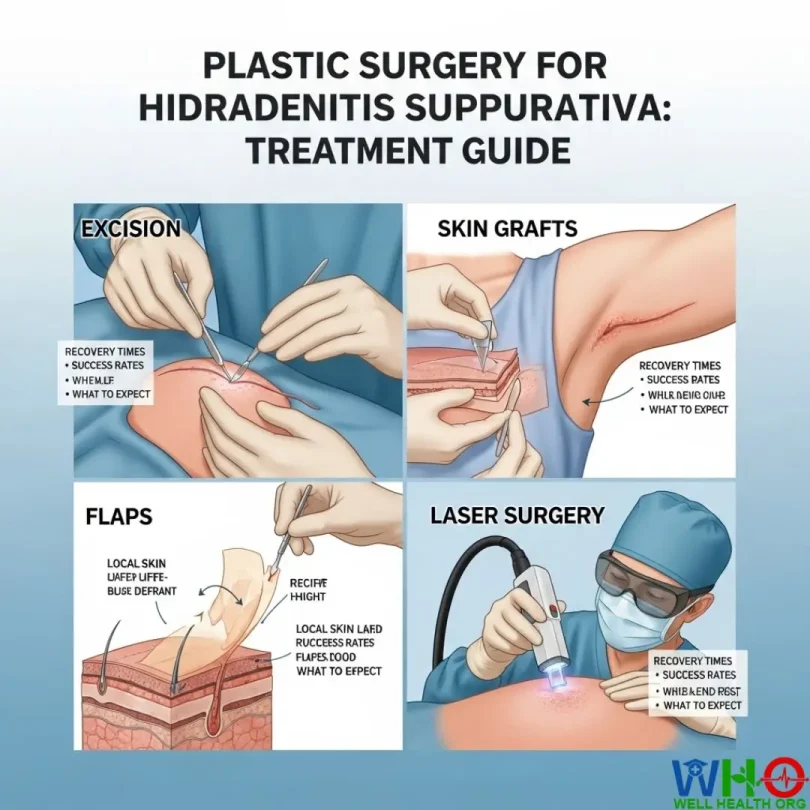
Living with hidradenitis suppurativa (HS) can be a daily struggle. For many, the painful lumps, recurrent abscesses, and draining tunnels are more than just a skin problem—they interfere with work, relationships, mobility, and overall quality of life. While medications and lifestyle changes can help manage mild to moderate HS, severe or advanced cases often require surgical solutions.
- Understanding Hidradenitis Suppurativa (HS) and Why Surgery May Be Needed
- Wide Excision: The Gold Standard Surgical Option
- How Wide Excision Works
- Recovery and Healing
- Who Benefits Most from Wide Excision?
- Risks and Considerations
- Local Flap Surgery: Preserving Function and Appearance
- Why Local Flaps Are Effective
- Recovery Timeline
- When Local Flaps Are Recommended
- Skin Grafting: Replacing Diseased Areas with Healthy Skin
- Types of Skin Grafts
- Recovery Process
- Pros and Cons
- Ideal Candidates
- Deroofing: A Less Invasive Surgical Approach
- How It Works
- Advantages
- Limitations
- Laser Surgery: A Modern and Minimally Invasive Option
- How Laser Surgery Works
- Benefits of Laser Surgery
- Recovery and Results
- Preparing for HS Surgery: Setting Yourself Up for Success
- Steps to Take Before Surgery
- Mental Preparation
- What to Expect During Recovery
- Early Recovery (First 2 Weeks)
- Mid Recovery (Weeks 3–6)
- Long-Term Recovery (6+ Weeks)
- Possible Complications
- Success Rates and Long-Term Outcomes of HS Surgery
- Effectiveness
- Quality of Life Improvements
- Factors That Influence Long-Term Success
- Making the Right Choice for Your Situation
- Factors to Consider
- Taking the Next Step
- Conclusion
- FAQs
- ✨ Final Note
If you’ve reached a point where creams, antibiotics, or biologic therapies are no longer effective, surgery may be the next step. But choosing the right procedure can feel overwhelming without the right guidance. This in-depth guide explores every major plastic surgery option for HS, explaining what each procedure involves, how recovery works, and what kind of results you can realistically expect.
Understanding Hidradenitis Suppurativa (HS) and Why Surgery May Be Needed
Hidradenitis suppurativa is a chronic, inflammatory skin condition that most often develops in areas where skin touches skin—such as the armpits, groin, buttocks, and under the breasts. At its core, HS is caused by blocked hair follicles that lead to painful lumps beneath the skin. Over time, these lumps can burst, creating tunnels called sinus tracts that connect under the skin and leak pus or blood.
The disease progresses in three stages, known as the Hurley stages:
- Stage 1 (Mild HS): Small, isolated lumps that appear occasionally and usually heal, leaving little scarring.
- Stage 2 (Moderate HS): Repeated flare-ups in the same areas, often leading to scarring and the development of some sinus tracts.
- Stage 3 (Severe HS): Large interconnected tunnels, widespread abscesses, and chronic inflammation. This stage can cause debilitating pain, restricted movement, and emotional distress.
For mild HS, treatments like antibiotics, hormonal therapy, or biologic injections (such as adalimumab) may be enough. But once HS advances to Stage 2 or 3, surgery is often the most reliable way to manage the disease.
Surgery becomes necessary when:
- Chronic abscesses fail to respond to medications.
- Sinus tracts have formed and continue to expand.
- Mobility is restricted due to scar tissue.
- The patient experiences constant pain, drainage, and infection risk.
Many people delay surgery due to fear of scars or downtime, but in truth, the right surgical approach can dramatically improve quality of life. Patients often report that after surgery, they regain the ability to move more freely, wear normal clothing, and participate in activities that were once impossible due to HS pain.
Wide Excision: The Gold Standard Surgical Option
When it comes to HS surgery, wide excision is often considered the most definitive treatment. This procedure involves removing all affected tissue, including diseased skin and underlying sinus tracts, with a margin of healthy tissue around it to reduce the chance of recurrence.
How Wide Excision Works
Your surgeon will map out the diseased area before surgery, ensuring that even tissue not visibly affected by HS is included in the removal. Because HS often spreads under the skin, this extra margin is crucial to preventing new flare-ups in the same area. The surgery is typically performed under general anesthesia and can last anywhere from 1 to 4 hours depending on the size and complexity of the affected area.
Recovery and Healing
Healing after wide excision can take 4 to 10 weeks. The wound may be left to heal naturally (secondary intention), or your surgeon may close it using:
- Skin grafting (transferring healthy skin from another body area).
- Local flaps (moving nearby skin and tissue with preserved blood supply).
- Direct closure (if the excision is small enough).
Patients should expect significant scarring, but in exchange, recurrence rates are much lower compared to less invasive surgeries. Most patients find that even with scars, life after recovery is far more comfortable and manageable than life with untreated HS.
Who Benefits Most from Wide Excision?
- People with Stage 3 HS and extensive tunneling.
- Patients who have failed repeated smaller procedures.
- Individuals ready to commit to a longer recovery for better long-term results.
Risks and Considerations
- Larger scars compared to other surgeries.
- Potential for wound infections or delayed healing.
- Need for reconstruction depending on location (e.g., groin or underarms).
Despite these challenges, wide excision has some of the highest success rates for HS, making it the go-to procedure when other treatments no longer work.
Local Flap Surgery: Preserving Function and Appearance
After diseased tissue is removed, surgeons often need to reconstruct the area. One effective method is local flap surgery, where healthy skin and tissue from an adjacent area are partially detached and repositioned to cover the wound.
Why Local Flaps Are Effective
Unlike skin grafts, which rely on the development of new blood vessels, local flaps retain their original blood supply, which makes them more reliable and better for healing. This means:
- Higher survival rates of transplanted tissue.
- Faster recovery compared to grafts.
- More natural cosmetic outcomes, since the skin matches in texture and color.
Recovery Timeline
Patients usually need to keep the surgical site immobilized for about a week to allow the flap to settle. After this, most people can return to light daily activities within 2 to 4 weeks, although complete healing may take longer.
The resulting tissue often looks and feels natural, with improved mobility compared to large skin grafts. This makes local flaps especially useful for areas where function is critical, such as the armpits or inner thighs.
When Local Flaps Are Recommended
- After wide excision when wound coverage is required.
- In locations where skin grafts may not hold well due to friction or movement.
- For patients who prioritize aesthetic results and smoother healing.
Skin Grafting: Replacing Diseased Areas with Healthy Skin
Another reconstruction option following HS excision is skin grafting. In this procedure, healthy skin is harvested from a donor site (commonly the thigh, buttocks, or abdomen) and transplanted to cover the surgical wound.
Types of Skin Grafts
- Split-thickness grafts – Use the top layers of skin (epidermis and part of dermis). These heal faster at the donor site but may appear thinner and less natural.
- Full-thickness grafts – Include all skin layers, offering better cosmetic results but requiring more healing time at the donor site.
Recovery Process
- Donor site usually heals in 1–2 weeks.
- Grafted area may take 3–6 weeks to fully integrate, during which the graft must remain undisturbed.
- Patients must avoid strenuous activity or stretching near the graft during early healing.
Pros and Cons
- ✅ Can cover large wounds efficiently.
- ✅ Donor site scars are typically minimal.
- ❌ Grafts rely on new blood vessel growth, which sometimes fails.
- ❌ Cosmetic results may be less natural than with local flaps.
Ideal Candidates
Patients undergoing large excisions in areas with limited nearby skin (such as the groin) often benefit from grafting. While recovery is longer compared to local flaps, grafting allows surgeons to close wounds that otherwise couldn’t be covered.
Deroofing: A Less Invasive Surgical Approach
For patients who are not ready for wide excision or who have less extensive disease, deroofing offers a minimally invasive surgical solution.
How It Works
The procedure involves removing the “roof” of sinus tracts and tunnels while leaving the base intact. This allows the wound to heal naturally from the bottom up. Unlike excision, deroofing does not remove large areas of skin but instead focuses on localized problem tracts.
Advantages
- Can often be performed under local anesthesia in an outpatient setting.
- Faster recovery, with most patients returning to daily activities in 2–4 weeks.
- Less scarring compared to wide excision.
- Effective for Stage 2 HS with limited tunneling.
Limitations
- Not suitable for Stage 3 HS or widespread disease.
- May require repeat procedures if new tracts develop.
- Cosmetic appearance may still be irregular.
Despite these drawbacks, many patients appreciate deroofing because it provides significant symptom relief with minimal downtime, making it a practical option for working individuals or those hesitant about more extensive surgery.
Laser Surgery: A Modern and Minimally Invasive Option
In recent years, laser treatments have emerged as a promising option for managing hidradenitis suppurativa, especially for patients seeking less invasive approaches or those not ready for major surgery. Laser therapy works by targeting the diseased tissue with concentrated beams of light energy, allowing for precise removal while minimizing damage to surrounding healthy skin.
How Laser Surgery Works
There are different types of lasers used for HS treatment:
- Carbon Dioxide (CO₂) Laser – This laser vaporizes diseased tissue and sinus tracts, effectively “burning out” HS lesions.
- Nd:YAG Laser – Targets deeper tissue and hair follicles, reducing inflammation and preventing new HS lesions from forming.
- Diode Laser – Primarily used for hair removal, as follicle blockage is one of the root causes of HS.
The choice of laser depends on the extent and severity of HS as well as the treatment goals (hair follicle destruction vs. tract removal).
Benefits of Laser Surgery
- Minimally invasive – No large incisions required.
- Faster recovery – Most patients return to normal activities in a few days to a week.
- Less scarring – Since tissue damage is controlled, scarring is typically minimal.
- Repeatable treatment – Unlike wide excision, laser procedures can be repeated if necessary without significant long-term risks.
Recovery and Results
Laser-treated areas usually heal within 2–3 weeks, depending on the intensity of the treatment. Patients often notice reduced pain, fewer flare-ups, and improved skin appearance. However, multiple sessions may be required for lasting results, especially in Stage 2 or 3 HS.
Laser surgery is most effective for smaller areas or early lesions, but it can also be combined with traditional surgery for complex cases. For example, a patient might undergo wide excision for severe groin lesions while using laser therapy for smaller armpit nodules.
Preparing for HS Surgery: Setting Yourself Up for Success
Surgery is not just about what happens in the operating room—the preparation beforehand can make a huge difference in both recovery and long-term results. Patients who actively prepare often experience fewer complications, faster healing, and better outcomes.
Steps to Take Before Surgery
- Medical Evaluation
Your surgeon will review your complete medical history, including any chronic conditions such as diabetes, high blood pressure, or autoimmune disorders that might affect healing. Blood tests and imaging may also be ordered to map out sinus tracts and disease extent. - Lifestyle Adjustments
- Quit smoking – Smoking drastically reduces blood flow and oxygen supply to healing tissues, increasing the risk of wound complications.
- Manage weight – Obesity can worsen HS and slow recovery, so even small weight-loss efforts before surgery can improve outcomes.
- Balanced diet – Focus on high-protein foods, vitamins A and C, and zinc, which all support skin healing.
- Medication Management
Some medications, especially blood thinners or immune-suppressing drugs, may need to be paused before surgery. Always discuss this with your doctor. - Home Preparation
Set up a recovery-friendly environment:- Have wound-care supplies ready (gauze, antiseptic, dressings).
- Prepare easy-to-reach meals or stock up on healthy frozen options.
- Arrange help with chores, childcare, or work tasks.
Mental Preparation
Don’t underestimate the emotional side of surgery. Many patients feel anxious about scars, recovery time, or recurrence. Joining a support group or speaking with others who have undergone HS surgery can ease these concerns and provide practical insights.
What to Expect During Recovery
Recovery after HS surgery varies widely depending on the procedure, the extent of disease, and individual healing capacity. However, understanding the general timeline can help patients feel more confident and prepared.
Early Recovery (First 2 Weeks)
- Pain Management: Mild to moderate pain is expected, but it can be controlled with prescription medication and over-the-counter options.
- Wound Care: Daily dressing changes are usually required. Your surgeon may recommend saline washes, antibiotic ointments, or negative pressure wound therapy (vacuum-assisted healing).
- Activity Restrictions: Avoid heavy lifting, stretching, or vigorous exercise. Depending on the location (e.g., groin, armpits), even walking or arm movements may need to be limited initially.
Mid Recovery (Weeks 3–6)
- Tissue Healing: Grafts or flaps begin to integrate fully, and open wounds gradually close.
- Reduced Pain: Pain typically decreases significantly by this stage.
- Return to Work: Many patients return to desk jobs by week 3 or 4, though physically demanding jobs may require longer leave.
Long-Term Recovery (6+ Weeks)
- Scar Maturation: Scars may remain red or raised for several months but gradually fade and flatten. Silicone sheets or scar creams can improve cosmetic outcomes.
- Follow-Up Care: Regular check-ups are crucial to monitor healing and detect recurrence early.
- Lifestyle Adjustments: Patients are often advised to continue weight management, wear breathable clothing, and avoid shaving or waxing near surgical areas to reduce flare-ups.
Possible Complications
While most recoveries go smoothly, complications may include:
- Wound infection
- Delayed healing
- Excessive scarring or contractures
- Partial graft or flap failure
Prompt communication with your surgeon is key if unusual symptoms (severe redness, pus, fever, or worsening pain) occur.
Success Rates and Long-Term Outcomes of HS Surgery
Many patients wonder: Is HS surgery worth it? The short answer is yes—but with realistic expectations.
Effectiveness
- Wide excision remains the most successful option, with long-term remission in many patients.
- Deroofing provides excellent relief for smaller lesions but may require repeat treatments.
- Laser surgery shows promising results, though recurrence is possible if deep tracts remain.
Research suggests that about 40–50% of patients may experience some recurrence after surgery. However, recurrence is often less severe and easier to manage than the original disease. Importantly, surgery significantly reduces pain, drainage, odor, and infection risk, which greatly improves daily quality of life.
Quality of Life Improvements
Patients often report being able to:
- Move more freely without pain.
- Wear regular clothing without constant bandages.
- Participate in exercise and social activities again.
- Feel more confident and less self-conscious about their skin.
Factors That Influence Long-Term Success
- Lifestyle habits (smoking, weight, hygiene).
- Post-surgical care and follow-up.
- Stage of HS at the time of surgery.
- Choice of procedure and surgeon experience.
Making the Right Choice for Your Situation
Deciding on HS surgery is not a one-size-fits-all process. The best surgical approach depends on multiple factors, including disease stage, location of lesions, overall health, and personal preferences.
Factors to Consider
- Extent of Disease: Wide excision may be necessary for stage 3 HS, while deroofing or laser treatment might suffice for earlier stages.
- Location of HS: Surgery in the groin or armpits requires special consideration due to mobility and sensitivity.
- Downtime: If you need a quicker return to work, less invasive options may be better initially.
- Cosmetic Concerns: Local flaps often offer the best aesthetic outcomes.
- Financial Considerations: Insurance coverage for HS surgery varies, so check your benefits before scheduling.
Taking the Next Step
- Consult a plastic surgeon experienced in HS treatment.
- Don’t hesitate to seek a second opinion if you feel uncertain.
- Ask about all possible alternatives, risks, and benefits.
- Consider combining surgery with medical management for best results.
Ultimately, HS surgery is not just about removing diseased tissue—it’s about restoring quality of life. With the right treatment plan, many patients find long-lasting relief and regain confidence in their bodies.
Conclusion
Hidradenitis suppurativa is one of the most challenging chronic skin conditions, but modern surgical techniques give patients real hope for relief. From wide excision and skin grafts to laser therapy and deroofing, there are multiple approaches to suit different stages and severities of HS.
While no single procedure guarantees a cure, surgery often provides the best chance of long-term control, especially when combined with lifestyle changes and ongoing medical management. The journey may involve scars and recovery time, but the trade-off is often a dramatic improvement in mobility, comfort, and self-esteem.
FAQs
1. Is HS surgery a permanent cure?
No. Surgery can remove diseased tissue and reduce recurrence, but HS is a chronic condition. Some patients may develop new lesions elsewhere.
2. How painful is HS surgery?
Pain is common but manageable with medications. Most patients report that post-surgical discomfort is easier to handle than the pain of untreated HS.
3. Can HS come back after wide excision?
Recurrence rates are lower with wide excision, but about 20–40% of patients may still develop new lesions over time.
4. Will my insurance cover HS surgery?
Coverage varies by plan. Many insurers recognize HS surgery as medically necessary, but it’s important to confirm with your provider.
5. Which is better: laser surgery or wide excision?
It depends on your disease stage. Laser surgery is less invasive with faster recovery, but wide excision is more effective for advanced HS.
✨ Final Note
If you’re living with HS and struggling with pain, drainage, or scarring, surgery may be the path to a better quality of life. Talk to your healthcare team, weigh your options, and take the step that feels right for you.
Medically Reviewed by Prof. Dr. Akram
Orthopedic Surgeon | Professor | Senior Medical Specialist
Prof. Dr. Akram is a distinguished surgeon with over 15 years of clinical expertise. Having served as a lead Emergency Specialist at Complex International Government Hospital, he currently leads a specialized team of 13 medical professionals at his private hospital. As a Professor at top medical universities, he ensures that every article on WellHealthOrg.com meets rigorous clinical standards.
Medical Disclaimer:
The information provided is for educational purposes only and is not a substitute for professional medical advice, diagnosis, or treatment. Always consult your physician for any medical concerns.
Our content is rigorously fact-checked by our 13-member Editorial Team under the clinical supervision of Prof. Dr. Akram.







