
Home Remedies for Cold and Fever: We all know the feeling. It usually starts with a subtle tickle in the back of your throat, a few repeated sneezes, or a heavy wave of exhaustion that hits you out of nowhere in the middle of the afternoon. The common cold or a sudden fever has arrived, threatening to derail your week, your work, and your family time.
- Part 1: Decoding the Body’s Defense System
- The Viral Invader
- Fever: Friend or Foe?
- Why Antibiotics Don’t Work
- Part 2: The Foundations of Recovery
- 1. The Art of Aggressive Rest
- 2. Radical Hydration
- Part 3: The Kitchen Pharmacy – Top Dietary Remedies
- Chicken Soup: The “Jewish Penicillin”
- Honey and Lemon: The Dynamic Duo
- Garlic: The Stinking Rose
- Ginger: The Nausea and Inflammation Fighter
- Part 4: Herbal Teas and Botanicals
- Peppermint Tea
- Chamomile Tea
- Elderberry
- Echinacea
- Part 5: Physical Remedies and Hydrotherapy
- Saltwater Gargles: The Sore Throat Savior
- Steam Inhalation and Humidity
- The “Wet Sock” Treatment
- Part 6: Prevention – Building a Fortress
- Gut Health is Immune Health
- Vitamin D: The Sunshine Vitamin
- Hygiene Habits
- Part 7: Special Considerations for Different Ages
- Part 8: When to Call the Doctor
- Part 9: The Psychology of Being Sick
- Final Thoughts: Empowering Your Health
In our modern, fast-paced world, the immediate reflex is often to rush to the pharmacy and stock up on colorful pills, syrups, and decongestants. While over-the-counter medications have their place, they often mask symptoms rather than supporting the body’s intrinsic ability to heal. Furthermore, many of these medications come with unwanted side effects, from drowsiness to jitteriness.
But what if the most powerful tools for recovery weren’t in a medicine cabinet, but in your kitchen pantry?
Home remedies have been the cornerstone of health for centuries, passed down through generations not just because of tradition, but because they work. This comprehensive guide will take you on a deep dive into the world of natural healing. We won’t just list remedies; we will explain the science behind them, provide detailed “how-to” instructions, offer safety precautions, and give you a holistic blueprint for getting back on your feet faster.
By the end of this extensive guide, you will be equipped with a complete “Natural First Aid Kit” of knowledge to tackle colds and fevers with confidence.
Part 1: Decoding the Body’s Defense System
Before we start brewing teas and crushing garlic, it is vital to understand what is actually happening inside your body. A lot of anxiety surrounding sickness comes from not understanding the biological processes at play.

The Viral Invader
The common cold is an upper respiratory infection caused by viruses. There isn’t just one “cold virus”; there are over 200 distinct viruses responsible for these infections, with rhinoviruses being the most common culprits. This biodiversity of viruses is exactly why we cannot simply “cure” the common cold and why you can catch multiple colds in a single season.
When a virus enters your body (usually through your eyes, nose, or mouth), it hijacks your healthy cells to replicate. Your symptoms—the runny nose, the cough, the sneezing—are actually not caused by the virus itself, but by your immune system’s aggressive reaction to the invader.
Fever: Friend or Foe?
One of the most misunderstood symptoms is the fever. We often view a fever as something scary that needs to be eliminated immediately. However, in the context of a holistic approach, a fever is your body’s most sophisticated weapon.
Viruses and bacteria thrive at normal body temperature (98.6°F / 37°C). When your immune system detects an intruder, the hypothalamus (your body’s internal thermostat) turns up the heat. This creates a hotter environment where viruses struggle to reproduce. Furthermore, higher temperatures stimulate the production of white blood cells.
Key Takeaway: A mild fever is a sign that your immune system is working correctly. The goal of home remedies is not necessarily to suppress the fever entirely (unless it gets dangerously high), but to manage the discomfort while letting the fever do its job.
Why Antibiotics Don’t Work
It is crucial to reiterate this point: Antibiotics kill bacteria. Colds and flus are caused by viruses. Taking antibiotics for a viral cold is not only ineffective; it destroys your gut microbiome (which is essential for immunity) and contributes to the global crisis of antibiotic resistance. This makes natural home remedies the primary and most logical course of action for viral illnesses.
Part 2: The Foundations of Recovery
You cannot supplement your way out of a lifestyle that ignores the body’s basic needs. Before you try any specific remedy, you must establish the two pillars of healing: Aggressive Rest and Radical Hydration.

1. The Art of Aggressive Rest
In our productivity-obsessed culture, we often feel guilty for taking a sick day. We try to “power through,” checking emails from bed or doing light chores. This is a mistake that can double the duration of your illness.
When you are sick, your body is channeling massive amounts of energy toward the immune battle. Every ounce of energy you spend on mental stress, physical movement, or digestion is energy stolen from your immune system.
- Sleep is Repair: During deep sleep, your body releases cytokines, a type of protein that targets infection and inflammation. If you are sleep-deprived, you produce fewer cytokines.
- Mental Rest: Turn off the news. Put away work emails. Stress produces cortisol, a hormone that suppresses immune function. “Rest” means truly doing nothing—napping, listening to soothing music, or meditating.
2. Radical Hydration
You’ve heard “drink plenty of fluids,” but let’s break down why and how.
A fever causes rapid fluid loss through sweating (evaporative cooling). Additionally, your body uses fluids to produce mucus, which is the mechanism used to trap and expel viruses. If you are dehydrated, your mucus becomes thick and sticky, clogging your sinuses and lungs, which can lead to secondary infections like bronchitis.
The Golden Rules of Hydration:
- Temperature Matters: Drink warm or room-temperature fluids. Ice-cold water can shock a sensitive throat and slow down digestion.
- Electrolytes: Water is great, but when you are sweating, you lose salt and potassium. Coconut water is an excellent natural source of electrolytes without the high sugar content of sports drinks.
- The “Pee Test”: The best way to gauge hydration is the color of your urine. It should be a pale, straw color. If it is dark yellow, you need to drink more immediately.
Part 3: The Kitchen Pharmacy – Top Dietary Remedies
Your kitchen is stocked with potent antiviral, antibacterial, and anti-inflammatory ingredients. Here is how to use food as medicine.

Chicken Soup: The “Jewish Penicillin”
Grandma was right. Chicken soup is not just a comfort food; it is scientifically backed medicine.
- The Science: Studies suggest that chicken soup inhibits the movement of neutrophils (a type of white blood cell) to mucous membranes. By slowing them down, it reduces inflammation and congestion.
- The Broth Benefit: A real bone broth (made by simmering bones for 12+ hours) is rich in collagen and amino acids like cysteine, which helps thin out mucus in the lungs, making it easier to cough up.
- The Heat factor: The steam and heat from the soup act as a natural vaporizer, clearing nasal passages.
Pro Tip: Add extra garlic, onions, and black pepper to your soup. Onions contain quercetin, a powerful antioxidant that acts as a natural antihistamine.
Honey and Lemon: The Dynamic Duo
This is perhaps the most famous remedy worldwide, but the quality of ingredients matters.
- Honey: Raw, unpasteurized honey is essential. Processed honey is just sugar syrup. Raw honey acts as a demulcent, meaning it forms a soothing film over mucous membranes. It is also antimicrobial. Manuka honey, specifically, has incredibly high antibacterial properties.
- Lemon: High in Vitamin C and helps alkalize the body. The acidity also helps cut through phlegm.
The Ultimate Sore Throat Elixir Recipe:
- Warm 1 cup of water (do not boil, as boiling water destroys the beneficial enzymes in raw honey).
- Squeeze half a fresh lemon.
- Stir in 1 tablespoon of raw honey.
- Add a pinch of cayenne pepper (optional). The capsaicin in the pepper helps block pain signals and increases blood flow to the throat to speed healing.
Safety Note: Never give honey to infants under 12 months due to the risk of botulism.
Garlic: The Stinking Rose
Garlic is one of nature’s most potent antibiotics. The secret ingredient is a compound called allicin. However, allicin is only released when the garlic clove is crushed or chopped.
How to use it:
Swallowing a whole clove won’t do much. You must crush the garlic and let it sit for 10 minutes to allow the enzymes to activate the allicin.
- The Hardcore Method: Chew a raw clove of garlic every 3-4 hours. It burns, but it works.
- The Gentle Method: Mince the garlic and mix it with a spoonful of honey or olive oil to buffer the stomach.
Ginger: The Nausea and Inflammation Fighter
Ginger is a rhizome that warms the body. If you have the “chills,” ginger is your best friend. It acts as a diaphoretic, meaning it promotes sweating, which can help “break” a fever naturally. It is also excellent if your flu is accompanied by an upset stomach.
How to make potent Ginger Tea:
Don’t use tea bags. Buy fresh ginger root.
- Slice about 2 inches of fresh ginger (no need to peel).
- Boil it in 2-3 cups of water for at least 15-20 minutes. The longer you boil, the stronger it gets (this is called a decoction).
- Strain and add honey.
Part 4: Herbal Teas and Botanicals
Beyond culinary spices, specific herbs have an affinity for the respiratory system.

Peppermint Tea
Peppermint contains menthol, a natural decongestant. The vapors alone can trick your brain into feeling like your airways are opening up. It is also a mild muscle relaxant, which can help with the body aches associated with fevers.
Chamomile Tea
When you can’t sleep because you feel miserable, chamomile is the answer. It increases glycine in the body, a chemical that relaxes nerves and muscles. It is gentle enough for children and helps reduce the anxiety that often comes with being sick.
Elderberry
Elderberry syrup has gained massive popularity recently. Some studies suggest that elderberry extract can reduce the duration of the flu if taken within the first 48 hours of symptoms. It appears to block virus spikes from attaching to healthy cells.
Usage: You can buy elderberry syrup or make your own using dried berries. Warning: Never eat raw elderberries as they can be toxic; they must be cooked.
Echinacea
This purple coneflower is best used at the very first sign of a cold. It stimulates the immune system to become more active. However, once you are fully sick, evidence suggests it is less effective. Think of Echinacea as the alarm bell that wakes up your immune system, not the soldiers fighting the war.
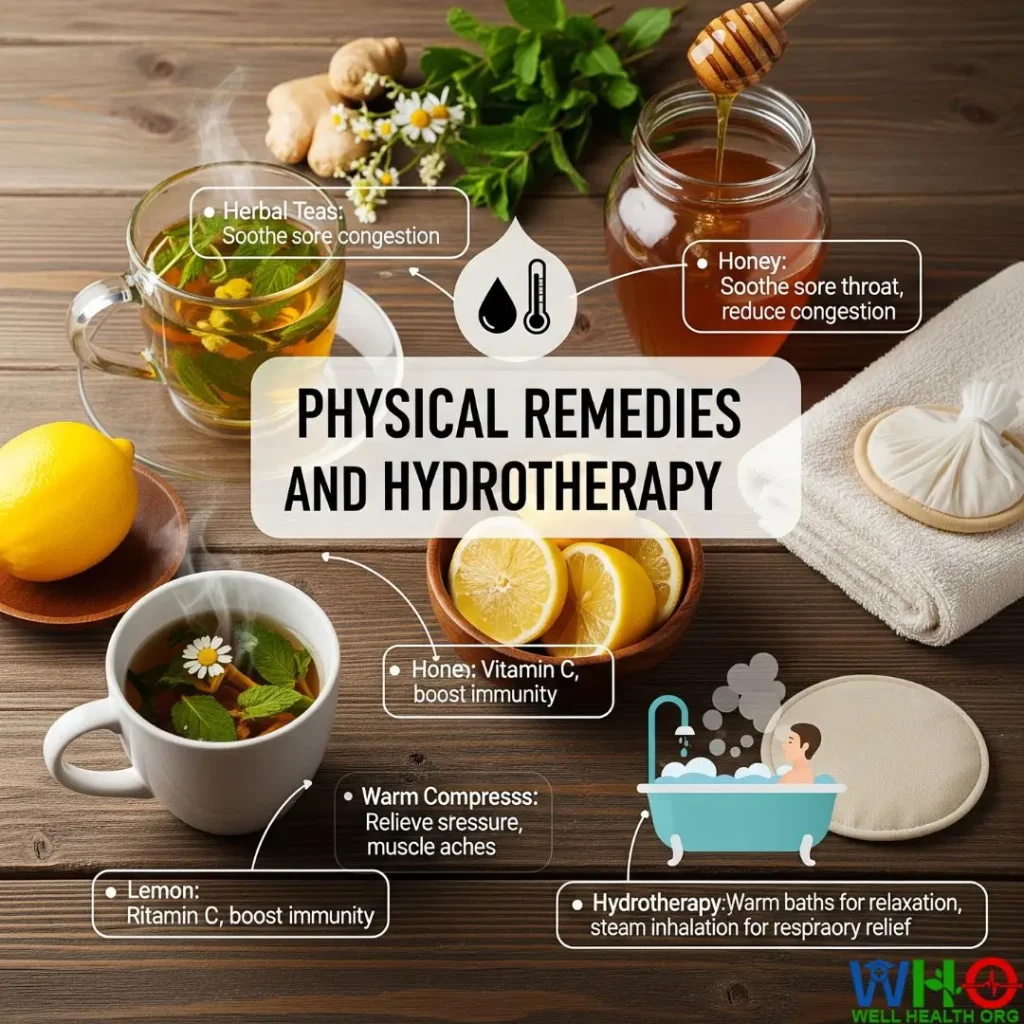
Part 5: Physical Remedies and Hydrotherapy
Sometimes, you need to treat the symptoms from the outside in.
Saltwater Gargles: The Sore Throat Savior
This is the single most effective remedy for a sore throat. Why? It’s basic osmosis.
When your throat is sore, the tissues are swollen and full of fluid (inflammation). A saltwater solution is hypertonic, meaning it has a higher concentration of salt than your cells. This draws excess fluid out of the swollen tissues, reducing pain and pressure. It also flushes out mucus and bacteria.
The Ratio: Mix 1/2 teaspoon of salt into 8 ounces of warm water. Any salt works, but sea salt or Himalayan salt is gentler than iodized table salt. Gargle for 30 seconds and spit. Repeat every 3 hours.
Steam Inhalation and Humidity
Dry air is the enemy of a respiratory infection. It dries out your mucus membranes, making them crack and bleed, and making your cough dry and hacking.
- Steam Bowl: Boil a pot of water. Remove from heat. Place on a stable table. Put a towel over your head to create a tent and lean over the steam. Breathe deeply through your nose.
- Additions: Add a drop of eucalyptus oil or a teaspoon of Vick’s VapoRub to the water. The eucalyptus acts as an expectorant, helping to loosen phlegm.
- The Humidifier: Run a cool-mist humidifier in your bedroom at night. Critical Tip: You must clean your humidifier daily. A dirty humidifier can pump mold spores and bacteria into the air, making you sicker.
The “Wet Sock” Treatment
This sounds bizarre, and you might be skeptical, but it is a staple in naturopathic medicine. The theory is that it stimulates circulation and the immune system.
How to do it:
- Right before bed, warm your feet in hot water.
- Soak a pair of thin cotton socks in ice-cold water. Wring them out thoroughly.
- Put the cold, wet socks on your warm feet.
- Immediately put a pair of thick, dry wool socks over the wet ones.
- Go to sleep.
The Result: Your body will react to the cold by drastically increasing blood circulation to the feet to warm them up. This reflex boosts general circulation and lymphatic drainage, helping to clear congestion from the upper body. By morning, the socks will be bone dry.
Part 6: Prevention – Building a Fortress
Once you recover, the goal is to stop the next bug from taking hold. “An ounce of prevention is worth a pound of cure.”
Gut Health is Immune Health
Did you know that 70% of your immune system resides in your gut? The beneficial bacteria in your digestive tract are your first line of defense.
- Probiotics: Eat fermented foods like yogurt, kefir, sauerkraut, and kimchi. These replenish your good bacteria.
- Prebiotics: Eat fiber-rich foods (garlic, onions, bananas) to feed those good bacteria.
Vitamin D: The Sunshine Vitamin
Research shows a strong correlation between Vitamin D deficiency and susceptibility to respiratory infections. Since we spend much of our time indoors, many people are deficient.
- Get Outside: Aim for 15-20 minutes of sun exposure daily.
- Diet: Fatty fish (salmon), egg yolks, and fortified foods.
Hygiene Habits
- Hand Washing: It sounds simple, but most people do it wrong. You need to scrub with soap for 20 seconds—the time it takes to sing “Happy Birthday” twice. Friction removes the germs; soap lifts them off.
- Phone Hygiene: We wash our hands, but we rarely wash our phones. Your phone is likely covered in bacteria. Wipe it down with an alcohol wipe daily.
Part 7: Special Considerations for Different Ages
Not all remedies are safe for everyone.
For Children:
- No Honey under 1 year.
- No Aspirin: Never give aspirin to children or teenagers recovering from viral infections (chickenpox or flu) due to the risk of Reye’s syndrome, a rare but fatal condition. Stick to acetaminophen or ibuprofen if medication is needed.
- Menthol Caution: Strong peppermint or eucalyptus oil can sometimes cause breathing spasms in very young children. Use products specifically formulated for babies.
For the Elderly:
- Hydration is Critical: Older adults often have a diminished sense of thirst. Caregivers must ensure they are drinking regularly.
- Skin Sensitivity: Be careful with hot water bottles or steam to avoid burns, as aging skin is thinner.
Part 8: When to Call the Doctor
While this guide empowers you to handle most colds at home, you must recognize the “Red Flags.” There is a fine line between “waiting it out” and “medical negligence.”
Seek professional help immediately if:
- Difficulty Breathing: If you feel like you can’t get enough air, or if you are wheezing. In children, look for “retractions” (where the ribs pull in with each breath) or flaring nostrils.
- Persistent High Fever:
- Infants (under 3 months): Any fever over 100.4°F (38°C) is an emergency.
- Children/Adults: A fever over 103°F (39.4°C) that doesn’t respond to medication, or any fever lasting more than 3 days.
- The “Second Sick”: If you get better for a few days, then suddenly get much worse with a high fever and severe cough. This is a classic sign of a secondary bacterial infection like pneumonia, which requires antibiotics.
- Severe Pain: Severe chest pain, abdominal pain, or an intense headache that feels different from a normal tension headache.
- Stiff Neck: A stiff neck combined with a fever and sensitivity to light can be a sign of meningitis, a life-threatening emergency.
- Confusion: Disorientation or extreme lethargy (hard to wake up).
Part 9: The Psychology of Being Sick
We often overlook the mental toll of being unwell. Being sick makes us feel vulnerable, frustrated, and isolated.
Self-care is not just about the physical remedies; it is about treating yourself with compassion.
- Change your sheets: Fresh, crisp linens can make a world of difference in how you feel.
- Aromatherapy: Even if you aren’t doing steam inhalation, diffusing lavender or eucalyptus oil can make your room feel like a spa rather than a sick bay.
- Acceptance: Stop fighting the fact that you are sick. The sooner you accept that you need rest, the sooner you will recover.
Final Thoughts: Empowering Your Health
Navigating a cold or fever is never fun, but it doesn’t have to be a helpless experience. By understanding the mechanisms of your body and utilizing the natural abundance of remedies available in your kitchen, you can transform a week of misery into a period of restorative healing.
From the simplicity of a saltwater gargle to the warming comfort of ginger tea, these remedies offer a way to support your body without unnecessary chemicals. They remind us that health is often about going back to basics: good food, good rest, and natural support.
So, the next time that familiar scratchiness hits your throat, don’t panic. Boil the kettle, fluff your pillows, and trust in your body’s incredible capacity to heal itself. You have the tools; now you just need the patience to let them work.
Disclaimer: This guide is for informational purposes only and does not constitute medical advice. Always consult with a healthcare professional regarding any medical condition or treatment.
Medically Reviewed by Prof. Dr. Akram
Orthopedic Surgeon | Professor | Senior Medical Specialist
Prof. Dr. Akram is a distinguished surgeon with over 15 years of clinical expertise. Having served as a lead Emergency Specialist at Complex International Government Hospital, he currently leads a specialized team of 13 medical professionals at his private hospital. As a Professor at top medical universities, he ensures that every article on WellHealthOrg.com meets rigorous clinical standards.
Medical Disclaimer:
The information provided is for educational purposes only and is not a substitute for professional medical advice, diagnosis, or treatment. Always consult your physician for any medical concerns.
Our content is rigorously fact-checked by our 13-member Editorial Team under the clinical supervision of Prof. Dr. Akram.







