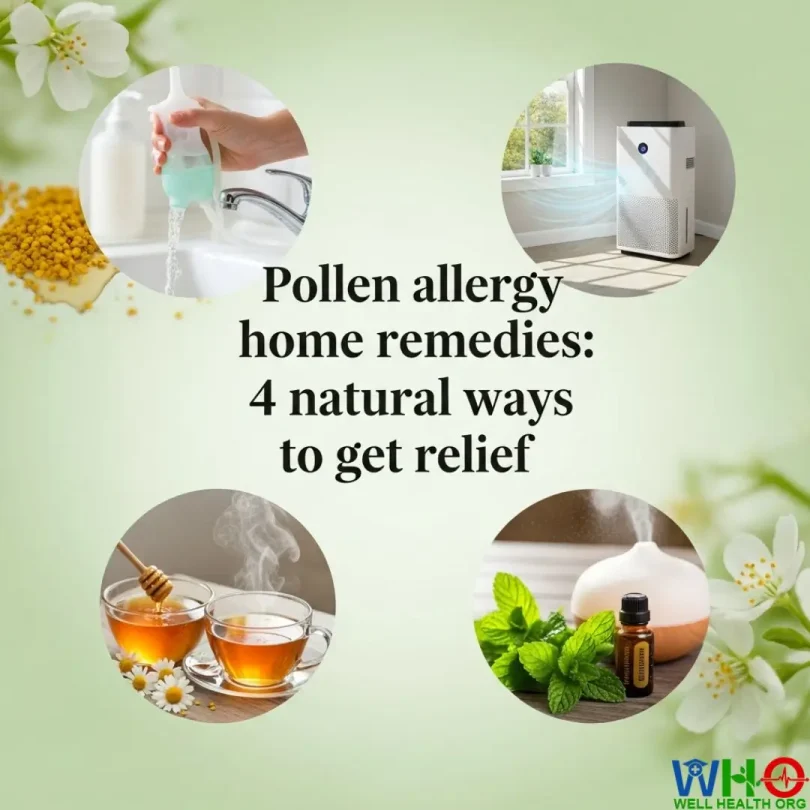
Medically Reviewed by Prof. Dr. Akram
Chief Medical Content Strategist & Senior Neurologist | WellHealthOrg
With over three decades in the clinical trenches, I’ve seen how seasonal allergies can transform a beautiful spring day into a personal nightmare. This guide isn’t just a list of “hacks”—it is a clinical roadmap designed to help you regain control over your respiratory health using evidence-based natural interventions and environmental discipline.Patient Navigation & Clinical Index
| Understanding the Condition | Therapeutic Interventions |
|---|---|
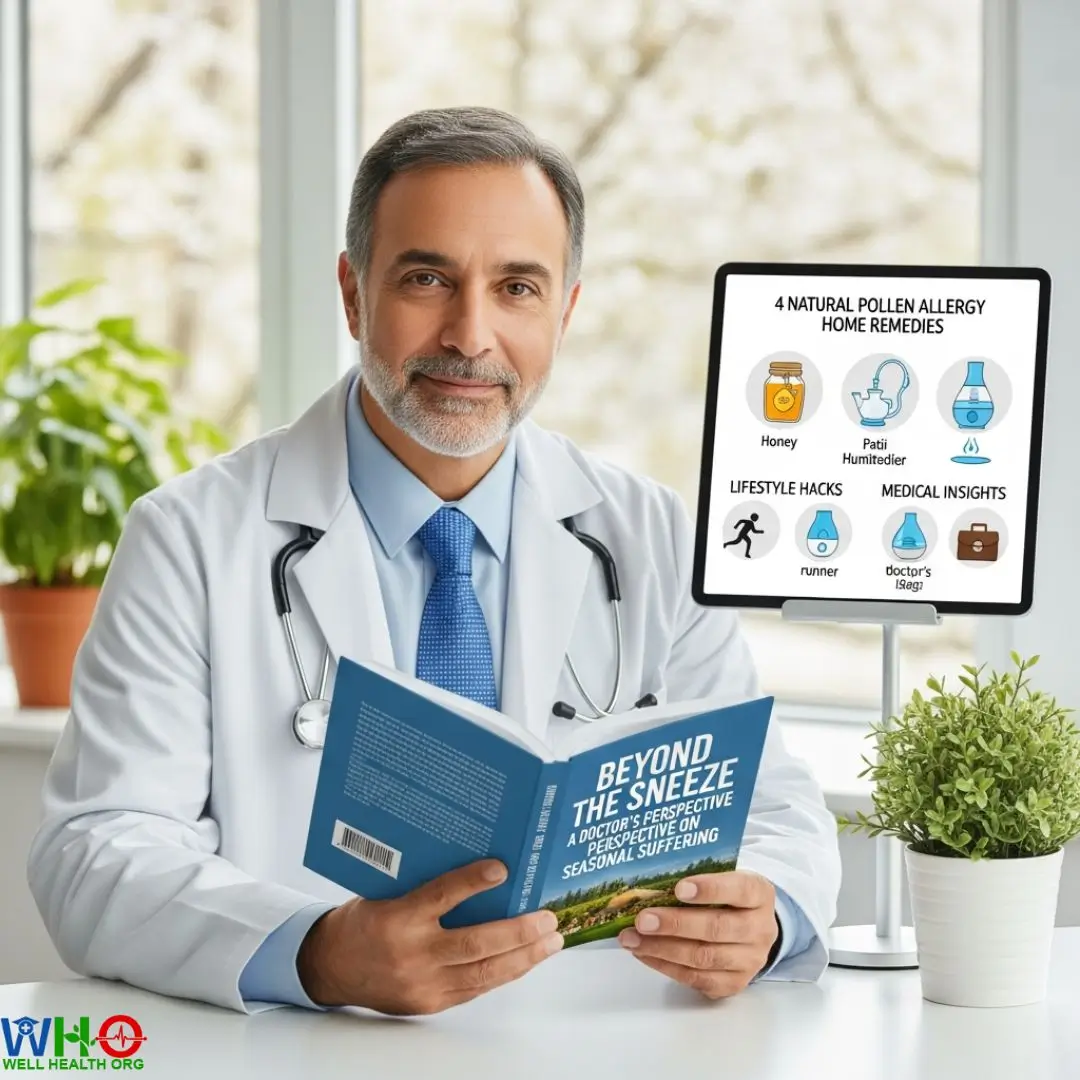
Beyond the Sneeze: A Doctor’s Perspective on Seasonal Suffering
Pollen Allergy Home Remedies (2)
Asaan Alfaz mein Summary (हिंदी सारांश) – Click to Expand
- पॉलेन एलर्जी तब होती है जब इम्यून सिस्टम फूलों के कणों को गलती से दुश्मन मान लेता है।
- हिस्टामाइन (Histamine) नाम का रसायन नाक बहने और खुजली का मुख्य कारण है।
- Nasal Rinse: नाक की सफाई सबसे जरूरी है, लेकिन हमेशा उबला हुआ पानी ही इस्तेमाल करें।
- Local Honey: रोजाना 1-2 चम्मच शहद खाने से शरीर धीरे-धीरे एलर्जी झेलना सीखता है।
- HEPA Filter: घर के अंदर की हवा को साफ़ रखने के लिए एयर प्यूरीफायर का इस्तेमाल करें।
- सुबह 5 से 10 बजे के बीच घर के अंदर रहें, क्योंकि इस समय पॉलेन सबसे ज्यादा होता है।
- बाहर से घर लौटते ही तुरंत नहाएं और कपड़े बदलें ताकि पॉलेन बिस्तर तक न पहुंचे।
- अदरक, हल्दी और बिछुआ (Nettle) की चाय सूजन कम करने में मदद करती है।
- Oral Allergy Syndrome: कुछ फल जैसे सेब खाने से मुंह में खुजली हो सकती है, उन्हें पका कर खाएं।
- अगर सांस लेने में घरघराहट (Wheezing) हो, तो इसे हल्के में न लें, यह अस्थमा हो सकता है।
- पालतू जानवरों को रोज गीले कपड़े से पोंछें क्योंकि उनके बालों में पॉलेन फंस जाता है।
- शराब और बीयर एलर्जी की सूजन को और बढ़ा सकते हैं।
- एलर्जी का मौसम शुरू होने से 2 हफ्ते पहले ही बचाव शुरू कर देना चाहिए।
- बच्चों की नाक पर लाल निशान (Allergic Salute) एलर्जी का पक्का संकेत है।
- अगर चेहरे पर बहुत दर्द हो या पीला बलगम आए, तो डॉक्टर को तुरंत दिखाएं।
Quick Insights in Hinglish (Roman Hindi) – Click to Expand
- Pollen allergy koi bimari nahi balki immune system ka “false alarm” hai.
- Body jab Histamine release karti hai, tabhi itching aur swelling shuru hoti hai.
- Nasal Irrigation: Din mein 2 baar saline rinse karne se pollen naak se bahar nikal jata hai.
- Naak saaf karne ke liye kabhi bhi direct tap water use na karein, paani boil karke thanda karein.
- Honey Trick: Local raw honey khane se body pollen ko tolerate karna seekh jati hai.
- HEPA Purifier: Bedroom mein air purifier lagane se raat ki neend behtar hoti hai.
- Morning walks delay karein; subah 5-10 baje pollen count sabse high rehta hai.
- Ghar aate hi shower lein, varna pollen aapke pillow aur bed par phail jayega.
- Ginger (Adrak) aur Turmeric (Haldi) natural anti-inflammatory agents hain.
- Quercetin capsules mast cells ko stabilize karke allergy rokte hain.
- Kuch logo ko fruits khane se muh mein itching hoti hai, ise cross-reactivity kehte hain.
- Thunderstorms ke waqt ghar mein rahein, varna “Thunderstorm Asthma” ho sakta hai.
- Pets ko bedroom se bahar rakhein allergy season ke dauran.
- Sunglasses pehenne se aankhon mein pollen kam jata hai.
- Agar medicines kaam na karein, toh Allergist se milkar Immunotherapy plan karein.
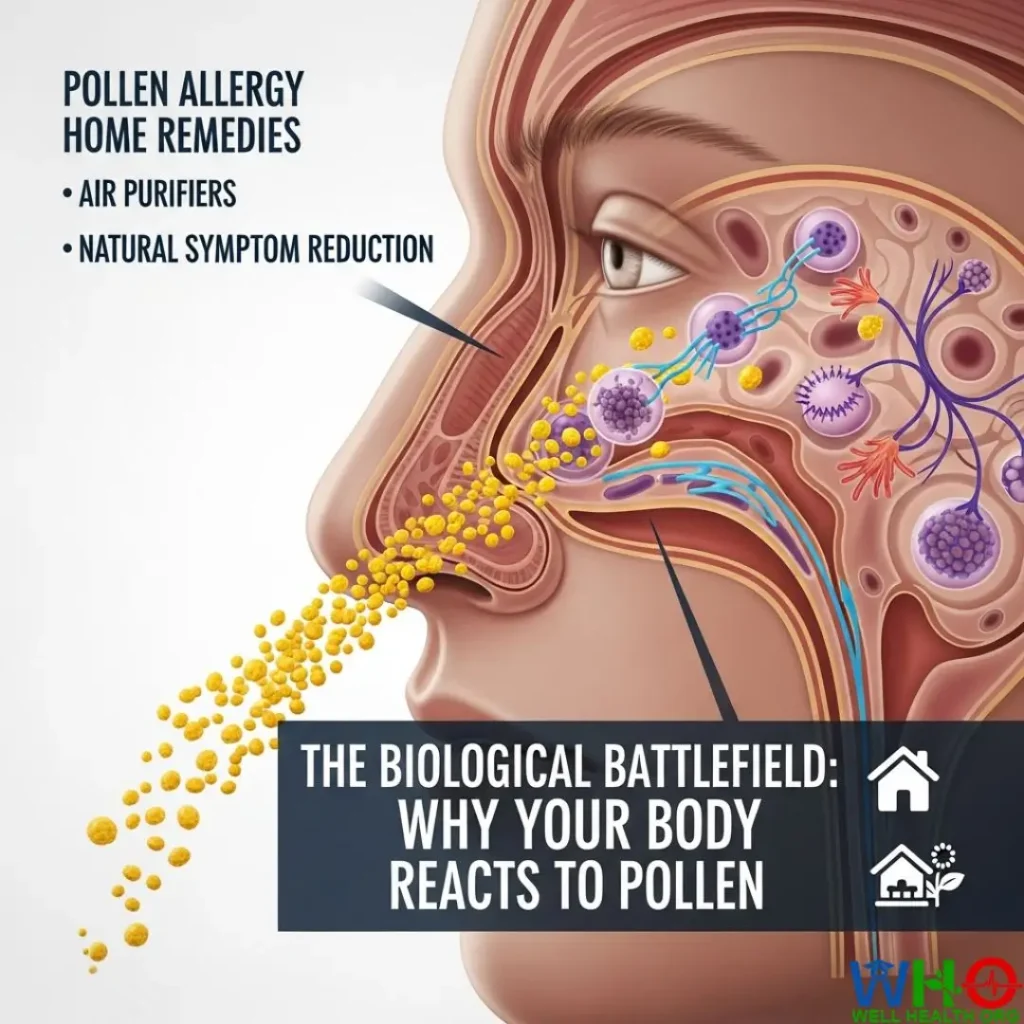
The Biological Battlefield: Why Your Immune System Lies to You
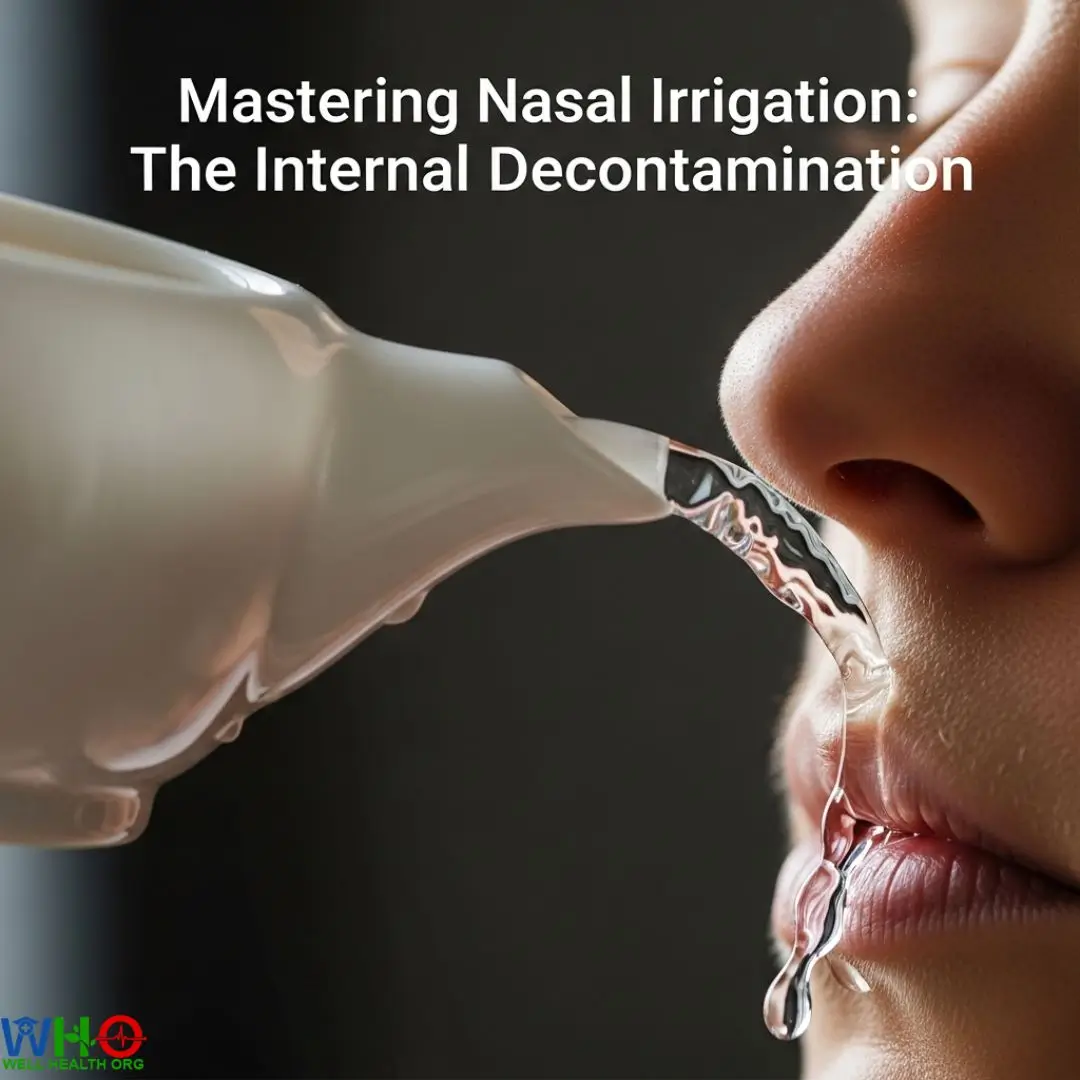
Mastering Nasal Irrigation: The Internal Decontamination
Pollen Allergy Home Remedies (3)
Clinical Protocol: The Saline Rinse
Quantity: Use 240ml (8 oz) of lukewarm water. Add 1/4 teaspoon of non-iodized salt (Pickling salt or Neti salt) and 1/4 teaspoon of baking soda to buffer the pH. Application:- Lean over a sink, tilting your head at a 45-degree angle.
- Insert the nozzle into the upper nostril. Crucial: Keep your mouth open and breathe through it.
- Gently pour or squeeze. The water should travel through the septum and exit the lower nostril.
- Gently blow your nose and repeat on the other side.
Local Honey & The Concept of Edible Vaccination
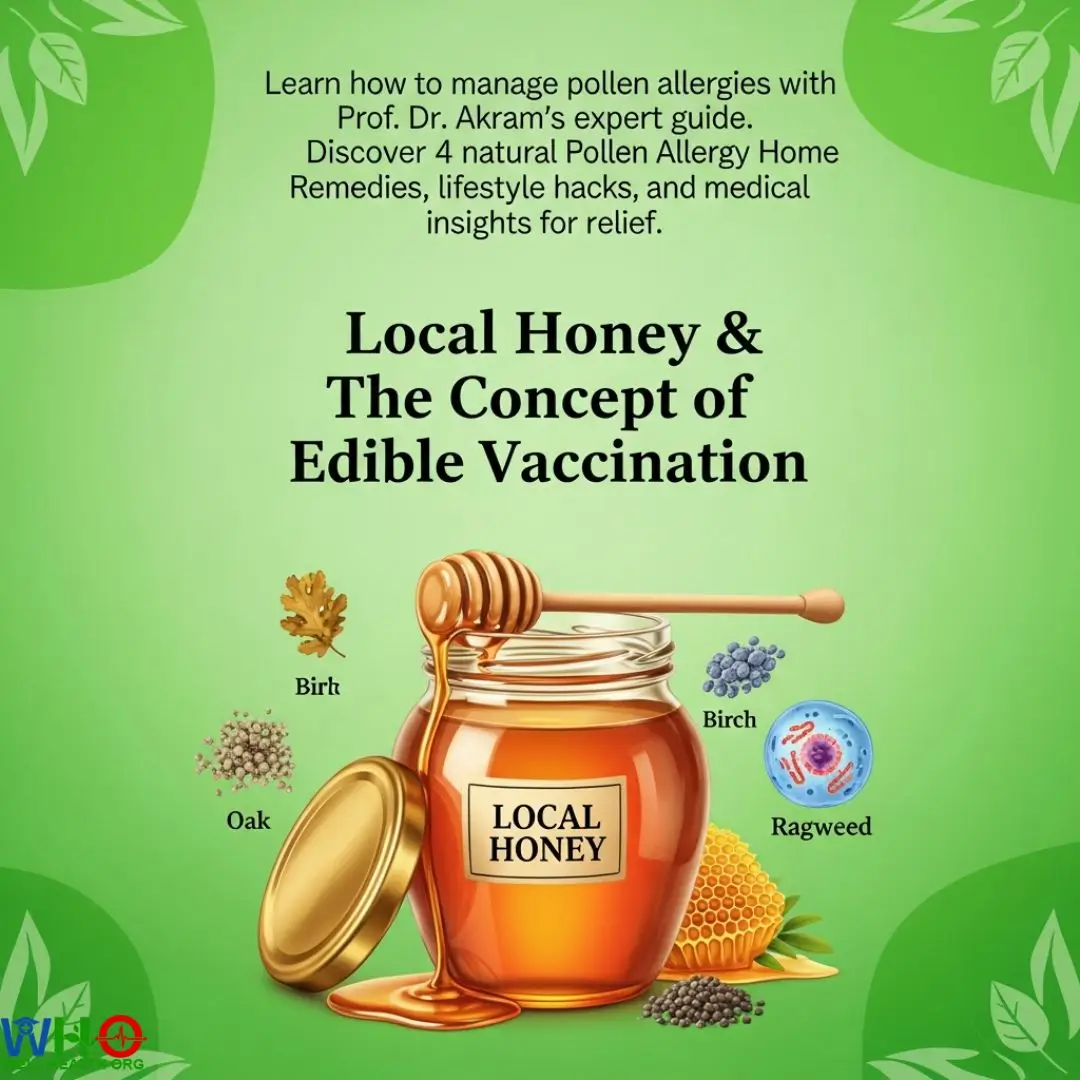 I am often asked if honey is a myth. The answer lies in the science of Immunotherapy. Allergy shots work by injecting tiny amounts of an allergen into the body so the immune system learns to tolerate it. Local honey works on a similar, albeit less precise, principle.
Clinical Protocol: Honey Desensitization
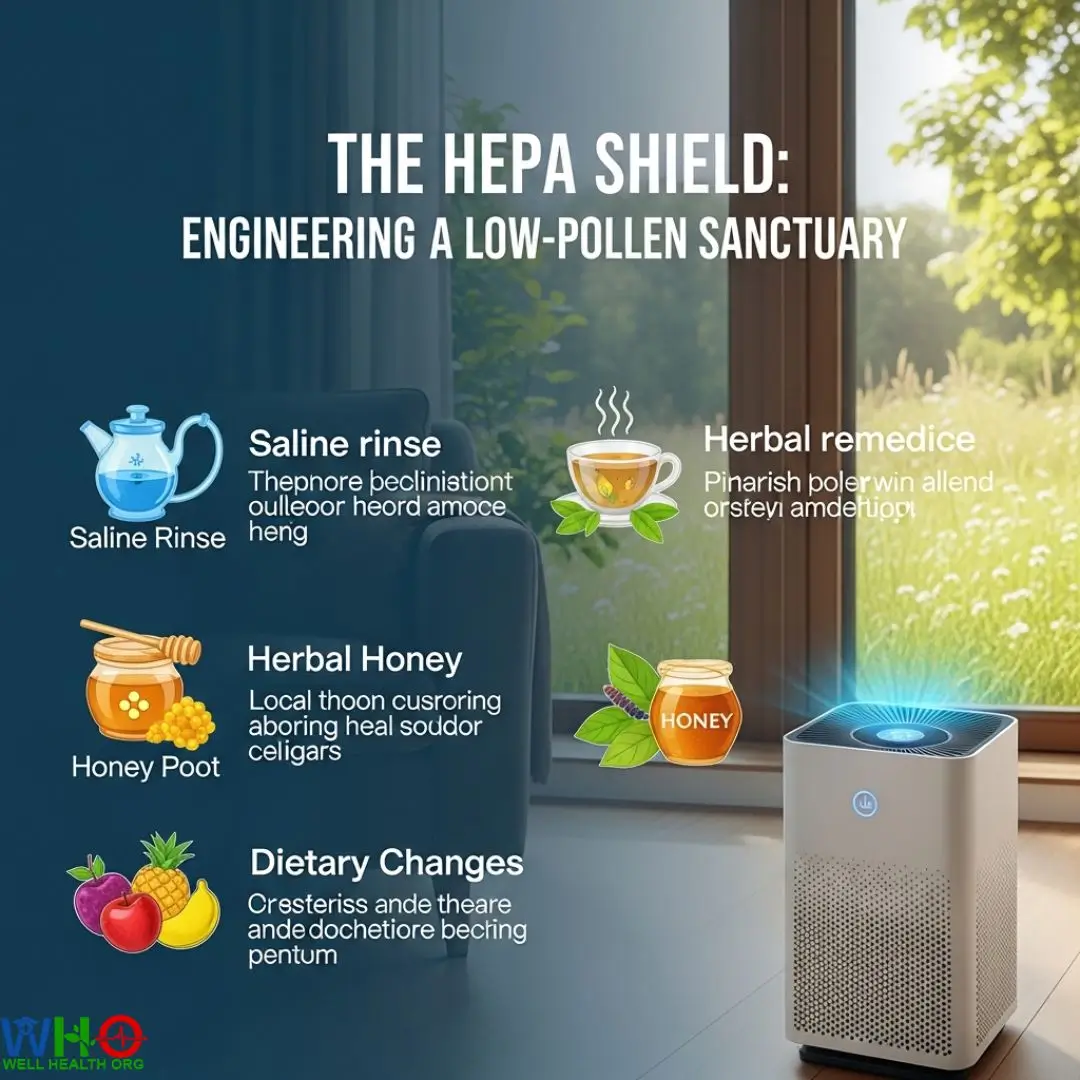
Quantity: 1 to 2 tablespoons of raw, unfiltered, local honey per day. It must be from bees within a 50-mile radius of your home. Application: Do not heat the honey, as high temperatures destroy the pollen proteins. Eat it directly or spread it on room-temperature toast. Start this 2-3 months before your specific allergy season kicks in. Mechanism: Bees collect pollen from local flora. Trace amounts end up in the honey. Consuming these small “oral doses” can stimulate T-regulatory cells in the gut, which tell the rest of your immune system, “Hey, this pollen is actually food, not a threat.” Recovery Path: This is a long-term strategy. You won’t feel better in an hour. However, patients who stick to this for an entire year often report a 30% reduction in their need for antihistamines the following season. Safety & Reaction Cure: If you experience an itchy throat or “hives” after eating local honey, you are likely reacting to the concentrated pollen. This is a sign to stop. Take an OTC antihistamine like Cetirizine (10mg) to calm the reaction. NEVER give honey to children under 1 year of age due to the risk of botulism.The HEPA Shield: Engineering a Low-Pollen Sanctuary
Pollen Allergy Home Remedies (5)
Clinical Protocol: Environmental Scrubbing
Quantity: Use a True HEPA (High-Efficiency Particulate Air) filter with a CADR rating appropriate for your room square footage. One for the bedroom is non-negotiable. Application: Run the filter 24/7. Place it in the center of the room if possible, or at least 3 feet from walls. The Entryway Protocol: Leave your shoes at the door, shower immediately upon entering, and wash your “outdoor” clothes separately. Mechanism: HEPA filters are designed to trap 99.97% of particles as small as 0.3 microns. Pollen grains are giants in comparison (10-100 microns). The filter effectively “scrubs” the air, removing the triggers before they reach your nasal receptors. Recovery Path: Most patients report “waking up clear” within 3 nights of HEPA use. The dark circles under the eyes—known as “Allergic Shiners”—often begin to fade as the vascular congestion decreases with better sleep. Safety & Maintenance: If you don’t change the filter every 6 months, it becomes a source of mold. If you notice a “musty” smell coming from the purifier, turn it off, discard the old filter, and sanitize the unit with a 10% bleach solution before installing a new one.Herbal Therapeutics: Quercetin & Nettle
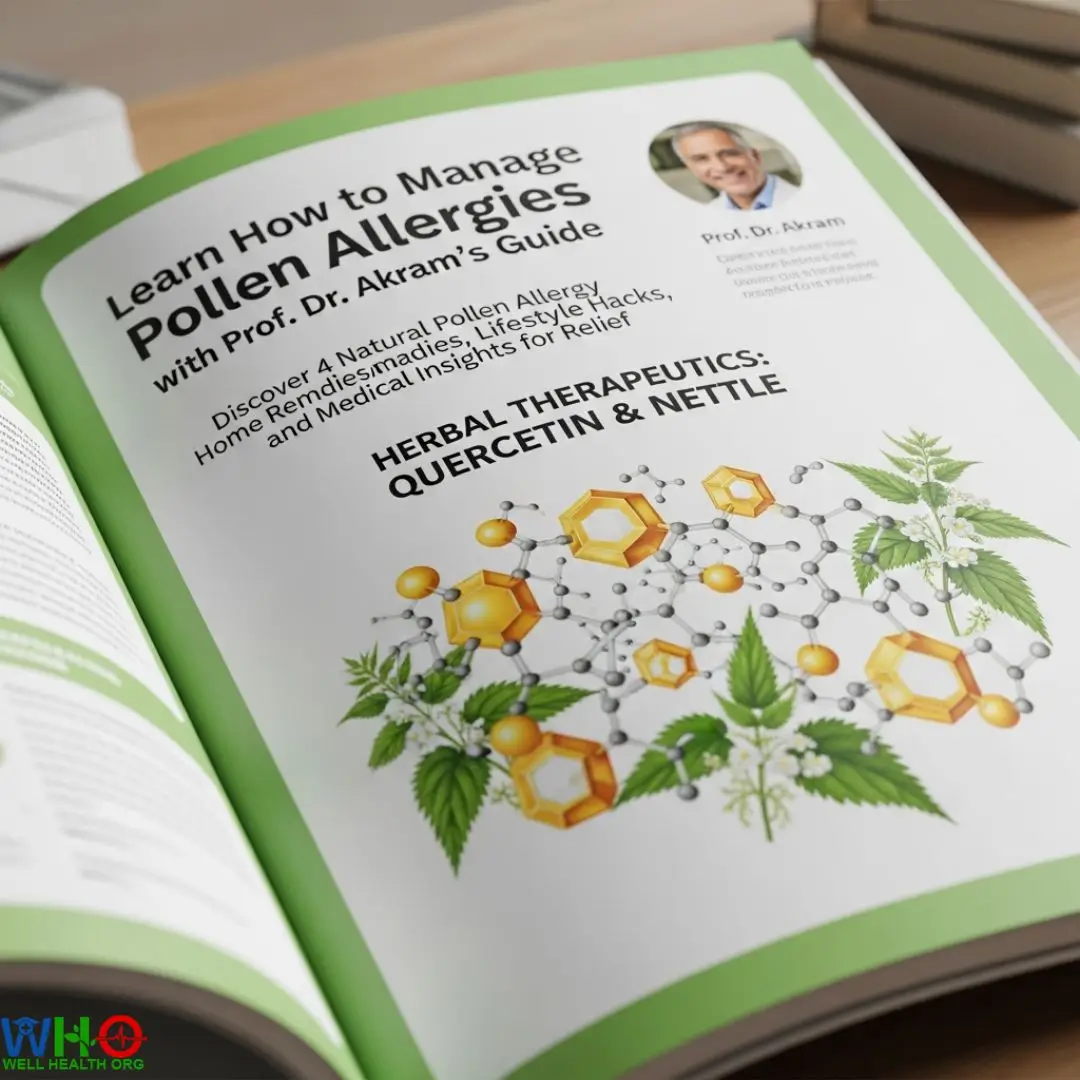 If you want to avoid the “head-in-a-cloud” feeling of traditional antihistamines, nature offers some elegant alternatives. These aren’t just “tea”—they are bioactive compounds that stabilize your cells.
Clinical Protocol: The Bioflavonoid Shield
Quantity: Quercetin: 500mg twice daily. Stinging Nettle: 300mg of freeze-dried leaf three times daily. Ginger/Turmeric: 1-2 cups of fresh-steeped tea daily. Application: Quercetin is a “mast cell stabilizer.” Take it 2 weeks before the season starts. Nettle is better for acute symptoms. Brew ginger tea by simmering 1 inch of fresh root in 2 cups of water for 10 minutes. Mechanism: Quercetin works by preventing the “grenades” (mast cells) from being so easy to trigger. Stinging Nettle inhibits the enzymes (COX-1 and COX-2) that create inflammatory prostaglandins. It’s essentially “Natural Advil” for your nose. Recovery Path: Reduced sneezing frequency and less “dripping” within 48 hours. Long-term use lowers systemic inflammation, which can even help with joint pain and skin health. Safety & Reaction Cure: Nettle can lower blood pressure and blood sugar. If you feel dizzy or shaky, stop use and consume a sugary snack. Quercetin can occasionally cause headaches; if this happens, reduce the dose by half. Always consult your doctor if you are on blood thinners like Warfarin.The “Hidden” Pollen: Oral Allergy Syndrome
Have you ever eaten an apple in the spring and felt your mouth start to itch? You aren’t imagining things. This is Oral Allergy Syndrome (OAS). Because the protein structure of certain fruits is almost identical to certain pollens, your immune system gets confused. The Cross-Reaction Cheat Sheet:- Birch Pollen: Reacts to Apples, Peaches, Carrots, Celery, and Almonds.
- Ragweed: Reacts to Bananas, Melons, and Zucchini.
- Grass Pollen: Reacts to Tomatoes, Oranges, and Potatoes.
Frequently Asked Questions: Real Patient Concerns
Your Clinical Action Plan: The 7-Day Reset
Success in managing allergies isn’t about one “magic pill.” It’s about a multi-layered defense. Follow this 7-day protocol to lower your “allergic load”:- Day 1-2: Environmental Decontamination. Scrub your bedroom. Wash all bedding in 60°C (140°F) water. Install your HEPA filter.
- Day 3-4: Mechanical Cleansing. Start your twice-daily saline nasal rinses. Use the “Entryway Protocol” (shoes off, immediate shower).
- Day 5-6: Biological Stabilization. Introduce local honey and start Quercetin/Nettle supplements (after consulting your doctor).
- Day 7: Dietary Check. Identify any cross-reactive fruits causing OAS and switch to cooked versions. Eliminate alcohol for the next 7 days to see if swelling reduces.
MEDICAL DISCLAIMER
This guide is for informational purposes and reflects the clinical observations of Prof. Dr. Akram. It is NOT a substitute for professional medical advice. Always seek the direct guidance of your physician before starting any new supplement or treatment, especially if you have pre-existing conditions like asthma, diabetes, or hypertension. If you experience difficulty breathing, swelling of the tongue, or a rapid pulse, call emergency services immediately.
Medically Reviewed by Prof. Dr. Akram
Orthopedic Surgeon | Professor | Senior Medical Specialist
Prof. Dr. Akram is a distinguished surgeon with over 15 years of clinical expertise. Having served as a lead Emergency Specialist at Complex International Government Hospital, he currently leads a specialized team of 13 medical professionals at his private hospital. As a Professor at top medical universities, he ensures that every article on WellHealthOrg.com meets rigorous clinical standards.
Medical Disclaimer:
The information provided is for educational purposes only and is not a substitute for professional medical advice, diagnosis, or treatment. Always consult your physician for any medical concerns.
Our content is rigorously fact-checked by our 13-member Editorial Team under the clinical supervision of Prof. Dr. Akram.